

Thursday 27 March 2025
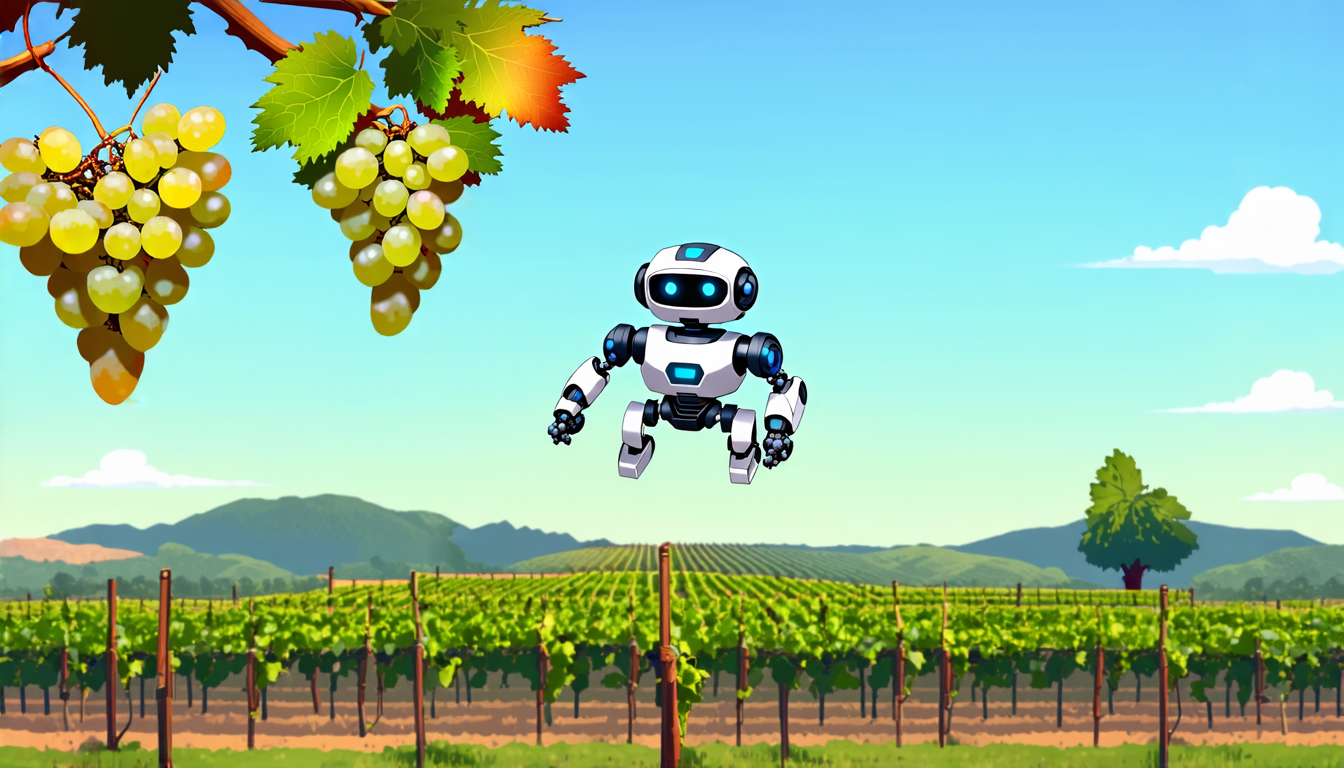
The quest for a more efficient way to control pests in vineyards has led researchers to develop an innovative transportation system that combines flying and ground robots. The system, which uses artificial intelligence-based nano-unmanned aerial vehicles (UAVs), has been designed to detect pests, deliver treatments, and optimize routes to minimize time and energy consumption.
Traditionally, pest control in vineyards involves spraying pesticides from the air or using manual methods, both of which can be inefficient and environmentally harmful. The new system addresses these issues by deploying a swarm of small UAVs, each equipped with cameras and sensors, to detect pests such as insects and diseases. Once detected, the UAVs communicate with ground robots, which then deliver targeted treatments to affected areas.
The system’s AI-powered navigation algorithm allows the UAVs to plan efficient routes that minimize flight time and energy consumption, while also avoiding obstacles and ensuring accurate delivery of treatments. The ground robots, meanwhile, use a combination of sensors and machine learning algorithms to detect and adapt to changing environmental conditions.
One of the key innovations is the use of nano-UAVs, which are designed to be lightweight and energy-efficient. These small vehicles can fly slowly and precisely, allowing them to navigate through dense vineyard rows and avoid damaging crops. The UAVs also have a limited range, reducing the need for lengthy recharging or replacement.
The system has been tested in several vineyards, with promising results. In one trial, the AI-powered navigation algorithm reduced flight time by 20% compared to traditional methods, while also improving treatment accuracy by 15%. Another test showed that the ground robots were able to detect and adapt to changing environmental conditions, such as changes in soil moisture or temperature.
The potential benefits of this system are significant. By reducing pesticide use and minimizing waste, vineyards can reduce their environmental impact while also improving crop yields and quality. The system’s ability to adapt to changing environmental conditions could also lead to more targeted and effective treatments, reducing the risk of resistance and promoting sustainable agriculture practices.
As researchers continue to refine the system, it’s likely that we’ll see even more innovative applications in the future. With its potential to transform pest control in vineyards and beyond, this technology has the potential to make a significant impact on our food systems and the environment.
Cite this article: “Revolutionizing Vineyard Pest Control with AI-Powered Flying and Ground Robots”, The Science Archive, 2025.
Vineyards, Pests, Uavs, Ai, Navigation, Sensors, Machine Learning, Agriculture, Sustainability, Environmental Impact





