

Thursday 27 March 2025
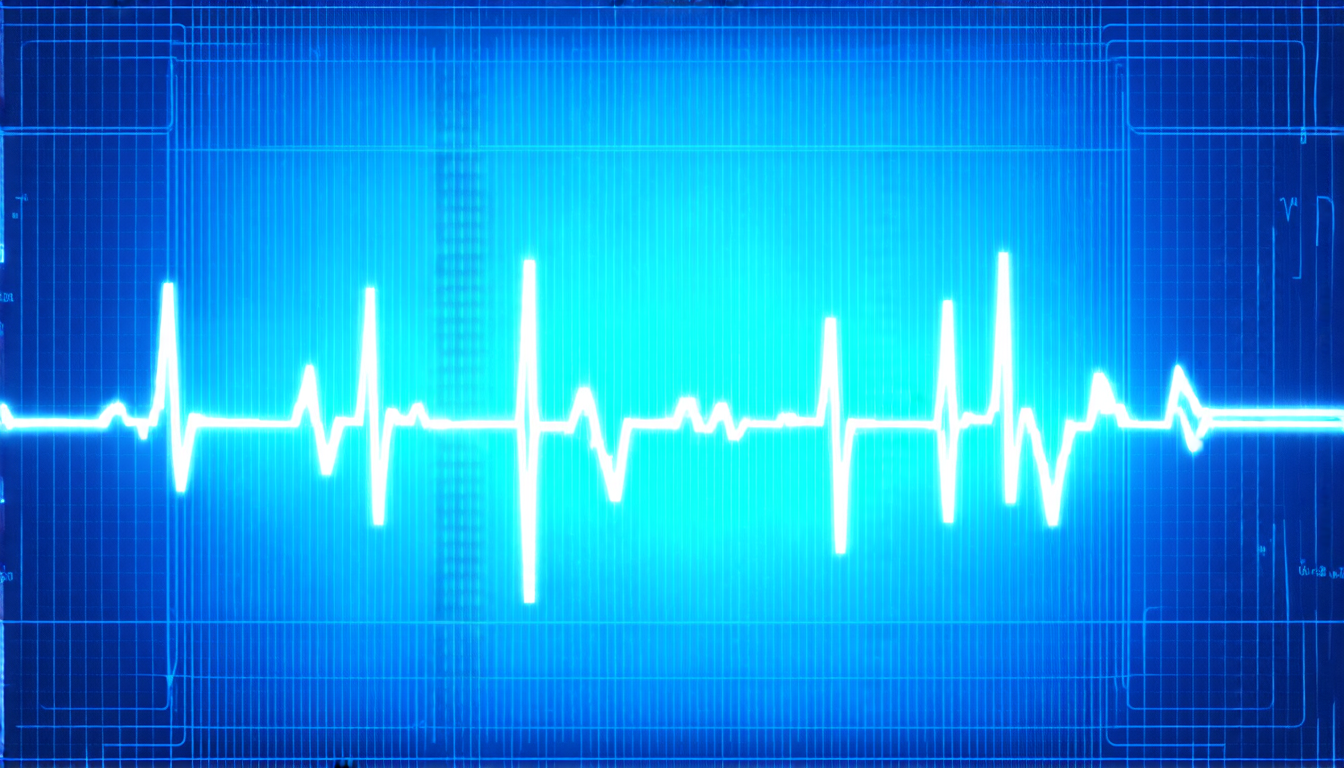
For years, doctors and researchers have been working on developing a reliable method to detect noise in electrocardiogram (ECG) signals. ECGs are used to monitor heart activity and diagnose various cardiovascular conditions. However, noisy signals can lead to misdiagnoses and incorrect treatment.
Recently, scientists have made significant progress in tackling this problem by using heart rate variability (HRV) features extracted from the ECG signal. HRV is a measure of the variation in time between consecutive beats, which is affected by various physiological and psychological factors.
The researchers developed a machine learning-based approach to classify noisy and clean segments of ECG signals based on their HRV patterns. They used four different datasets containing varying sources of ECG data and different types of noise.
The results were impressive: the models achieved an accuracy of over 90% in classifying noisy and clean segments, regardless of the ECG data source or type of noise. This means that the method is highly generalizable and can be applied to various real-world scenarios.
One of the key findings was that models trained on individual datasets performed well when tested on unseen datasets from other sources. This suggests that the approach is robust and can adapt to new data without significant retraining.
The researchers also found that combining datasets from multiple sources improved performance, particularly in detecting noise patterns that were not present in a single dataset. This highlights the importance of integrating diverse data sources to improve the accuracy of noise detection.
In addition to its potential applications in healthcare, this research has implications for real-time monitoring and AI-based cardiovascular disease prediction. By automatically identifying noisy segments, the method can help prevent misdiagnoses and ensure accurate predictions.
The study’s findings have significant implications for the development of wearable devices and mobile apps that monitor heart activity remotely. With the ability to detect noise in ECG signals, these devices could provide more accurate and reliable health monitoring services.
Overall, this research demonstrates a major step forward in developing an automated method for detecting noise in ECG signals. By leveraging machine learning and HRV features, scientists have created a highly effective approach that can improve the accuracy of heart-related diagnoses and treatments.
Cite this article: “Automated Noise Detection in ECG Signals: A Machine Learning Approach”, The Science Archive, 2025.
Ecg Signals, Noise Detection, Machine Learning, Heart Rate Variability, Cardiovascular Conditions, Misdiagnoses, Accuracy, Wearable Devices, Mobile Apps, Healthcare.





