

Thursday 27 March 2025
A team of researchers has developed a new approach to predicting traffic flow, using a combination of machine learning and graph theory. The system, called DeepStateGNN, is designed to analyze complex patterns in urban transportation networks and make accurate predictions about future traffic conditions.
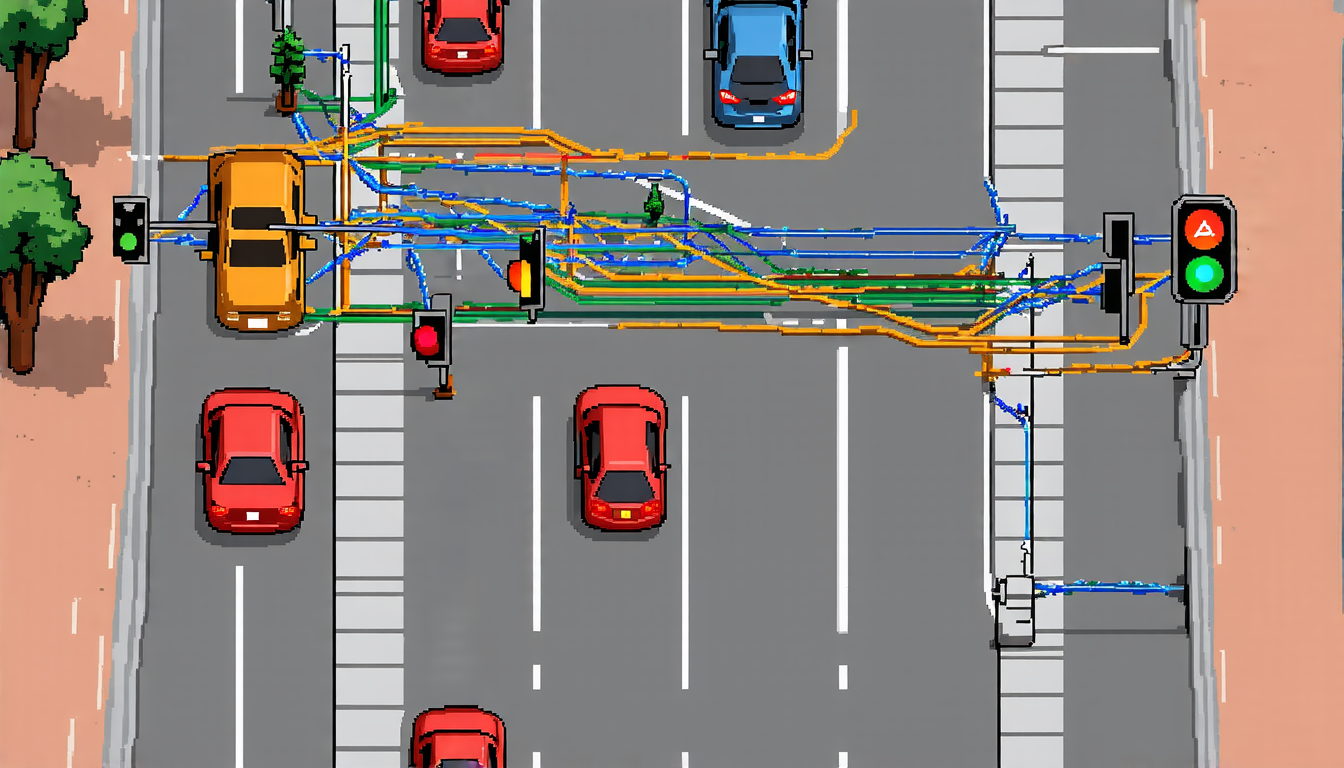
The key innovation behind DeepStateGNN is its ability to group sensors together into clusters based on their similarity in terms of spatial proximity, functional characteristics, and behavioral patterns. These clusters are then used to create a fixed-size graph that represents the underlying structure of the traffic network.
This approach allows DeepStateGNN to capture long-term dependencies and complex relationships between different parts of the network, which is essential for making accurate predictions about future traffic conditions. The system can also handle incomplete data sets, which is common in real-world applications where sensor data may be missing or unreliable.
The researchers tested their system on a large dataset of traffic flow data from the city of Los Angeles, and found that it outperformed existing methods by a significant margin. In particular, DeepStateGNN was able to accurately predict traffic speeds and volumes at different locations in the network, as well as identify patterns of traffic congestion.
One of the most promising aspects of DeepStateGNN is its potential for scalability. The system can be easily adapted to work with large datasets from other cities or regions, making it a valuable tool for urban planners and transportation officials.
The development of DeepStateGNN is part of a broader effort to improve our understanding of complex systems like traffic flow. By using machine learning and graph theory to analyze these systems, researchers hope to develop more accurate and reliable methods for predicting their behavior.
In addition to its potential applications in traffic forecasting, DeepStateGNN could also be used to study other complex systems that involve networks of interconnected components, such as social networks or power grids. The system’s ability to capture long-term dependencies and complex relationships between different parts of the network makes it a powerful tool for analyzing these types of systems.
Overall, the development of DeepStateGNN is an important step forward in our understanding of complex systems like traffic flow, and has the potential to make a significant impact on urban transportation planning.
Cite this article: “DeepStateGNN: A Machine Learning-Driven Approach to Predicting Traffic Flow”, The Science Archive, 2025.
Traffic, Prediction, Machine Learning, Graph Theory, Deepstategnn, Urban Transportation, Traffic Flow, Network Analysis, Data Clustering, Scalability





