

Friday 28 March 2025
Researchers have been working on a new approach to control systems, one that takes into account the unpredictable behavior of uncontrollable agents in complex systems. The traditional method of robust control synthesis, which assumes that these agents are adversarial and tries to anticipate their worst-case behavior, can be overly conservative and lead to suboptimal solutions.
In this new framework, the system controller is seen as a leader who commits to a plan upfront, while the uncontrollable agents respond in real-time to achieve their own objectives. The key insight here is that the leader’s actions can influence the behavior of the followers, allowing for more flexible and adaptive control strategies.
The researchers demonstrate this approach using a signal temporal logic (STL) framework, which allows them to specify complex temporal and spatial constraints on the system’s behavior. They show how this framework can be used to synthesize control sequences that ensure the satisfaction of these constraints, even in the presence of uncontrollable agents.
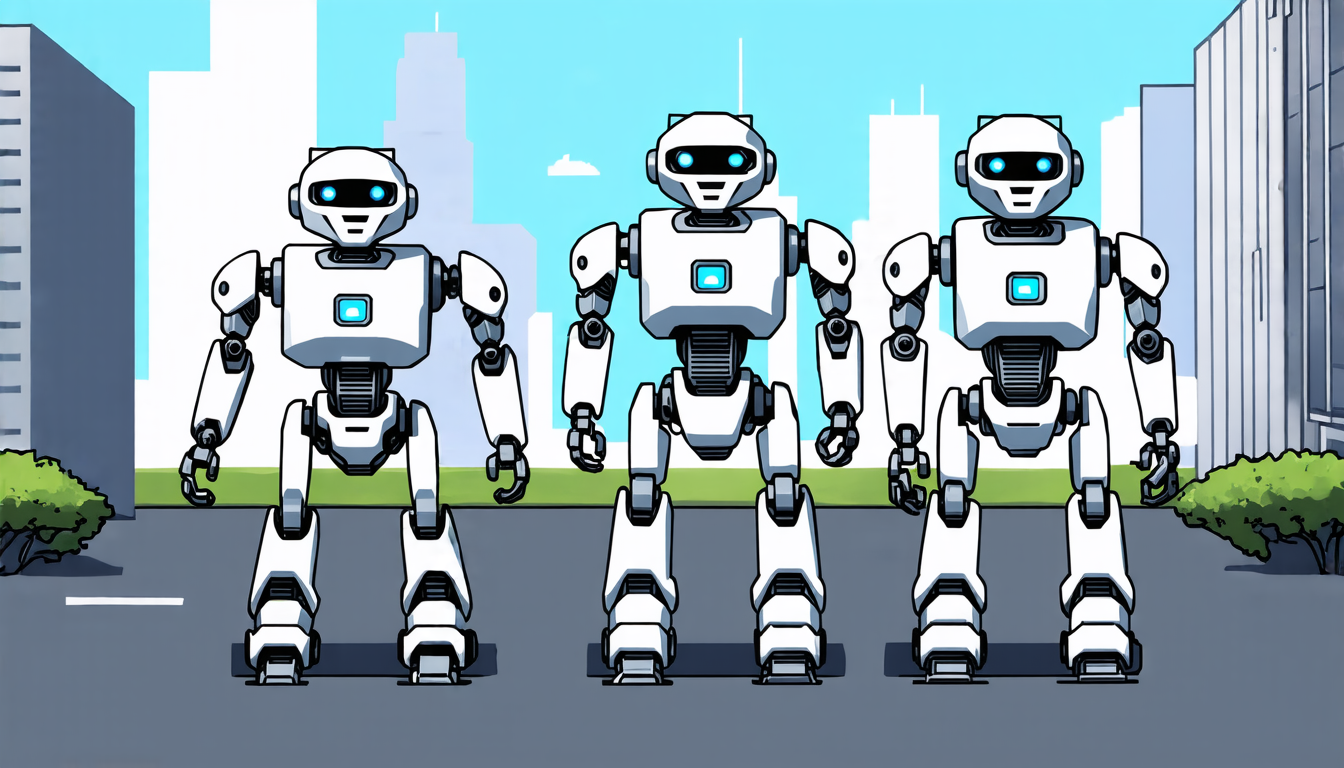
One example they give is a team of three robots working together to achieve different tasks. The leader robot commits to a plan upfront, while the follower robots adapt their actions in real-time to achieve their own objectives. By taking into account the unpredictable behavior of the followers, the leader can adjust its plan to ensure that the overall system goals are met.
This approach has several advantages over traditional robust control methods. For one, it allows for more flexible and adaptive control strategies, which can better handle unexpected events or changes in the environment. It also provides a more realistic model of complex systems, where uncontrollable agents can have their own objectives and behaviors that may not always align with those of the system controller.
However, this approach is not without its challenges. One issue is ensuring that the leader’s plan is robust enough to handle the unpredictable behavior of the followers. Another challenge is dealing with the potential conflicts between the leader’s goals and those of the followers.
Despite these challenges, the researchers believe that their approach has significant potential for real-world applications. For example, it could be used in autonomous vehicle systems, where multiple vehicles need to work together to achieve different tasks while adapting to changing road conditions and traffic patterns.
In this new framework, the system controller is seen as a leader who commits to a plan upfront, while the uncontrollable agents respond in real-time to achieve their own objectives. By taking into account the unpredictable behavior of these agents, the leader can adjust its plan to ensure that the overall system goals are met.
Cite this article: “Leader-Follower Control Framework for Complex Systems”, The Science Archive, 2025.
Control Systems, Uncontrollable Agents, Complex Systems, Robust Control Synthesis, Stl Framework, Temporal Logic, Spatial Constraints, Adaptive Control Strategies, Autonomous Vehicles, Multi-Agent Systems, Leader-Follower Architecture





