

Friday 28 March 2025
A team of researchers has developed a novel framework for generating realistic traffic accident scenarios, which could have significant implications for autonomous vehicle development and safety assessment.
The new system, called AVD2 (Accident Video Diffusion for Accident Video Description), uses a combination of computer vision and natural language processing techniques to create detailed descriptions of accidents. This information can then be used to train AI systems to recognize and respond to similar scenarios on the road.
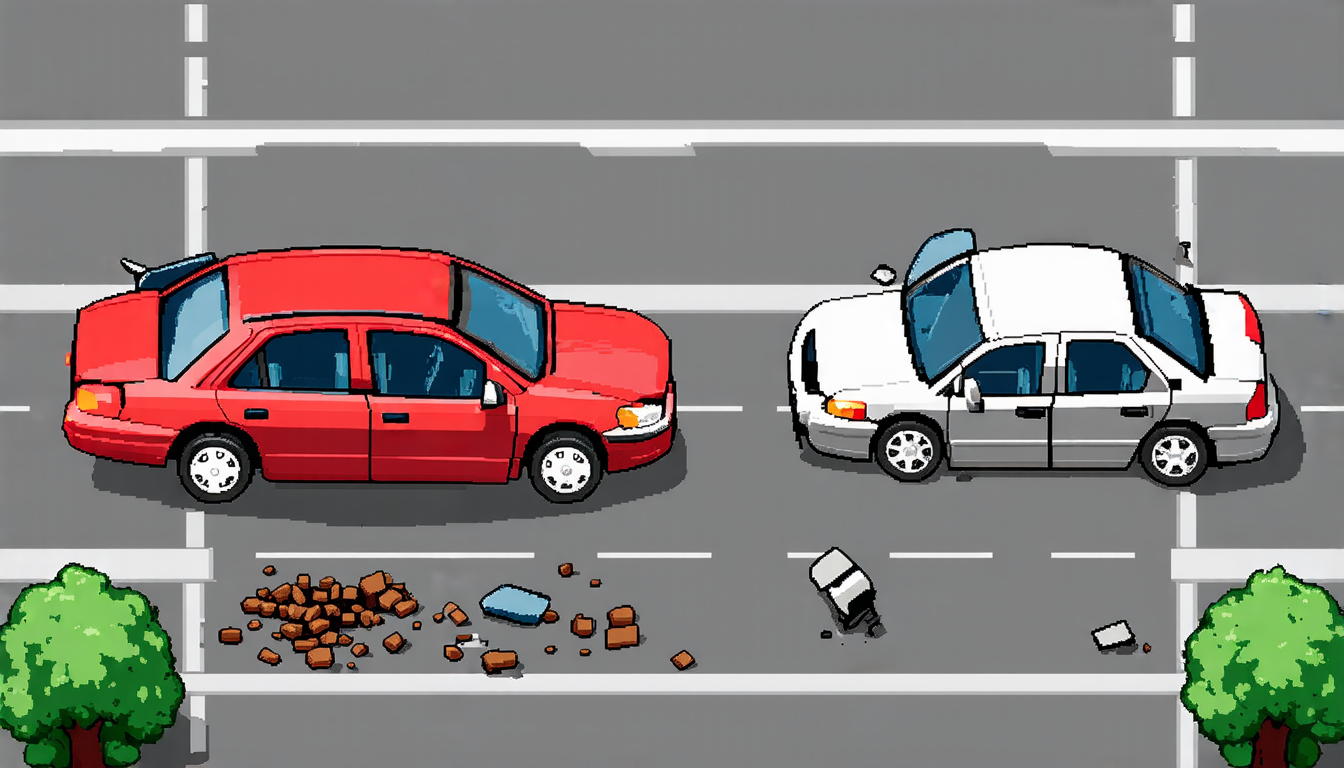
One of the key challenges in developing autonomous vehicles is creating realistic testing scenarios that can simulate the complexities of real-world driving. AVD2 addresses this issue by generating videos of accidents, along with detailed descriptions of what happened, why it happened, and what could have been done to prevent it.
The system uses a technique called diffusion-based video generation, which involves training an AI model on a large dataset of images and then using that model to generate new images. In this case, the model is trained on a dataset of accident videos, along with corresponding text descriptions.
Once the model has been trained, it can be used to generate new accident scenarios, complete with realistic video footage and detailed descriptions. This information can then be used to train autonomous vehicles to recognize and respond to similar accidents in real-time.
The potential benefits of AVD2 are significant. By using realistic accident scenarios to train autonomous vehicles, developers can ensure that their systems are better equipped to handle the complexities of real-world driving. This could help to reduce the risk of accidents and improve overall road safety.
In addition to its applications in autonomous vehicle development, AVD2 could also be used to analyze and predict traffic patterns, as well as to develop new safety features for human-driven vehicles.
The researchers behind AVD2 are currently working to refine their system and explore its potential applications. With the continued growth of autonomous vehicle technology, it’s likely that we’ll see more innovative solutions like this in the future.
Cite this article: “Generating Realistic Traffic Accident Scenarios for Autonomous Vehicle Development”, The Science Archive, 2025.
Autonomous Vehicles, Traffic Accidents, Ai Systems, Computer Vision, Natural Language Processing, Video Generation, Accident Scenarios, Road Safety, Autonomous Driving, Machine Learning.





