

Friday 28 March 2025
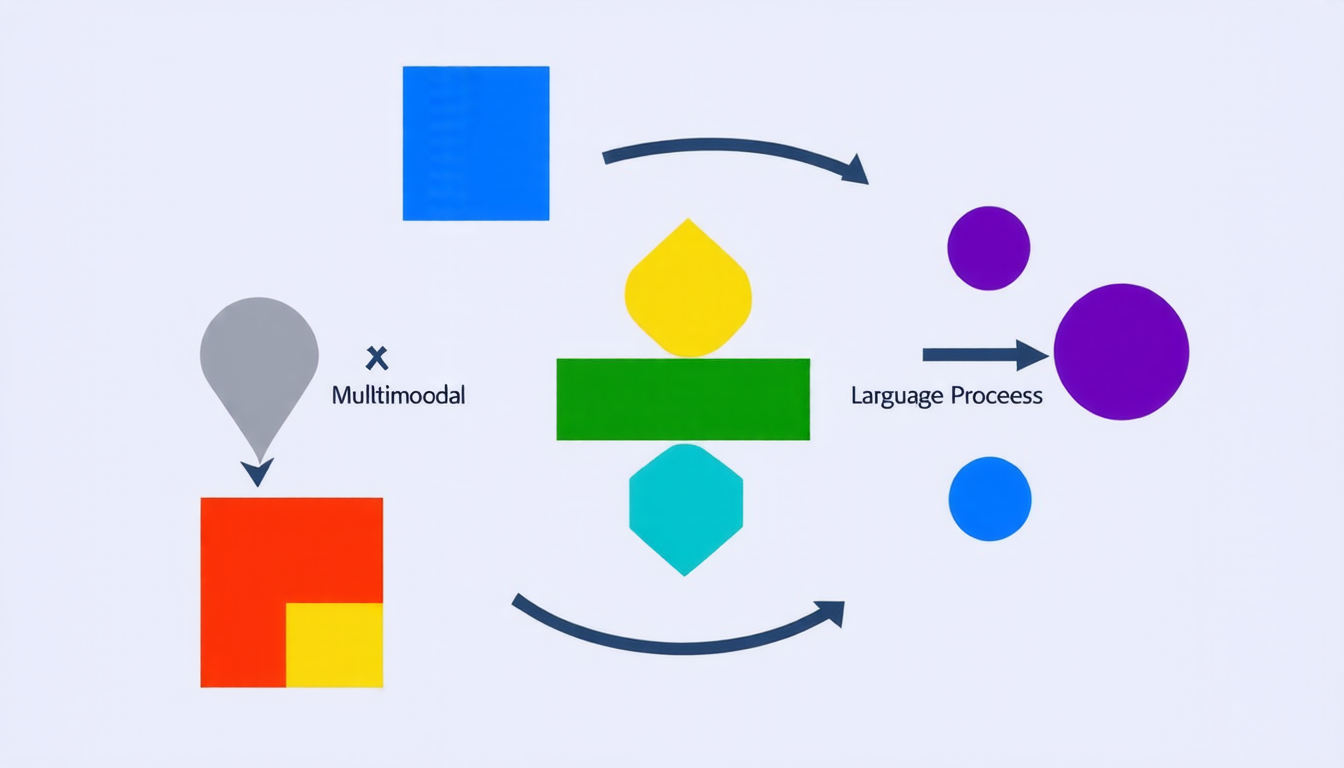
The world of artificial intelligence (AI) has made tremendous progress in recent years, and one area that’s garnered significant attention is multimodal language processing. This involves training machines to comprehend and respond to various forms of human communication, such as text, images, and charts.
Researchers have long recognized the importance of integrating multiple modalities to develop more sophisticated AI systems. However, creating a benchmark that accurately assesses the capabilities of these models has proven challenging. That’s why scientists have been working on developing a comprehensive evaluation framework, known as Chart- MRAG Bench.
Chart-MRAG Bench is designed to test the performance of AI models in various scenarios, including single-point and multi-hop question answering, text-only, chart-only, and text-chart contexts. The framework consists of 4,738 question-answer pairs across eight domains from real-world documents. These questions are carefully crafted to require complex reasoning and integration of information from different modalities.
One of the most significant contributions of Chart-MRAG Bench is its ability to evaluate multimodal language models in chart-based scenarios. Traditional benchmarks have largely focused on image-text interactions, overlooking the importance of charts, which are commonly used in real-world applications.
The framework’s developers employed a novel approach to generate high-quality evaluation samples. They created a system called CHARGE (Chart- based document question-answering Generation), which involves structured keypoint extraction, cross-modal verification, and keypoint-based generation. This architecture enables the creation of questions that assess a system’s ability to integrate and reason over multiple visual representations while maintaining document-level consistency.
In addition to evaluating multimodal language models, Chart-MRAG Bench also sheds light on the phenomenon of text-over-visual modality bias. This refers to the tendency of AI systems to favor text-based processing over visual information, even when the latter contains more precise and relevant data.
The study found that larger multimodal language models, particularly GPT-4o, demonstrate a better ability to handle multimodal information effectively, recognizing and managing information redundancy across modalities. In contrast, smaller models struggle to integrate information from different sources.
Chart-MRAG Bench has the potential to revolutionize the development of AI systems by providing a comprehensive evaluation framework that accurately assesses their capabilities in complex scenarios. By understanding the strengths and limitations of current multimodal language models, researchers can design more effective strategies for integrating visual and textual information.
Cite this article: “Charting a New Course: Chart-MRAG Bench Revolutionizes Multimodal Language Processing Evaluation”, The Science Archive, 2025.
Artificial Intelligence, Multimodal Language Processing, Chart-Mrag Bench, Machine Learning, Natural Language Processing, Visual Representation, Text-Based Processing, Modality Bias, Redundancy Management, Gpt-4O, Evaluation Framework





