

Friday 28 March 2025
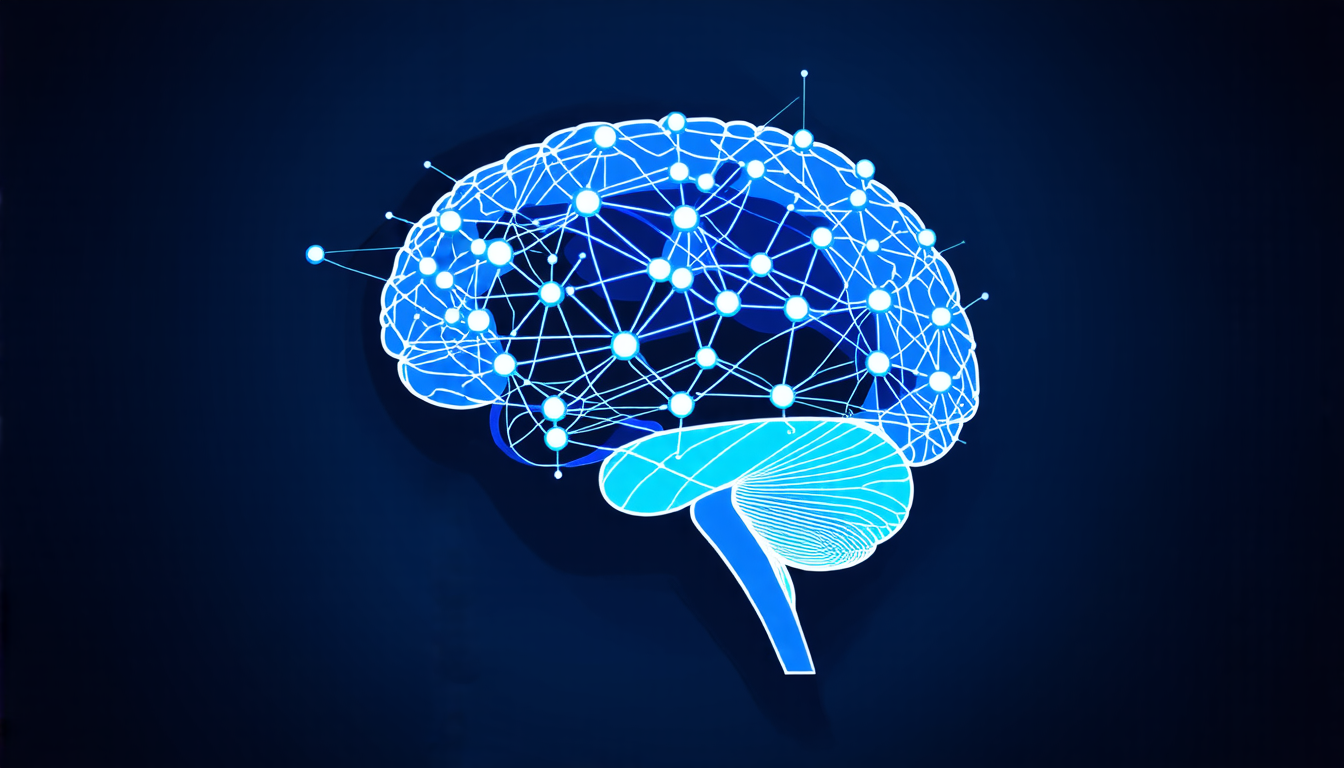
The article describes a new approach to analyzing brain activity using random matrix theory (RMT). The technique, which was developed by researchers at the University of Western Ontario, uses RMT to identify patterns in brain signals and detect correlations between different regions of the brain.
To understand how this works, it’s helpful to know a bit about RMT. Random matrix theory is a branch of mathematics that deals with matrices – essentially tables of numbers – where some or all of the entries are random variables. In the context of brain activity, these matrices represent the patterns of electrical signals that occur in different regions of the brain.
The researchers used RMT to analyze data from functional magnetic resonance imaging (fMRI) scans, which are commonly used to study brain function. The fMRI scanner measures changes in blood flow in different parts of the brain, which is thought to reflect activity in those areas. By analyzing these patterns of blood flow, the researchers were able to identify correlations between different regions of the brain.
The approach has several advantages over traditional methods of analyzing brain activity. For one thing, it’s more robust – that is, it can detect correlations even when there’s a lot of noise or random variation in the data. It also allows researchers to analyze large amounts of data quickly and efficiently, which can be important for identifying patterns that might not be apparent with smaller datasets.
The researchers tested their approach on a dataset from 100 subjects who were given an fMRI scan while performing different tasks. They found that RMT was able to identify correlations between different regions of the brain that were consistent across all of the subjects, even when there was a lot of noise in the data. This suggests that these correlations may be a fundamental feature of brain function.
The approach also has potential applications beyond just analyzing brain activity. For example, it could be used to analyze other types of complex systems – such as financial markets or social networks – where identifying patterns and correlations is important for understanding how they work.
Overall, this new approach using RMT shows promise for advancing our understanding of brain function and potentially even treating neurological disorders. By providing a powerful tool for analyzing brain activity, it could help researchers uncover new insights into the workings of the human mind.
Cite this article: “Unlocking the Secrets of Brain Function: A New Approach Using Random Matrix Theory”, The Science Archive, 2025.
Brain Activity, Random Matrix Theory, Fmri Scans, Brain Function, Correlations, Noise, Robustness, Data Analysis, Complex Systems, Neurological Disorders





