

Friday 28 March 2025
The quest for a more accessible world has taken a significant step forward, as researchers have developed advanced language models capable of generating detailed descriptions of indoor and outdoor environments. This innovative technology has the potential to revolutionize the way blind and low-vision individuals navigate their surroundings.
The new models, dubbed ImgTxtREW-S and TxtBLIP-S, use artificial intelligence to analyze visual data and generate natural language descriptions that are both accurate and actionable. These descriptions can be used in a variety of applications, from virtual assistants that provide real-time guidance to mobile devices that offer turn-by-turn directions.
One of the key challenges in developing these models was ensuring that they were able to accurately identify and describe complex environments. To achieve this, researchers trained their models on vast datasets of images and text descriptions, allowing them to learn patterns and relationships between visual features and linguistic concepts.
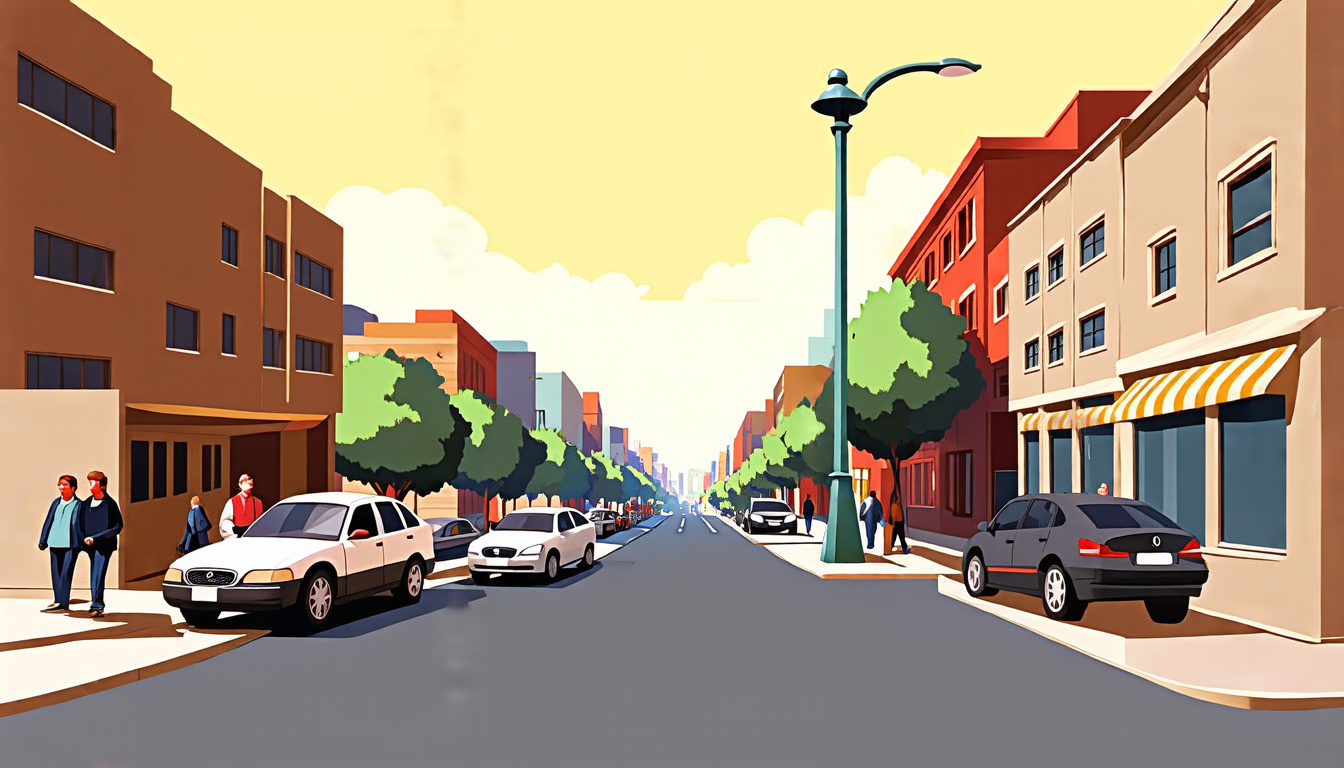
The resulting models are capable of producing remarkably detailed descriptions, taking into account factors such as spatial layout, object recognition, and even subtle visual cues like texture and color. For example, a model might describe a street scene by noting the location of parked cars, streetlights, and pedestrians, as well as the type of buildings and road markings.
The potential benefits of this technology are numerous. Blind and low-vision individuals could use these models to navigate their surroundings with greater ease and confidence, reducing reliance on assistance from others and increasing independence. Additionally, the models could be integrated into virtual reality environments, allowing users to explore complex spaces in a more immersive and interactive way.
The researchers behind this development have already tested their models with blind and low-vision individuals, who have reported high levels of satisfaction with the accuracy and usefulness of the descriptions generated. Further refinement of these models will likely involve fine-tuning their performance on specific tasks and environments, as well as exploring new applications for this technology.
As our understanding of artificial intelligence continues to evolve, it is clear that this technology has the potential to make a significant impact on the lives of individuals with visual impairments. By providing more accurate and actionable descriptions of the world around us, these models could help to increase accessibility and independence for millions of people worldwide.
Cite this article: “Advancing Accessibility: AI-Powered Descriptions for Blind and Low-Vision Individuals”, The Science Archive, 2025.
Artificial Intelligence, Language Models, Blindness, Low-Vision, Accessibility, Navigation, Virtual Assistants, Mobile Devices, Text Descriptions, Visual Data





