
Friday 28 March 2025
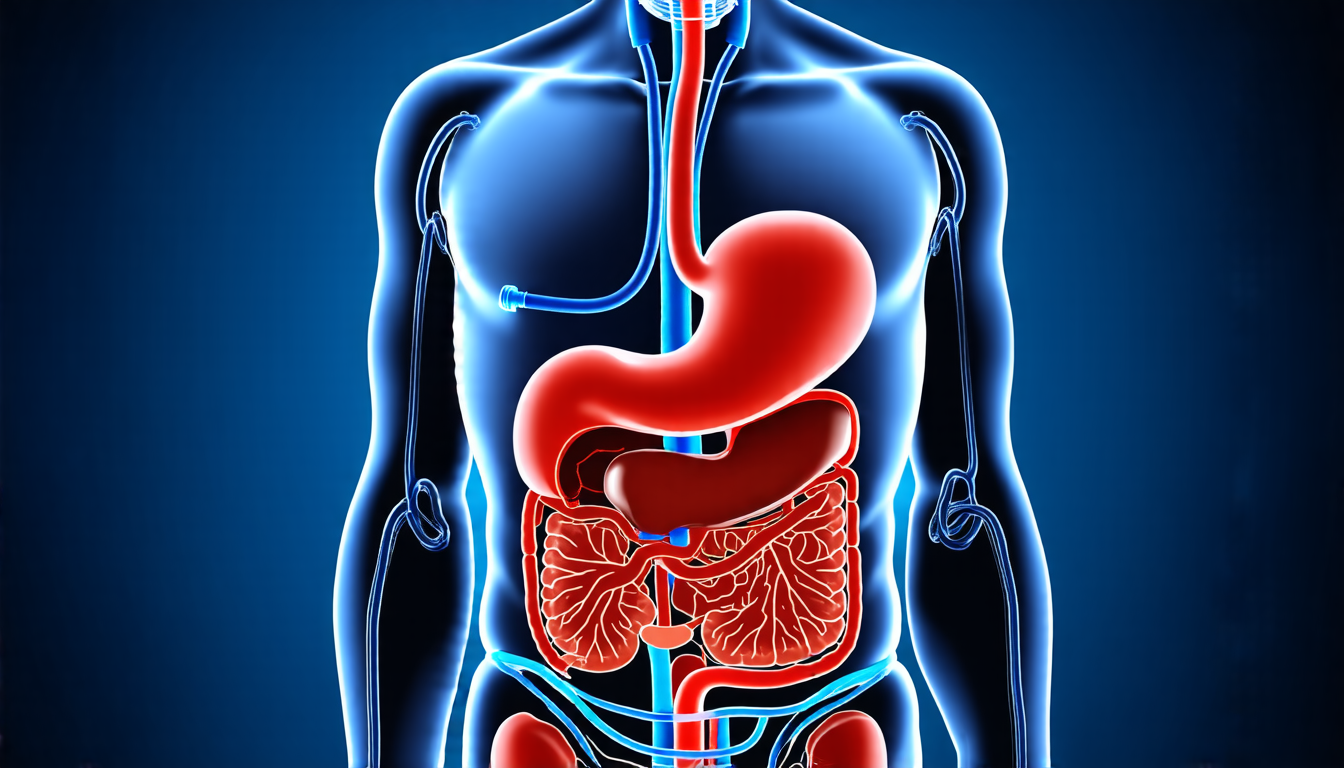
A novel ultrasound nasogastric tube (UNGT) dataset has been developed to address the lack of public datasets for medical image analysis. The UNGT dataset includes 493 images gathered from 110 patients, with an average image resolution of approximately 879 x 583 pixels. Four structures are precisely annotated: the liver, stomach, tube, and pancreas.
The development of this dataset is significant because it allows researchers to train and test medical image analysis algorithms using a standardized and large-scale dataset. This will enable the creation of more accurate models that can be used in clinical settings. The dataset also includes images with varying levels of noise and artifacts, which mimics real-world scenarios where medical images may be degraded.
The UNGT dataset uses a semi-supervised adaptive-weighting aggregation medical segmenter (AAMS) to address data limitation and imbalance concurrently. This approach tackles the severe unbalanced challenge by regulating the loss across varying categories as training proceeds. The presented multiscale attention aggregation block bolsters feature representation by integrating local and global contextual information.
The AAMS model is tested on the UNGT dataset, outperforming existing state-of-the-art approaches to varying extents. It achieves a mean intersection over union (IoU) score of 0.83, indicating high accuracy in segmenting the four annotated structures.
The development of this dataset and algorithm has significant implications for medical image analysis. The UNGT dataset can be used to train models that can accurately detect and segment nasogastric tubes in images, which is crucial for patient safety. The AAMS model can also be adapted to other medical imaging applications where data imbalance is a major challenge.
Furthermore, the use of semi-supervised learning approaches like AAMS has the potential to improve the accuracy of medical image analysis models by leveraging both labeled and unlabeled data. This approach can be particularly useful in scenarios where large amounts of labeled data are not available or are difficult to obtain.
The development of this dataset and algorithm highlights the importance of standardized datasets for medical image analysis. Standardized datasets enable researchers to train and test algorithms using a common framework, which facilitates comparison and improvement of models. The UNGT dataset is an important step towards creating more accurate and reliable medical image analysis models that can be used in clinical settings.
The use of advanced computer vision techniques like attention mechanisms and adaptive weighting also highlights the potential for machine learning to improve medical imaging applications.
Cite this article: “Standardizing Medical Imaging: A Novel Ultrasound Nasogastric Tube Dataset and Semi-Supervised Algorithm”, The Science Archive, 2025.
Medical Image Analysis, Ultrasound Nasogastric Tubes, Computer Vision, Attention Mechanisms, Adaptive Weighting, Semi-Supervised Learning, Dataset Development, Image Segmentation, Machine Learning, Clinical Applications