

Friday 28 March 2025
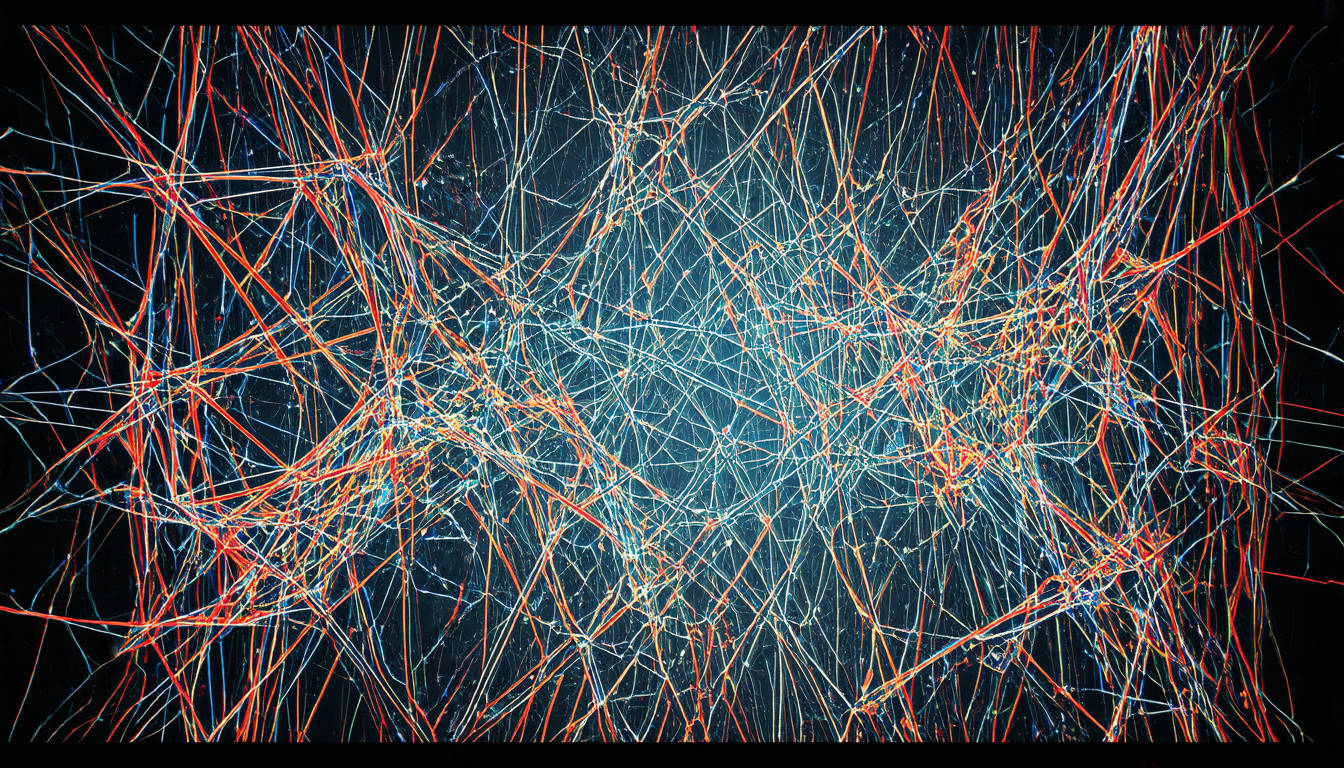
The intricate dance of Oxtoby systems, where seemingly random patterns unfold like a choreographed ballet. These complex structures have long fascinated mathematicians and physicists alike, but only recently has progress been made in understanding their behavior.
At the heart of this mystery lies the concept of conjugacy, which describes how two Oxtoby systems can be transformed into each other while preserving their essential properties. For decades, researchers struggled to determine whether this relationship was hyperfinite – meaning it could be broken down into a finite number of basic building blocks – or not.
Enter Konrad Deka and Bo Peng, who have made significant strides in solving this problem. By analyzing the behavior of Oxtoby systems with respect to a specific mathematical structure called a Toeplitz sequence, they’ve demonstrated that the conjugacy relation is indeed hyperfinite.
This breakthrough has far-reaching implications for our understanding of chaos theory, dynamical systems, and even the fundamental laws of physics. Think of it like this: just as a piano can be broken down into individual notes and chords, an Oxtoby system can now be understood as a collection of basic components that govern its behavior.
The key to their discovery lies in the concept of generalized Oxtoby subshifts – a class of mathematical objects that exhibit unique properties. By studying these subshifts, Deka and Peng were able to identify patterns and relationships that had previously gone unnoticed.
Their work builds upon decades of research by pioneers like John Oxtoby and others, who first introduced the concept of Toeplitz sequences in the 1950s. Since then, mathematicians have been working to understand how these sequences interact with other mathematical structures, such as groups and algebras.
The implications of this discovery are still being explored, but it’s clear that Deka and Peng’s work has opened up new avenues for research. By shedding light on the intricate dance of Oxtoby systems, they’ve taken us one step closer to unraveling the mysteries of chaos theory and dynamical systems.
In the world of mathematics, progress often comes in small, incremental steps. But sometimes, those steps can have far-reaching consequences that transform our understanding of the universe. Deka and Peng’s work is a prime example of this – a testament to the power of human curiosity and the beauty of mathematical discovery.
Cite this article: “Cracking the Code of Oxtoby Systems”, The Science Archive, 2025.
Oxtoby Systems, Conjugacy, Hyperfinite, Toeplitz Sequences, Chaos Theory, Dynamical Systems, Mathematical Structures, Groups, Algebras, Generalized Oxtoby Subshifts
Reference: Konrad Deka, Bo Peng, “Generalized Oxtoby subshifts and hyperfiniteness” (2025).





