
Friday 28 March 2025
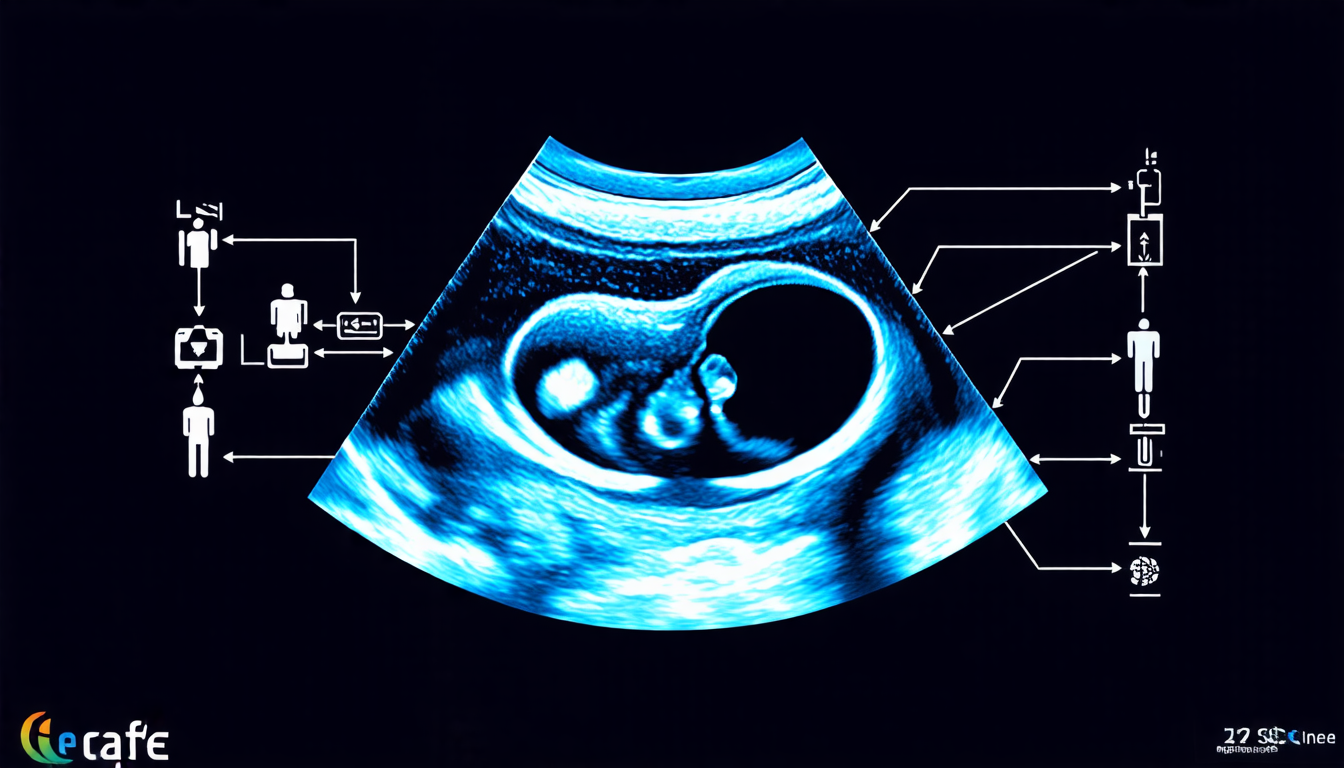
Ultrasound technology has revolutionized medical imaging, allowing doctors to visualize internal organs and tissues without the need for invasive procedures. But despite its widespread adoption, ultrasound still faces some significant challenges – namely, the need for skilled operators and the limited accuracy of image quality.
That’s why researchers have been exploring new ways to improve ultrasound technology using artificial intelligence (AI) and machine learning algorithms. One approach is called reinforcement learning, which involves training computers to make decisions by interacting with their environment and receiving rewards or penalties based on their performance.
In recent years, scientists have made significant progress in applying reinforcement learning to ultrasound imaging. By leveraging the power of AI, researchers have been able to develop systems that can automatically adjust probe positions, optimize image quality, and even diagnose diseases more accurately than human operators.
One of the most promising applications of reinforcement learning in ultrasound is in the area of navigation guidance. Currently, doctors must manually position ultrasound probes to capture high-quality images, which can be time-consuming and requires a great deal of skill. By using reinforcement learning algorithms, researchers have been able to develop systems that can automatically guide the probe to optimal positions, reducing imaging times and improving image quality.
Another area where reinforcement learning has shown promise is in the enhancement of ultrasound images. Traditional ultrasound technology often produces low-contrast or noisy images, which can make it difficult for doctors to diagnose diseases accurately. By applying reinforcement learning algorithms to enhance these images, researchers have been able to improve contrast and reduce noise, making it easier for doctors to identify abnormalities.
Reinforcement learning has also shown potential in the area of image segmentation – the process of identifying specific structures or features within an ultrasound image. This is a critical step in diagnosing diseases, as it allows doctors to focus on specific areas of concern. By using reinforcement learning algorithms, researchers have been able to develop systems that can automatically segment images with high accuracy, freeing up doctors to focus on more complex tasks.
Despite these advances, there are still significant challenges to overcome before reinforcement learning becomes a standard tool in ultrasound imaging. One major hurdle is the need for large amounts of high-quality training data – something that is often lacking in medical imaging applications. Additionally, there may be concerns about the accuracy and reliability of AI-driven ultrasound systems, particularly when it comes to diagnosing diseases.
However, researchers are making rapid progress in addressing these challenges.
Cite this article: “Advancing Ultrasound Technology with Artificial Intelligence and Machine Learning”, The Science Archive, 2025.
Ultrasound, Artificial Intelligence, Machine Learning, Reinforcement Learning, Medical Imaging, Image Quality, Navigation Guidance, Image Enhancement, Image Segmentation, Disease Diagnosis