

Friday 28 March 2025
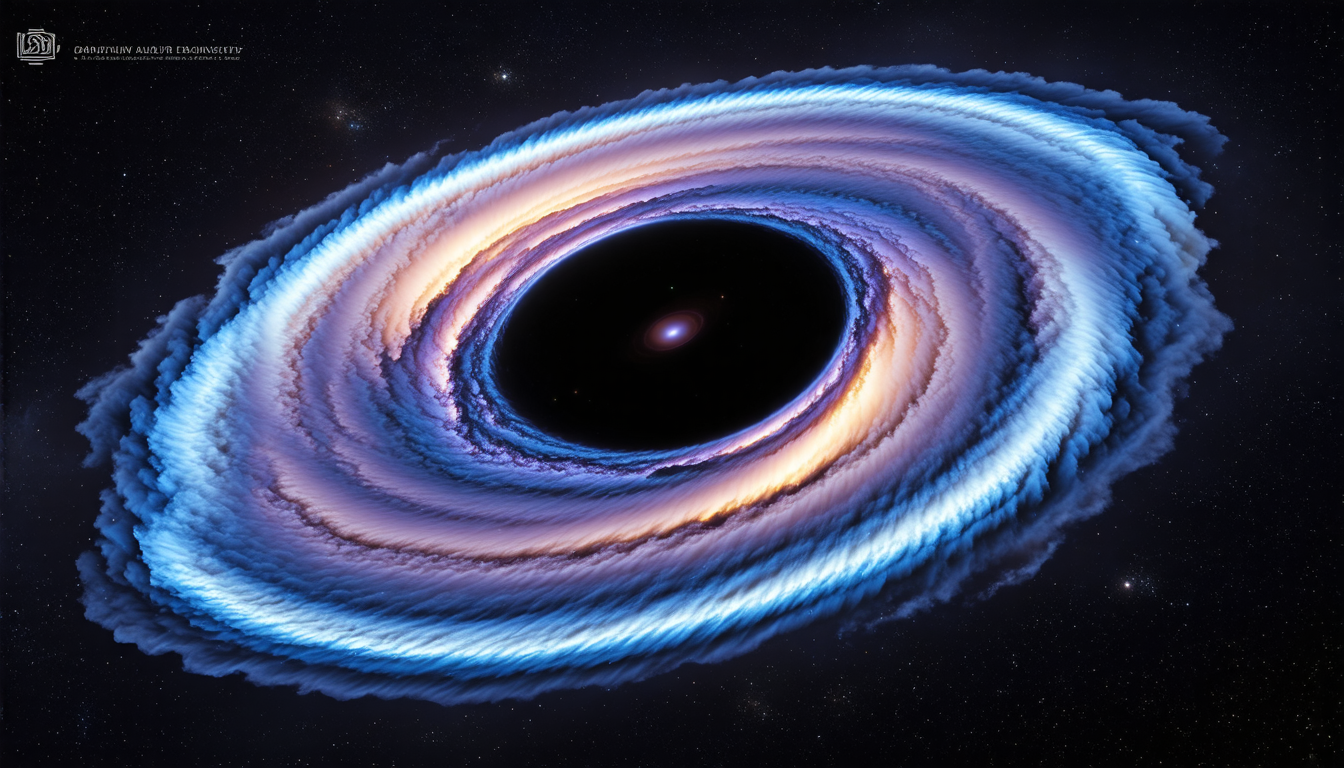
A team of scientists has developed a new method for simulating the behavior of supermassive black holes at the centers of galaxies, allowing them to better understand how these massive objects affect their surroundings.
Supermassive black holes are incredibly dense regions of space that can have masses millions or even billions of times that of our sun. They are found at the centers of many galaxies and play a crucial role in shaping the evolution of those galaxies. Despite their importance, however, scientists still know relatively little about how supermassive black holes work.
One major challenge in studying supermassive black holes is simulating their behavior over long periods of time. This is because the processes involved are highly complex and depend on many factors, including the mass of the black hole, the density of surrounding matter, and the strength of magnetic fields.
The new method developed by the team uses a combination of numerical simulations and physical models to study the behavior of supermassive black holes. The approach involves using powerful computers to simulate the behavior of the black hole over long periods of time, taking into account factors such as the density of surrounding matter and the strength of magnetic fields.
The researchers found that their new method allowed them to accurately model the behavior of supermassive black holes in a way that was not previously possible. This is important because it will allow scientists to better understand how these massive objects affect their surroundings, which can have a significant impact on our understanding of galaxy evolution.
In addition to improving our understanding of supermassive black holes, the new method could also be used to study other complex astrophysical phenomena, such as supernovae explosions and the formation of stars. This is because many of these phenomena involve complex interactions between matter and energy that are difficult to simulate using traditional methods.
Overall, the development of this new method represents an important step forward in our understanding of supermassive black holes and their role in shaping the evolution of galaxies. It also highlights the importance of continued investment in scientific research and computing power, which is essential for making progress in many areas of astrophysics.
Cite this article: “Simulating Supermassive Black Holes: A New Approach to Understanding Galaxy Evolution”, The Science Archive, 2025.
Supermassive Black Holes, Galaxy Evolution, Numerical Simulations, Physical Models, Magnetic Fields, Matter Density, Astrophysical Phenomena, Supernovae Explosions, Star Formation, Scientific Research





