

Friday 28 March 2025
A recent study has shed new light on the mysterious phenomenon of coronal line emitters, a type of galaxy that has long puzzled astronomers. By examining the properties of these galaxies, scientists have made significant strides in understanding the complex relationships between black holes and their surroundings.
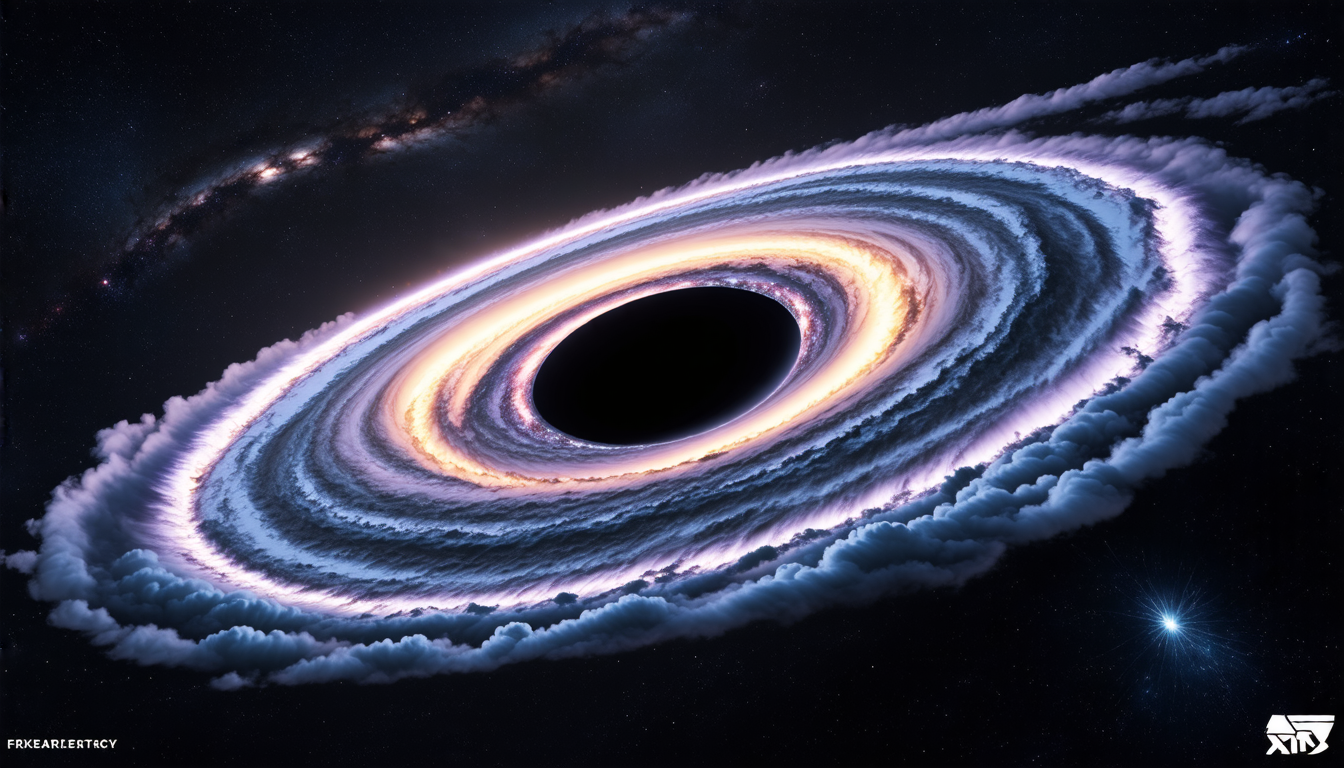
Coronal line emitters are a unique class of active galactic nuclei (AGN), which are incredibly luminous objects at the hearts of many galaxies. These AGN are powered by supermassive black holes that feed on surrounding gas and dust, heating it up to incredible temperatures and causing it to emit intense radiation. But coronal line emitters stand out from other AGN because they produce a distinctive type of light, known as coronal lines, which are thought to be produced when extremely hot gas is ionized by the strong radiation fields near the black hole.
By analyzing data from a large sample of galaxies, scientists have discovered that coronal line emitters are often found in galaxies with particularly high levels of star formation activity. This suggests that the intense radiation and powerful outflows emanating from these AGN may be playing a key role in regulating the growth and evolution of their host galaxies.
One of the most striking findings of the study is the strong correlation between the luminosity of the coronal lines and the mass of the supermassive black hole at the galaxy’s center. This implies that the strength of the radiation field near the black hole is directly linked to the size of the black hole itself, which in turn may influence the rate at which gas and dust are fed into the AGN.
The study also found that coronal line emitters tend to be more common in galaxies with lower metallicities, or levels of heavy elements such as iron and oxygen. This could be due to the fact that these galaxies have undergone fewer episodes of star formation, allowing their gas to remain cleaner and more pristine.
The results of this study have significant implications for our understanding of the complex relationships between black holes and their surroundings. By studying coronal line emitters, scientists may gain valuable insights into how supermassive black holes influence the growth and evolution of galaxies over billions of years.
This research also highlights the importance of continued observations and analysis of these enigmatic objects. As new telescopes and instruments come online, scientists will be able to probe deeper into the properties of coronal line emitters and uncover even more secrets about these mysterious galaxies.
Cite this article: “Unveiling the Secrets of Coronal Line Emitters: A New Understanding of Black Hole-Galaxy Relationships”, The Science Archive, 2025.
Galaxies, Black Holes, Active Galactic Nuclei, Coronal Lines, Radiation Fields, Star Formation, Luminosity, Supermassive Black Holes, Metallicities, Agn





