

Friday 28 March 2025
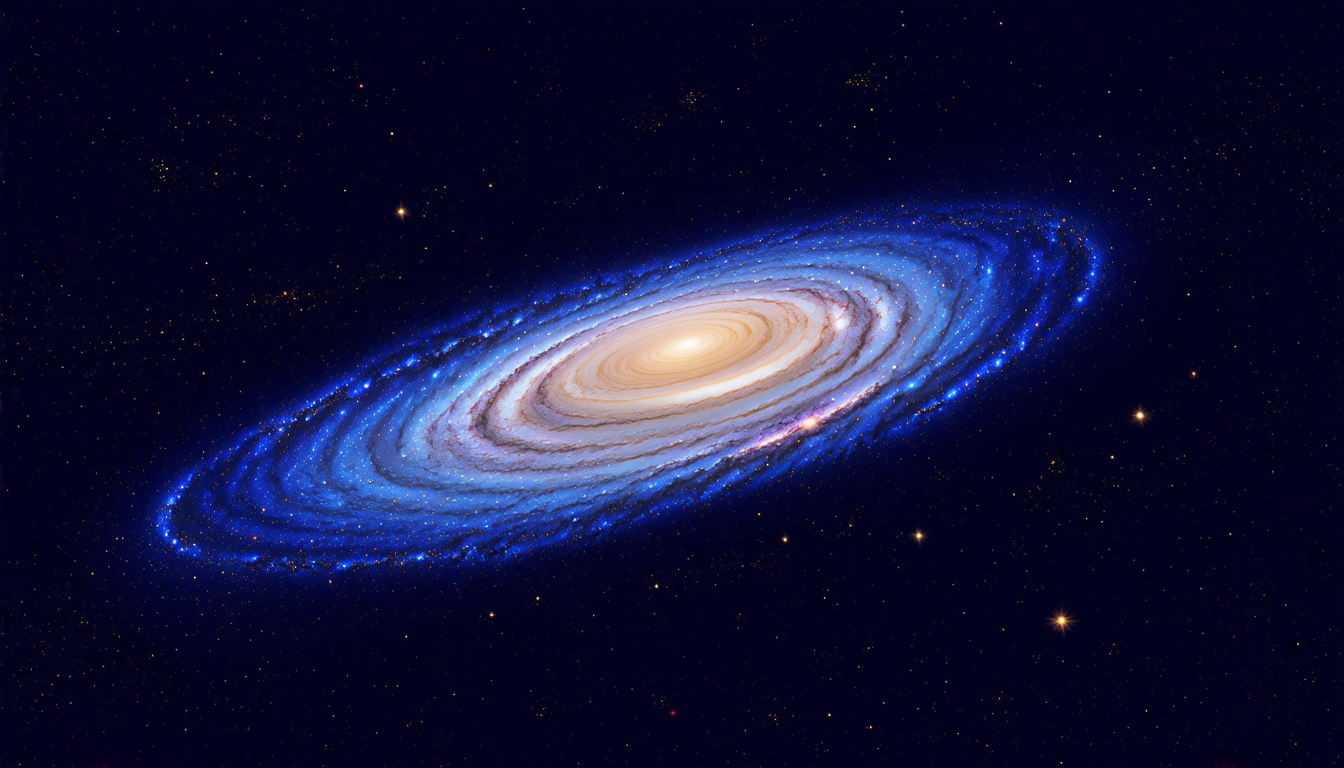
A team of astronomers has made a significant discovery in their quest to understand the Milky Way galaxy, uncovering nine new open clusters that offer valuable insights into the formation and evolution of our cosmic neighborhood.
Open clusters are groups of stars that formed at the same time from the same material. By studying these clusters, scientists can gain a better understanding of how galaxies like the Milky Way came to be. The newly discovered clusters provide a unique opportunity for researchers to analyze the properties of stars in different parts of the galaxy and shed light on the processes that shape their evolution.
The research team used data from the VISTA Variables in the Via Láctea (VVVX) survey, which captured images of the Milky Way’s disk over several years. They also employed Gaia spacecraft data, which provided precise measurements of star distances and motions. By combining these datasets, the scientists were able to identify nine new open clusters, each consisting of tens of thousands of stars.
One of the most exciting aspects of this discovery is the variety of properties exhibited by the newly found clusters. Some are relatively young, with ages measured in hundreds of millions of years, while others are much older, dating back billions of years. The team also observed differences in metallicity, or the abundance of elements heavier than hydrogen and helium, between the clusters.
The researchers used sophisticated computer simulations to model the evolution of the stars within each cluster. By comparing these models with observations, they were able to determine the age, distance, and chemical composition of each cluster. This information will help scientists better understand how galaxies like the Milky Way formed and evolved over billions of years.
The discovery of these nine new open clusters also provides a valuable opportunity for astronomers to study the properties of stars in different parts of the galaxy. By analyzing the light emitted by individual stars within the clusters, researchers can gain insights into their composition, temperature, and motion. This information will help scientists develop a more comprehensive understanding of how stars form and evolve.
The findings from this research have far-reaching implications for our understanding of the Milky Way galaxy. The discovery of new open clusters expands our knowledge of the galaxy’s structure and evolution, providing valuable clues about its formation and development over billions of years. As researchers continue to study these newly found clusters, they will likely uncover even more secrets about our cosmic neighborhood.
The next step is to further analyze the properties of each cluster using a range of astronomical techniques.
Cite this article: “Nine New Open Clusters Revealed in Milky Way Galaxy”, The Science Archive, 2025.
Astronomy, Galaxy, Milky Way, Open Clusters, Stars, Formation, Evolution, Vista, Gaia, Spacecraft, Simulation





