

Friday 28 March 2025
A team of researchers has made a significant breakthrough in the field of data analysis, introducing a new method that can better capture the underlying structure of complex data sets. The approach, known as Curvature Corrected Nonnegative Manifold Data Factorization (CC- NMDF), is designed to improve the accuracy and interpretability of results by taking into account the curvature of the data.
In traditional data factorization methods, such as nonnegative matrix factorization (NMF), data points are represented as vectors in a high-dimensional space. However, these methods can be limited when dealing with complex data sets that have inherent geometric structure, such as those found in computer vision or machine learning applications.
CC-NMDF addresses this limitation by modeling the data as points on a manifold, which is a curved surface that generalizes the concept of a flat Euclidean space. By incorporating the curvature of the manifold into the factorization process, CC-NMDF can better capture the underlying relationships between the data points and improve the accuracy of the results.
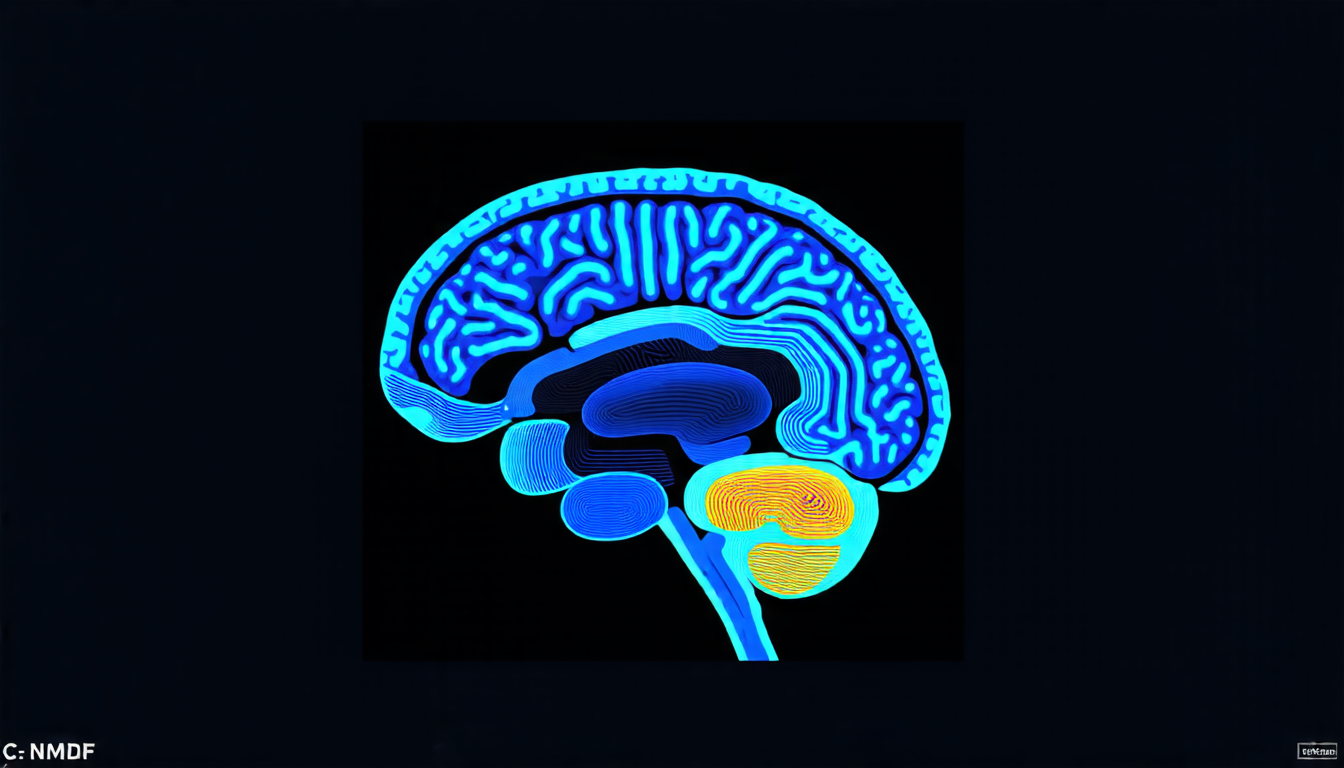
The researchers tested their method using a range of datasets, including diffusion tensor magnetic resonance imaging (DTI) scans of the human brain. In these experiments, they found that CC-NMDF outperformed traditional NMF methods in terms of both accuracy and interpretability.
One of the key advantages of CC-NMDF is its ability to produce factors that are more meaningful and interpretable than those produced by traditional methods. This is because the curvature correction process allows the algorithm to capture subtle patterns and relationships in the data that may not be apparent from a flat Euclidean perspective.
For example, in the DTI scans, CC-NMDF was able to identify specific regions of the brain that were associated with different cognitive processes, such as attention or memory. These results have important implications for our understanding of brain function and could potentially be used to develop new diagnostic tools for neurological disorders.
The researchers also found that CC-NMDF was more robust than traditional methods in the presence of noise or missing data, which is a common problem in many real-world applications.
Overall, the introduction of CC-NMDF represents an important step forward in the field of data analysis and has the potential to revolutionize our ability to understand complex systems. By incorporating the curvature of manifolds into the factorization process, this method offers a powerful new tool for researchers and practitioners working with high-dimensional data sets.
Cite this article: “Breakthrough in Data Analysis: Introducing Curvature Corrected Nonnegative Manifold Data Factorization”, The Science Archive, 2025.
Data Analysis, Manifold Learning, Nonnegative Matrix Factorization, Curvature Correction, Dti Scans, Brain Function, Cognitive Processes, Data Robustness, High-Dimensional Data, Machine Learning.





