

Friday 28 March 2025
Physicists have long sought to understand the fundamental laws that govern the behavior of matter and energy in the universe. In recent years, researchers have been exploring a particular area of physics known as modified gravity, which seeks to explain phenomena such as dark matter and dark energy by tweaking our understanding of gravity itself.
One approach to modified gravity is the f(R,T) theory, which proposes that the curvature of spacetime (R) and the stress-energy tensor (T) are not separate entities, but rather intertwined components of a single entity. This idea has been shown to have some promising implications for our understanding of the universe, particularly in relation to the behavior of dark matter and dark energy.
In a new study, researchers have taken this approach one step further by exploring the properties of anisotropic stars within the f(R,T) framework. Anisotropic stars are those that exhibit different physical properties in different directions, such as density or pressure. By studying these objects within the context of modified gravity, scientists hope to gain a deeper understanding of how matter and energy interact at the most fundamental level.
The researchers used a mathematical technique known as the gravitational decoupling approach to derive a set of equations that describe the behavior of anisotropic stars in the f(R,T) theory. They then applied these equations to a range of different scenarios, including those involving varying densities and pressures within the star.
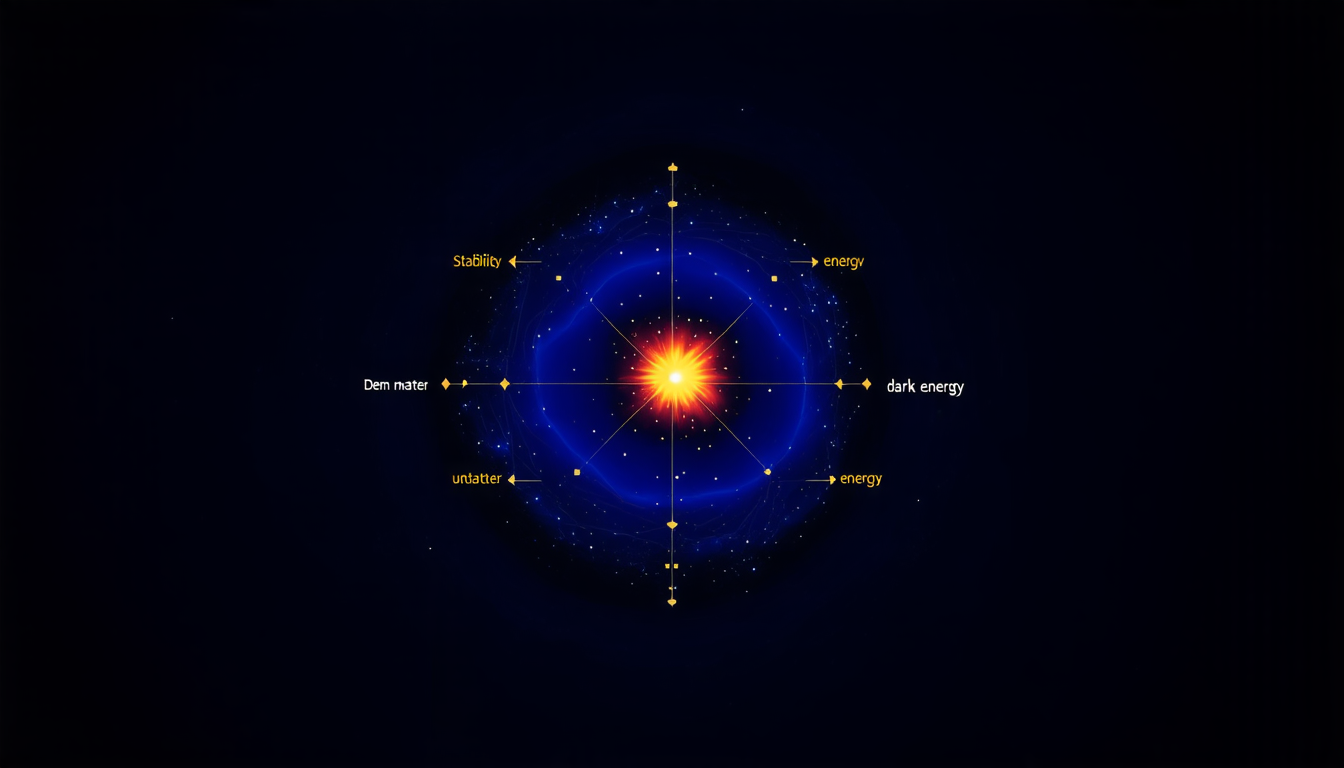
Their findings suggest that the properties of anisotropic stars can be significantly affected by the presence of dark matter and dark energy. In particular, they found that the density and pressure profiles of these objects are influenced by the gravitational interactions between normal matter and dark matter. This has significant implications for our understanding of how these objects form and evolve over time.
The researchers also explored the stability of their anisotropic star solutions under a range of different conditions. They found that some of these solutions were stable, while others exhibited instabilities that could potentially lead to the collapse or fragmentation of the star. This has important implications for our understanding of how stars behave in extreme environments, such as those encountered during the late stages of stellar evolution.
The study provides new insights into the properties and behavior of anisotropic stars within the f(R,T) theory, and highlights the potential benefits of modified gravity approaches to understanding complex phenomena in astrophysics.
Cite this article: “Modified Gravity Reveals New Insights into Anisotropic Star Behavior”, The Science Archive, 2025.
Modified Gravity, F(R,T) Theory, Dark Matter, Dark Energy, Anisotropic Stars, Gravitational Decoupling, Astrophysics, Stellar Evolution, Density Profiles, Pressure Profiles





