

Friday 28 March 2025
The drone delivery problem is a complex puzzle that has been vexing researchers for years. At its core, it’s a question of how to efficiently deliver packages using drones, which are limited in their speed and range. A new paper delves into the intricacies of this challenge, exploring the boundaries of what’s possible with current technology.
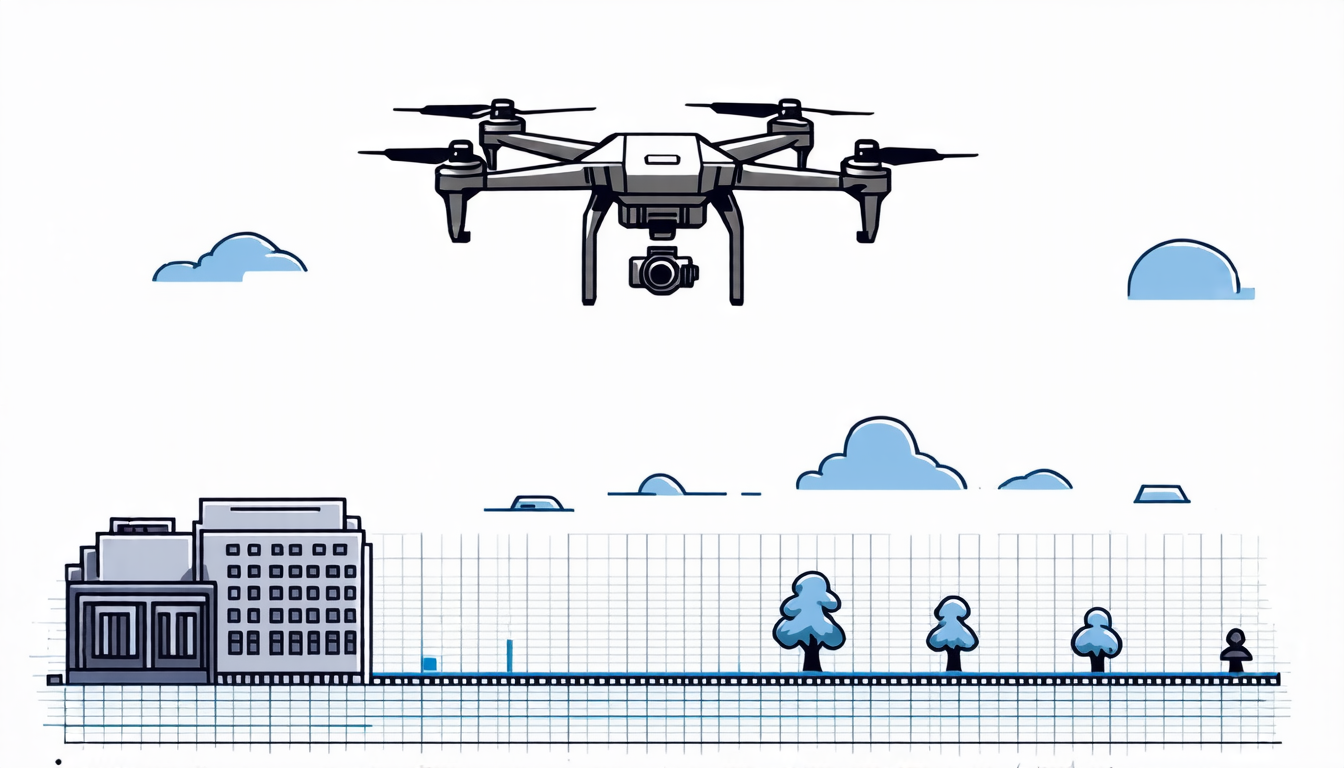
The study focuses on two specific scenarios: delivering packages along a straight line and navigating a grid graph. The researchers found that even when restricting the drones to just two speeds, the problem remains NP-hard – meaning that it becomes exponentially more difficult to solve as the size of the input increases. This is significant because it means that any attempts to develop an efficient algorithm for solving this problem will be severely limited by the sheer scale of the task.
But here’s the thing: the researchers didn’t stop there. They also developed a simple, yet effective algorithm that can deliver packages along a grid graph in just O(n) time – where n is the size of the grid. This may not seem like a huge deal at first glance, but consider this: an O(1) algorithm would be able to solve the problem instantly, regardless of the size of the input. An O(n log n) algorithm would take longer, but still be feasible for relatively small inputs. But an O(n) algorithm is much more challenging to develop, especially when dealing with a complex problem like drone delivery.
So what does this mean in practical terms? For one thing, it means that researchers can start exploring more advanced algorithms and techniques, knowing that there’s a solid foundation to build upon. It also means that companies developing drone delivery systems may be able to rely on these simpler algorithms for smaller-scale operations, while saving the more complex solutions for larger or more challenging scenarios.
But perhaps the most interesting aspect of this research is its implications for our understanding of NP-hardness itself. As researchers delve deeper into the intricacies of drone delivery and other complex problems, they’re discovering that even seemingly simple constraints can make a huge difference in the difficulty of solving these puzzles. It’s a reminder that there’s still much to be learned about the boundaries of computation and the limits of our algorithms.
In the end, this research is just one small piece of a much larger puzzle – but it’s an important step forward in understanding the complexities of drone delivery and the power (and limitations) of modern computing.
Cite this article: “Cracking the Code: New Insights into Drone Delivery Challenges”, The Science Archive, 2025.
Drone Delivery, Np-Hardness, Algorithm Development, Grid Graph, Complexity Theory, Computer Science, Optimization, Logistics, Robotics, Automation
Reference: Simon Bartlmae, Andreas Hene, Kelin Luo, “On the Hardness of the Drone Delivery Problem” (2025).





