

Friday 28 March 2025
The pursuit of understanding the intricacies of graph theory has led researchers down a winding path, filled with twists and turns that challenge even the most seasoned mathematicians. In recent years, a particular aspect of this field has garnered significant attention: the weak saturation number of trees.
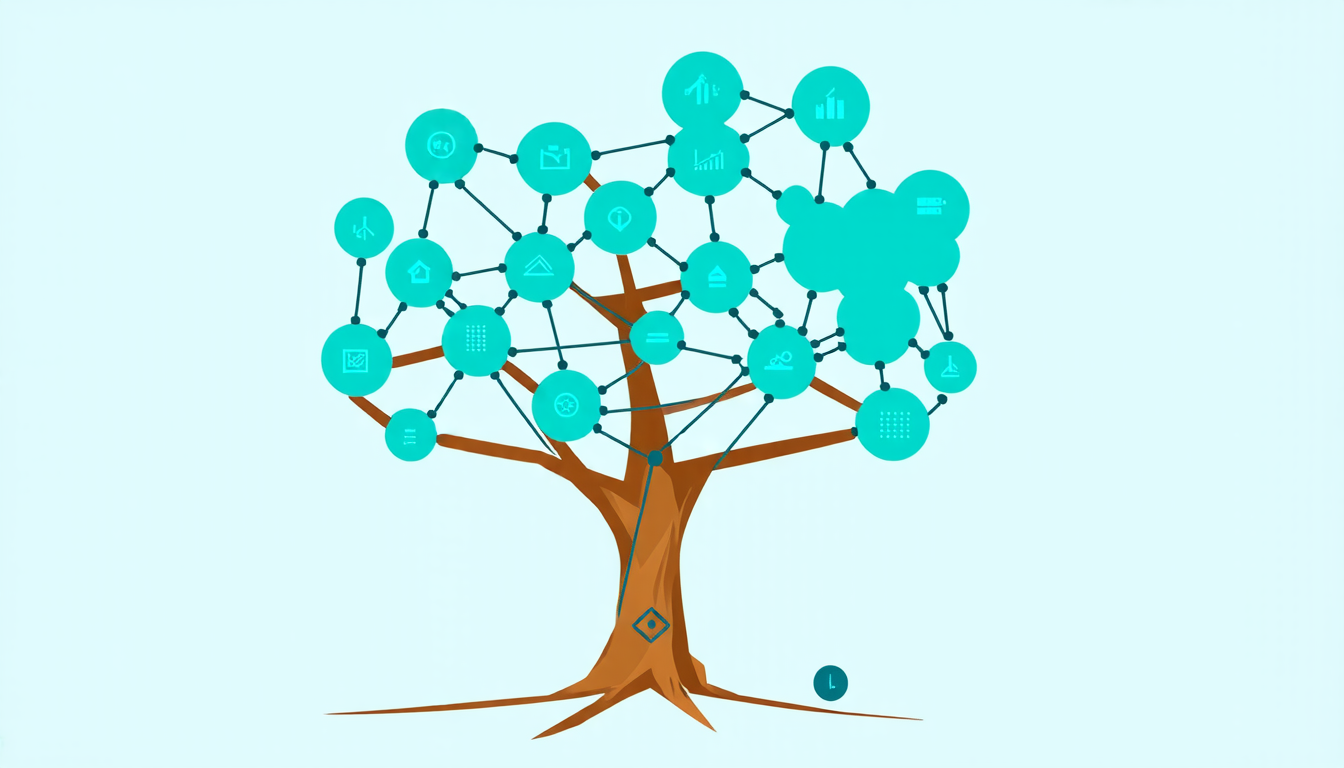
For those unfamiliar with the term, a tree is a simple undirected graph in which any two vertices are connected by exactly one path. Weak saturation numbers, on the other hand, describe the maximum number of edges that can be added to a graph without creating a new copy of an existing subgraph. In the context of trees, this concept has far-reaching implications for fields such as computer science and network theory.
The article in question delves into the world of good trees, specifically those whose weak saturation numbers are equal to their edge counts minus one. These trees possess a unique property: they can be embedded within larger graphs without creating new copies of subgraphs. This phenomenon has significant implications for our understanding of graph structures and the ways in which they interact.
One of the most striking aspects of this research is its focus on local structures, or the patterns that emerge when examining individual vertices and their connections to one another. By analyzing these patterns, researchers have been able to identify certain properties that are necessary for a tree to be good. For instance, they’ve found that trees with non-pendant vertices (vertices connected to only one other vertex) tend to exhibit this behavior.
However, the article also highlights the limitations of current knowledge in this field. Despite significant progress, researchers have yet to develop a truly elementary combinatorial proof for the weak saturation number of trees. This gap in understanding has led some to propose alternative approaches, such as using linear algebraic methods or exploiting specific properties of certain graphs.
The authors’ work builds upon previous research, which has shown that good trees can be constructed using a variety of techniques. One notable example is the creation of trees with large second-smallest degree, which allows for the inclusion of additional vertices without disrupting the underlying structure. By exploring these local structures and their interactions, researchers hope to gain a deeper understanding of the weak saturation number and its implications for graph theory as a whole.
In the end, this research has far-reaching consequences for our understanding of complex networks and their behavior under different conditions. As researchers continue to delve into the mysteries of graph theory, they may uncover new insights that shed light on everything from social network dynamics to the structure of biological systems.
Cite this article: “Unraveling the Mysteries of Weak Saturation Numbers in Trees”, The Science Archive, 2025.
Graph Theory, Weak Saturation Number, Trees, Good Trees, Computer Science, Network Theory, Local Structures, Combinatorial Proof, Linear Algebraic Methods, Graph Structures.
Reference: Wenchong Chen, Xiao-Chuan Liu, Xu Yang, “A Note on Weak Saturation Number of Trees” (2025).





