

Friday 28 March 2025
The quest for secure communication in vehicular networks has led researchers to develop innovative solutions that can withstand the challenges of a rapidly changing landscape. In recent years, the focus has shifted towards decentralized public key infrastructure (PKI) systems, which promise improved resilience and fault tolerance.
One such approach is the Security Credential Management System (SCMS), designed specifically for vehicular communications. SCMS relies on multiple authorities to manage certificates, ensuring that vehicles can verify each other’s identities without relying on a single centralized entity. However, as the number of connected vehicles grows, so does the complexity of this system.
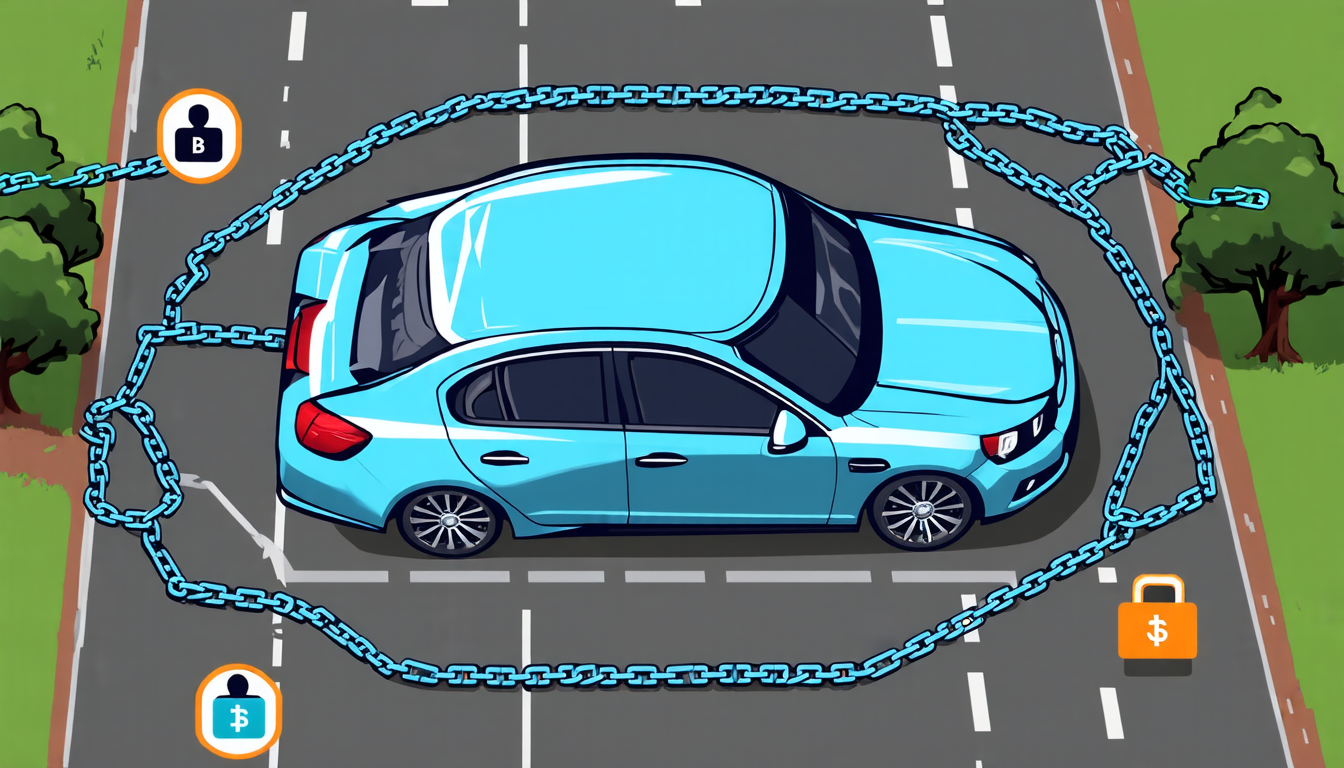
To address these challenges, researchers have turned to blockchain technology. By integrating blockchain with SCMS, they aim to create a decentralized and transparent PKI framework. This new system, dubbed Blockchain-Based Trust Management (BBTM), promises improved security, integrity, and resilience against potential threats.
The BBTM system builds upon the existing functionalities of the Global Certificate Chain File (GCCF) and Global Policy File (GPF) within SCMS. By utilizing blockchain, BBTM ensures that certificate management is decentralized, making it more difficult for an attacker to compromise the entire system. The distributed nature of blockchain also enables nodes to maintain a copy of the ledger, ensuring that data remains accessible even in the event of a failure.
Experimental results demonstrate that BBTM achieves suitable transaction performance and execution overheads for GCCF and GPF. This is particularly significant as vehicular networks are often subject to varying network conditions and bandwidth constraints.
The integration of blockchain with SCMS also opens up new avenues for research in decentralized PKI systems. As the number of connected devices continues to grow, it becomes increasingly important to develop solutions that can adapt to changing circumstances. BBTM’s decentralized approach allows for greater flexibility and fault tolerance, making it an attractive solution for future applications.
The potential implications of this technology are far-reaching. By enabling secure communication between vehicles and infrastructure, BBTM can improve safety on the roads and enhance the overall driving experience. As autonomous vehicles become increasingly prevalent, a robust PKI framework will be essential for ensuring the integrity of these systems.
While there is still much work to be done in refining this technology, the integration of blockchain with SCMS marks an important step towards creating more secure and resilient vehicular networks. By leveraging the strengths of both technologies, researchers can develop innovative solutions that meet the unique challenges of this rapidly evolving field.
Cite this article: “Secure Vehicular Communications: Blockchain-Based Trust Management System”, The Science Archive, 2025.
Vehicular Networks, Blockchain, Pki, Scms, Decentralized, Security, Resilience, Fault Tolerance, Autonomous Vehicles, Certificate Management





