

Friday 28 March 2025
A team of researchers has developed a novel approach to managing energy consumption in data centers, which could lead to significant reductions in electricity bills and carbon emissions.
The traditional method for controlling air-cooled chillers in data centers relies on a centralized system that dictates cooling levels based on overall building conditions. However, this approach can be inflexible and may not take into account the unique operating conditions of individual devices or zones within the facility.
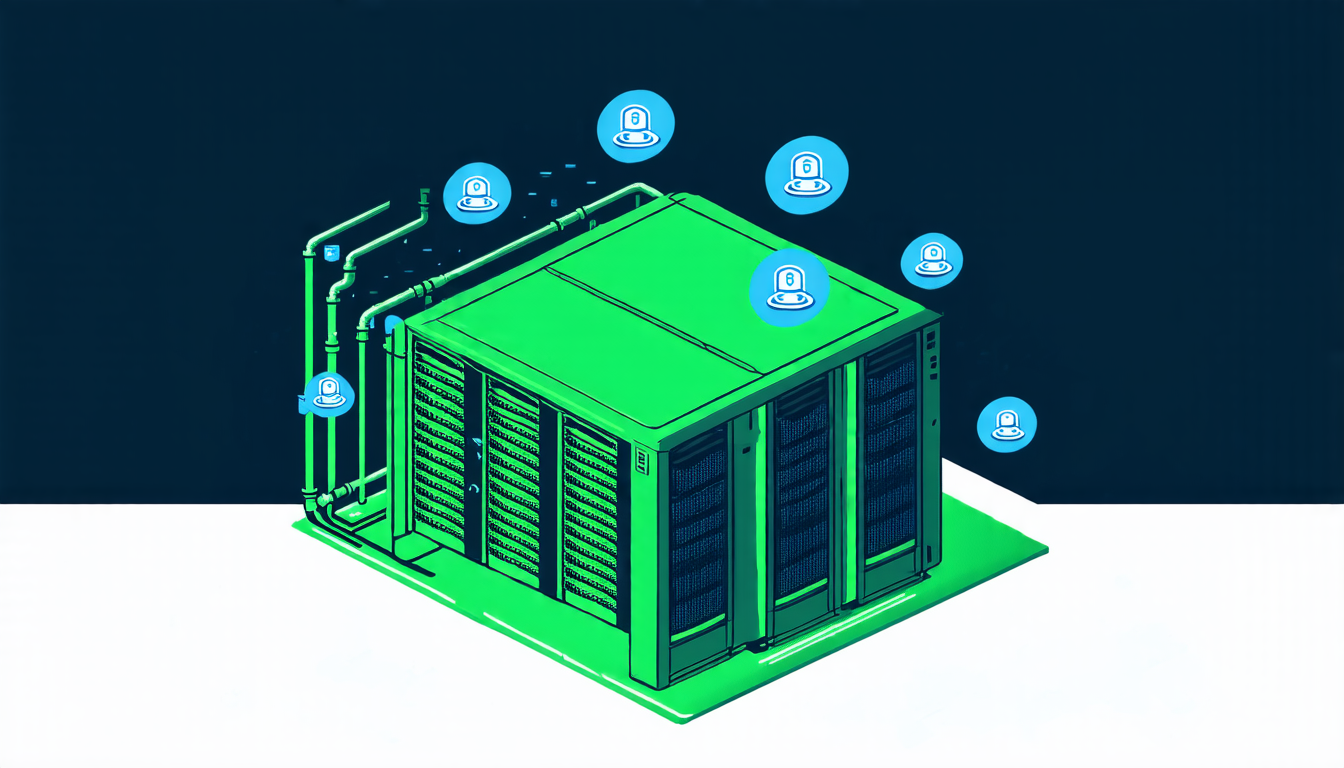
To address these limitations, scientists have designed a multi-agent architecture that enables autonomous agents to monitor and regulate local operational parameters in real-time. These agents are deployed on edge devices within each building zone and use locally collected sensor data to make immediate control decisions for HVAC operations.
The coordination layer of the system ensures that individual agent actions are harmonized, preventing conflicting control decisions between different zones and maintaining overall system stability. A central aggregator collects and integrates data from the coordination layer to provide a comprehensive overview of HVAC performance throughout the building.
One of the key benefits of this approach is its ability to optimize energy consumption based on real-time weather variations. For example, if an unanticipated temperature drop is detected at night, the system can adjust chiller speeds to prevent unnecessary cooling. During heatwaves, the MAS redistributes cooling loads between zones to prevent overheating and improve energy efficiency.
The researchers have also demonstrated that their approach can lead to significant improvements in fault tolerance and predictive maintenance scheduling. By continuously monitoring runtime thresholds and dynamically redistributing workloads when necessary, the system can extend the lifespan of equipment by up to 30% and reduce unplanned downtime.
Furthermore, the use of zero-trust security models and encrypted local communication ensures that critical infrastructure is protected against cyber threats while maintaining distributed autonomy.
The potential applications of this technology are vast. In addition to data centers, it could be used in smart buildings, hospitals, and other facilities where energy efficiency and reliability are crucial. As the world continues to grapple with climate change and energy scarcity, innovations like this one may play a key role in shaping our sustainable future.
The team’s findings have significant implications for building management systems, highlighting the potential benefits of decentralized decision-making and real-time optimization. While there is still much work to be done, this research paves the way for more efficient, resilient, and secure energy consumption strategies in the years to come.
Cite this article: “Decentralized Energy Management System for Data Centers”, The Science Archive, 2025.
Data Centers, Energy Efficiency, Hvac Systems, Multi-Agent Architecture, Autonomous Agents, Edge Devices, Real-Time Monitoring, Fault Tolerance, Predictive Maintenance, Cybersecurity.





