

Friday 28 March 2025
Scientists have long been fascinated by the intricate networks of fibers that form in natural and industrial processes. From the tangled webs of cotton plants to the synthetic fabrics used in clothing, these complex structures have captivated researchers for decades. Now, a team of scientists has made a significant breakthrough in understanding how these fiber networks form and behave.
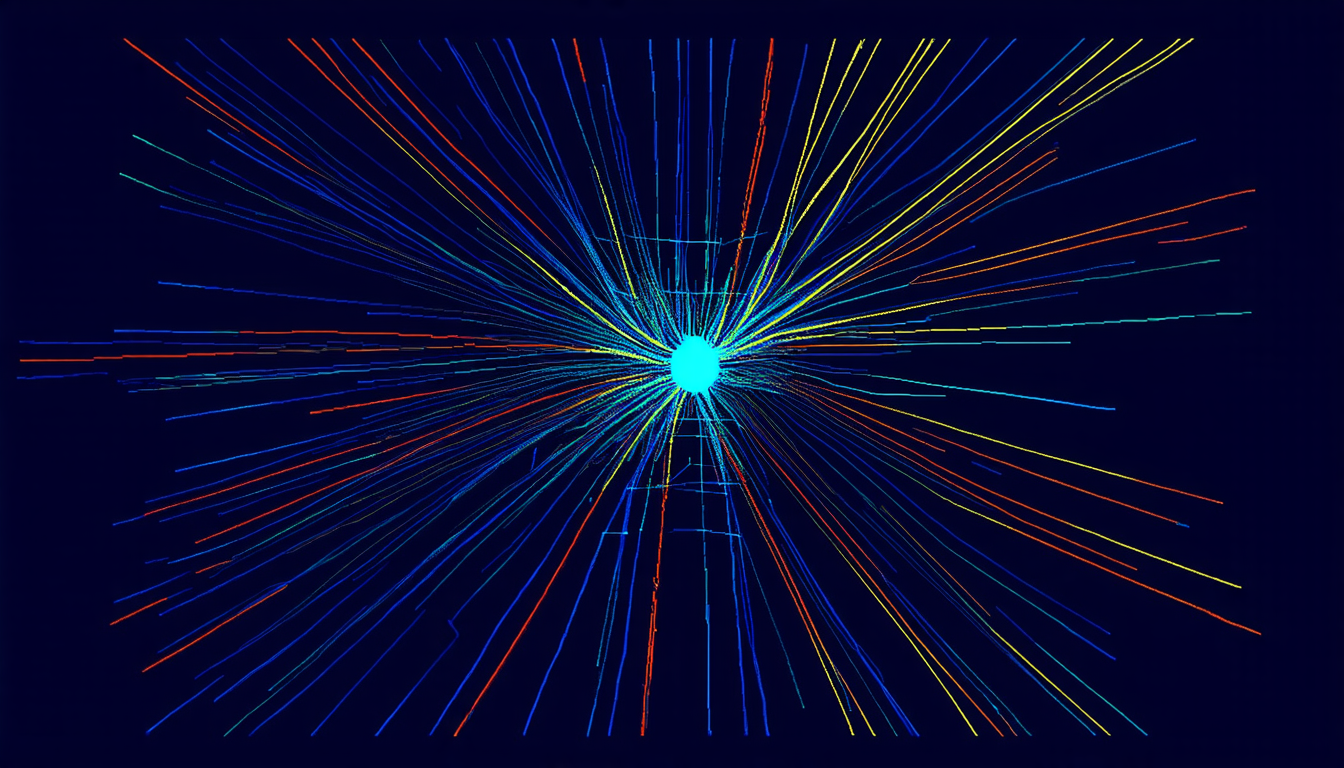
The study, published recently, focused on creating artificial fiber aggregates using nylon fibers suspended in water. By manipulating the flow patterns and density of the fibers, the researchers were able to create structures that mimic those found in nature. The key innovation was the use of X-ray tomography to visualize the internal structure of these networks, allowing scientists to study their properties in unprecedented detail.
One of the most striking findings was the discovery that the fibers within the aggregates are not randomly oriented. Instead, they form two distinct regions: an inner core where the fibers are randomly distributed, and an outer shell where they align orthogonally. This structure is remarkably similar to that found in natural fiber networks, such as the aegagropilae plant.
The researchers also discovered that the density of the aggregates increases with their size and the duration of the experiment. This suggests that the fibers are able to entangle and compress over time, forming a more robust network. Additionally, the team found that the coordination number of the fibers – the average number of contacts between each fiber – follows a unique distribution.
The study’s findings have significant implications for our understanding of complex systems and materials science. The discovery of these intricate structures and their properties could lead to breakthroughs in fields such as textiles, composites, and even biology. By studying how fibers interact and organize themselves, scientists may be able to create new materials with unprecedented strength, flexibility, or durability.
The experiment’s use of X-ray tomography is particularly noteworthy. This non-invasive technique allows researchers to visualize the internal structure of complex systems without disrupting their natural behavior. As a result, scientists can study these systems in unprecedented detail, gaining insights that would be impossible through traditional methods.
In essence, this research represents a significant step forward in our understanding of fiber networks and their properties. By studying these intricate structures, scientists may unlock new secrets about the fundamental nature of materials and complex systems.
Cite this article: “Unraveling the Secrets of Fiber Networks”, The Science Archive, 2025.
Fiber Networks, Materials Science, X-Ray Tomography, Complex Systems, Nylon Fibers, Water Suspensions, Fiber Aggregates, Natural Materials, Textiles, Composites.





