

Friday 28 March 2025
For decades, computers have been bound by a fundamental constraint: they can only access memory that’s physically connected to them. This limitation has led to a proliferation of virtualization techniques, which create a layer of indirection between the CPU and RAM to enable multiple operating systems to coexist on a single machine.
But what if you could bypass this limitation entirely? What if your computer could directly manipulate memory addresses without being tied to physical proximity? That’s exactly what a team of researchers has achieved with their new approach, dubbed Light Virtualization (LightV).
The key insight behind LightV is that modern CPUs already contain logic for managing memory coherence – the process of ensuring that multiple cores accessing shared data don’t overwrite each other. By tapping into this existing infrastructure, LightV can manipulate memory addresses at a much lower level than traditional virtualization schemes.
In traditional virtualization, the hypervisor (the software layer that sits between the operating system and hardware) has to translate every memory access request from the OS to a physical address. This adds significant overhead, as the hypervisor must constantly check whether the requested page is mapped to RAM or not. LightV eliminates this need by allowing the CPU’s coherence logic to do the heavy lifting.
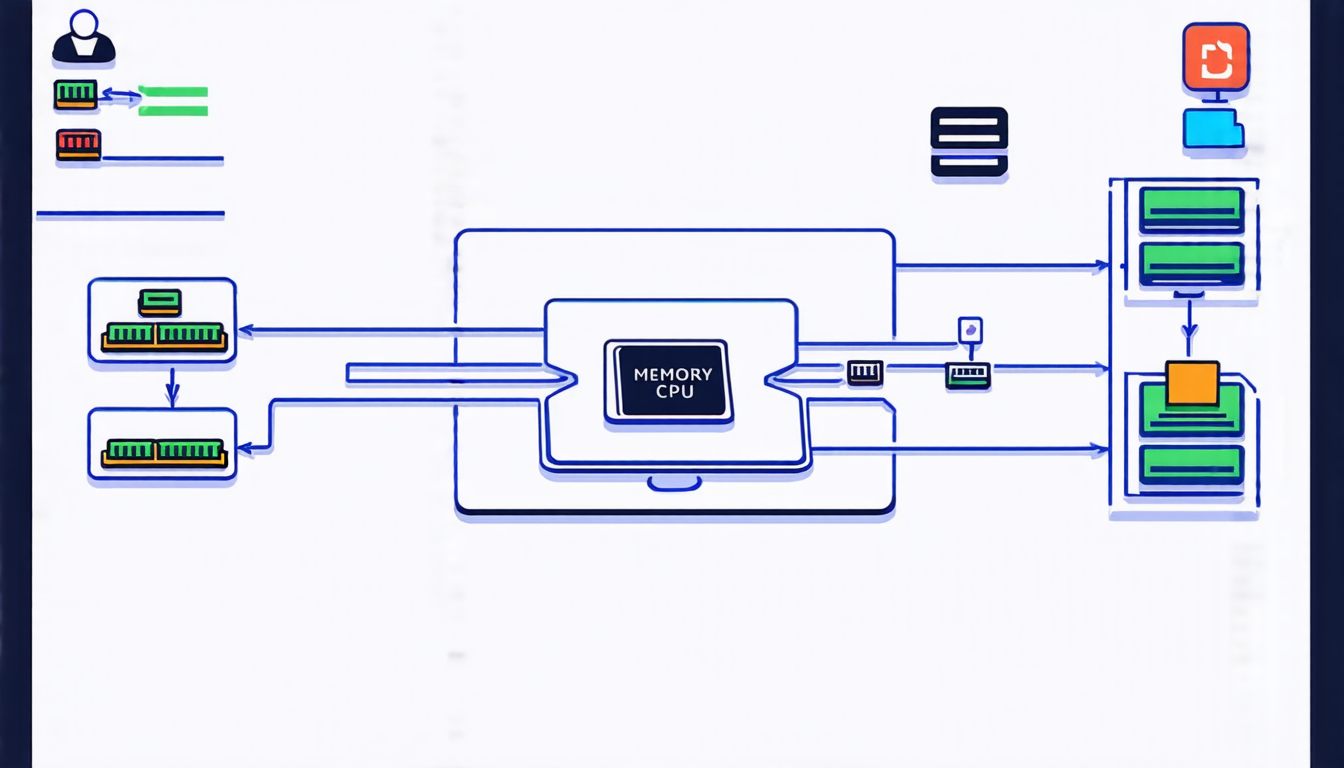
Here’s how it works: when a core requests access to a memory location, the coherence controller intercepts the request and checks if the desired page is cached. If it’s not, the controller sends a snoop request to other cores that may have the page in their caches. LightV can then manipulate the returned data on the fly, allowing for arbitrary changes to memory mappings.
The implications are profound. With LightV, you could create multiple virtual machines (VMs) that share the same physical RAM, without the need for expensive hardware acceleration or complex software emulation. You could also enable more efficient use of memory bandwidth, as VMs can now access shared data directly without going through the hypervisor.
But perhaps the most exciting aspect of LightV is its potential to unlock new use cases in fields like embedded systems and IoT devices. By allowing multiple operating systems to coexist on a single chip, LightV could enable more complex and flexible system designs, with reduced power consumption and increased reliability.
Of course, there are still many technical hurdles to overcome before LightV can be widely adopted. The researchers acknowledge that their approach requires significant changes to existing hardware and software stacks. Nevertheless, the potential rewards make it an area worth exploring further.
Cite this article: “Light Virtualization: A New Approach to Memory Access”, The Science Archive, 2025.
Virtualization, Memory, Cpu, Coherence, Logic, Hypervisor, Translation, Overhead, Manipulation, Shared





