

Friday 28 March 2025
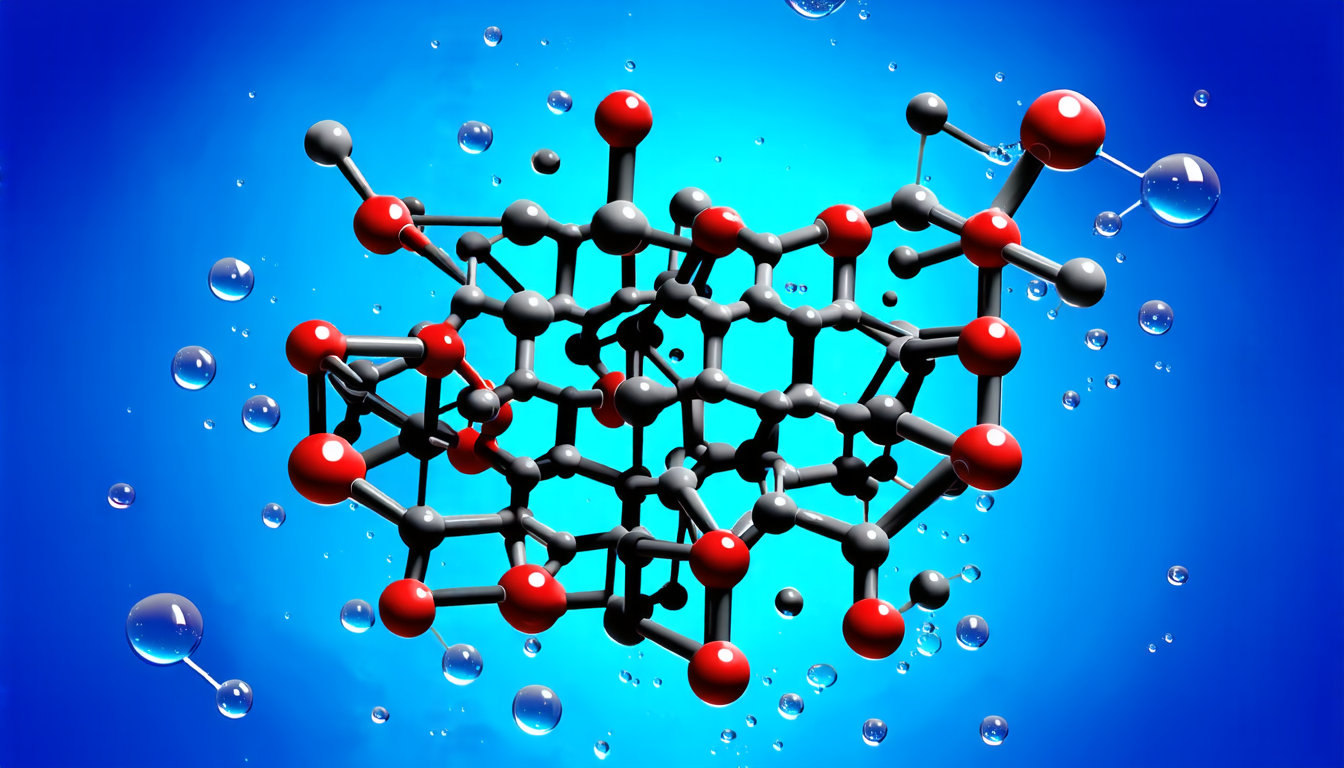
Scientists have made a significant breakthrough in understanding how metal-organic frameworks (MOFs) can be used to capture radioactive iodine, a crucial step in mitigating the effects of nuclear accidents and waste management.
MOFs are highly porous materials composed of metal ions linked by organic molecules. They have been shown to exhibit remarkable properties, such as high surface areas and selectivity for specific gas molecules. However, their application in capturing radioactive iodine has been limited due to the complex chemical interactions involved.
A new study has used advanced computational methods to simulate the behavior of MOFs under humid conditions, mimicking real-world scenarios where radioactive iodine is present. The researchers found that by incorporating certain molecular features into the design of the MOF, it was possible to enhance its ability to capture iodine molecules.
The team used a combination of machine learning algorithms and molecular simulations to predict the performance of over 1,800 different MOFs under various conditions. They discovered that the presence of nitrogen atoms in the MOF structure played a crucial role in enhancing iodine capture, as they provided additional binding sites for the iodine molecules.
Furthermore, the researchers found that the adsorption of water molecules on the surface of the MOF also influenced the capture efficiency. By optimizing the design of the MOF to minimize water adsorption while maintaining high iodine capture rates, the team was able to achieve impressive results.
The implications of this research are significant, as it could lead to the development of more effective and efficient methods for capturing radioactive iodine from nuclear waste and accident sites. This is a critical step in mitigating the environmental and health risks associated with these events.
The study also highlights the potential of machine learning and computational simulations in materials science. By leveraging these tools, researchers can rapidly screen large databases of molecular structures to identify optimal candidates for specific applications.
In the future, this research could have far-reaching implications beyond nuclear applications. The development of MOFs with enhanced selectivity and adsorption properties could lead to breakthroughs in fields such as carbon capture and storage, gas separation, and catalysis.
Overall, this study demonstrates the power of interdisciplinary collaboration between chemists, materials scientists, and computer scientists. By combining advanced computational methods with experimental validation, researchers can accelerate the discovery of new materials and technologies that have the potential to transform our understanding of the world.
Cite this article: “Unlocking Efficient Radioactive Iodine Capture with Metal-Organic Frameworks”, The Science Archive, 2025.
Metal-Organic Frameworks, Radioactive Iodine, Nuclear Accidents, Waste Management, Computational Simulations, Machine Learning Algorithms, Molecular Structures, Materials Science, Adsorption, Porous Materials





