

Friday 28 March 2025
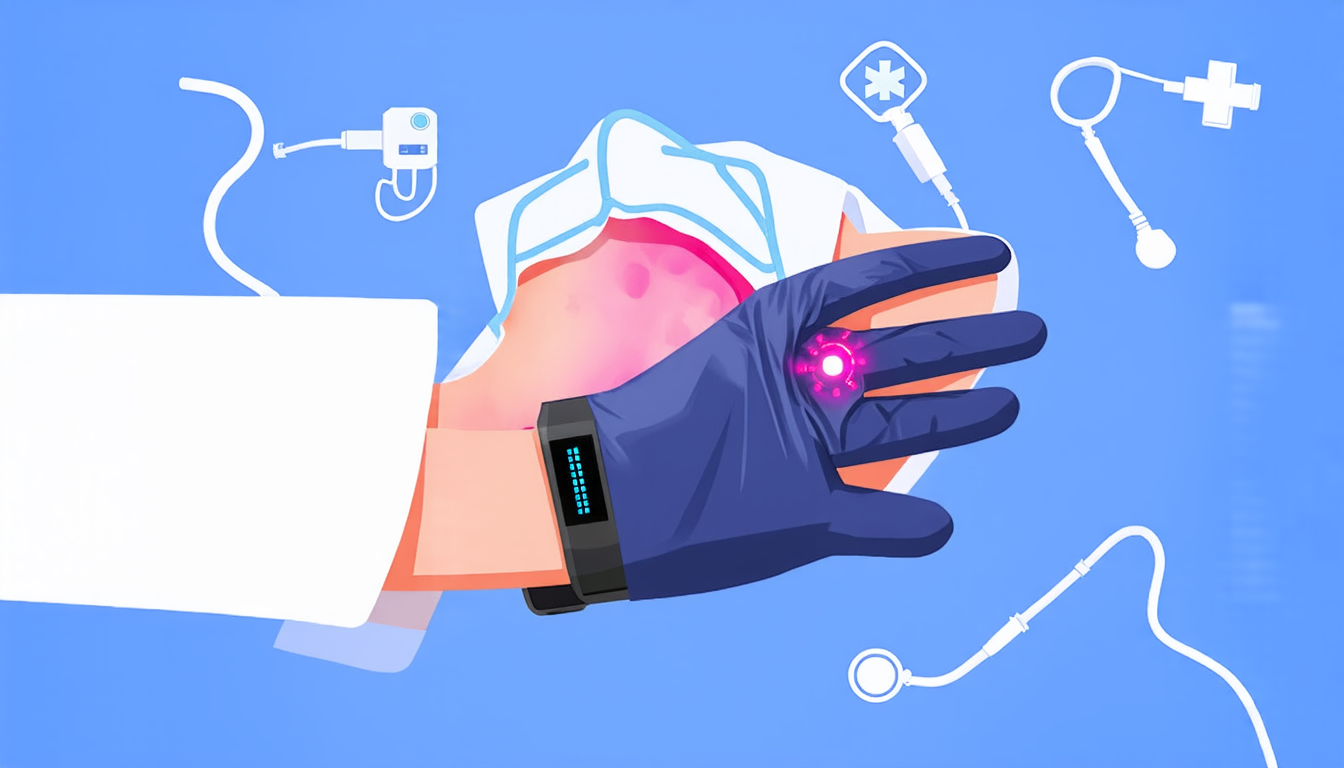
The quest for a more accurate and efficient way to detect breast cancer has led researchers to develop innovative technologies that can help doctors identify tumors at an early stage, when they are still treatable. One such technology is a wearable tactile glove designed to simulate the sensation of palpating a patient’s breast tissue.
Palpation, or feeling with the hands, is a crucial step in detecting breast cancer. A doctor uses their fingers to press and feel for abnormalities in the breast tissue. However, this process can be time-consuming and requires extensive training to perform correctly. Moreover, it may not always detect small tumors or those located deep within the breast tissue.
The new wearable glove aims to solve these issues by providing a more accurate and efficient way of detecting breast cancer through palpation. The glove is equipped with sensors that mimic the sensation of human fingers, allowing doctors to feel for abnormalities in the breast tissue without having to physically touch the patient’s body.
The device uses deep learning algorithms to analyze the data collected from the sensors and determine whether a tumor is present or not. This technology has shown promising results in detecting breast cancer at an early stage, with an accuracy rate of over 80%.
One of the key advantages of this technology is its ability to detect small tumors that may be difficult to feel through traditional palpation methods. The glove can also detect tumors located deep within the breast tissue, which can be challenging for doctors to identify manually.
Another benefit of the wearable glove is its potential to reduce the risk of false positives and false negatives. Traditional palpation methods can lead to false positives, where a doctor incorrectly identifies a tumor when there isn’t one. Conversely, they may also miss small tumors due to human error. The glove’s advanced algorithms minimize these errors, providing doctors with more accurate results.
The potential impact of this technology is significant. Early detection of breast cancer can significantly improve treatment outcomes and reduce mortality rates. The wearable glove could revolutionize the way doctors detect breast cancer, making it faster, more efficient, and more accurate.
Clinical trials are currently underway to test the effectiveness of the wearable glove in real-world settings. If successful, this technology could become a valuable tool for doctors worldwide, helping them to better diagnose and treat breast cancer patients.
Cite this article: “Revolutionizing Breast Cancer Detection with Wearable Technology”, The Science Archive, 2025.
Breast Cancer, Detection, Palpation, Wearable Technology, Tactile Glove, Sensors, Deep Learning, Algorithms, Accuracy, Diagnosis





