

Friday 28 March 2025
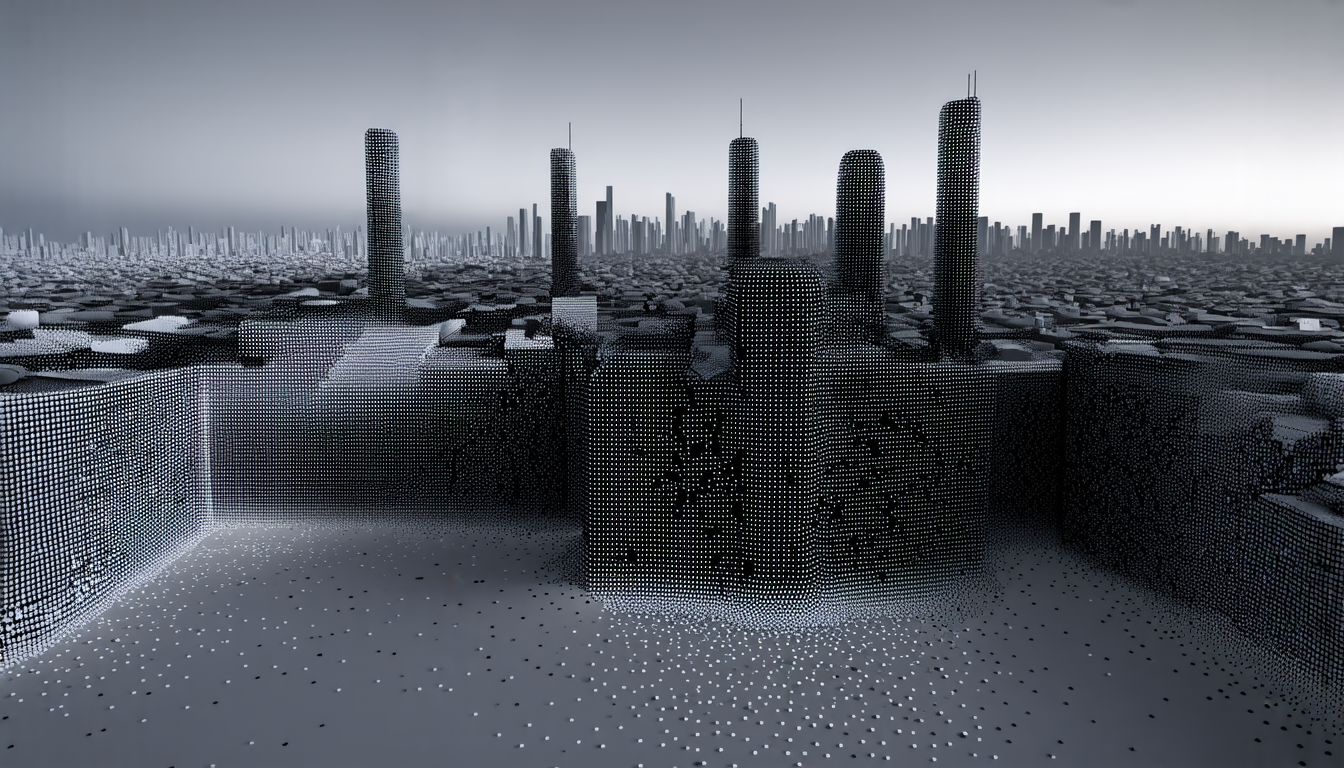
The quest for more efficient and accurate computer processing has led researchers to explore a new frontier: the world of spiking neural networks (SNNs). These innovative systems mimic the behavior of human brains by transmitting information through brief pulses, or spikes, rather than traditional electrical signals. The latest breakthrough in this field is the development of a Spiking Point Transformer (SPT), designed specifically for processing three-dimensional point clouds.
In recent years, SNNs have gained popularity due to their potential for energy efficiency and adaptability to complex tasks. However, the majority of research has focused on two-dimensional image recognition, leaving the realm of 3D data largely unexplored. The authors of this paper sought to bridge this gap by creating an SPT capable of classifying point clouds with unprecedented accuracy.
The SPT is built upon a Transformer architecture, which has revolutionized natural language processing and computer vision tasks. By incorporating spiking neural networks into this framework, the researchers aimed to harness the strengths of both worlds. The resulting system leverages the sparse binary activation of SNNs to reduce computational costs while maintaining the ability to learn complex patterns.
To achieve this, the authors designed a novel encoding scheme, dubbed Queue-Driven Sampling Direct Encoding (Q-SDE). This approach enables the SPT to selectively sample and encode the most relevant points in each time step, significantly reducing the computational load. Furthermore, they introduced the Hybrid Dynamics Integrate-and-Fire Neuron (HD-IF), which simulates selective neuron activation and adapts to diverse data scenarios during inference.
The experimental results are nothing short of impressive. The SPT demonstrated state-of-the-art performance on three benchmark datasets, including ModelNet10, ModelNet40, and ScanObjectNN. Notably, the system achieved an overall accuracy of 94.76% on ModelNet10, surpassing previous methods by a significant margin.
Moreover, the authors conducted an ablation study to evaluate the impact of different neurons on model performance. The results showed that HD-IF consistently outperformed other single neurons, highlighting its effectiveness in enhancing model performance.
The energy efficiency of SPT is also noteworthy. Compared to traditional artificial neural networks (ANNs), the SPT requires significantly less power consumption. For instance, when processing a point cloud at 1 time step, the SPT consumed only 3.0mJ of energy, a remarkable 28.2-fold reduction compared to ANNs.
Cite this article: “Spiking Point Transformer: A Breakthrough in Efficient and Accurate 3D Point Cloud Processing”, The Science Archive, 2025.
Spiking Neural Networks, Snns, Point Clouds, Transformer Architecture, 3D Data, Energy Efficiency, Computer Vision, Natural Language Processing, Neuron Activation, Artificial Neural Networks





