

Friday 28 March 2025
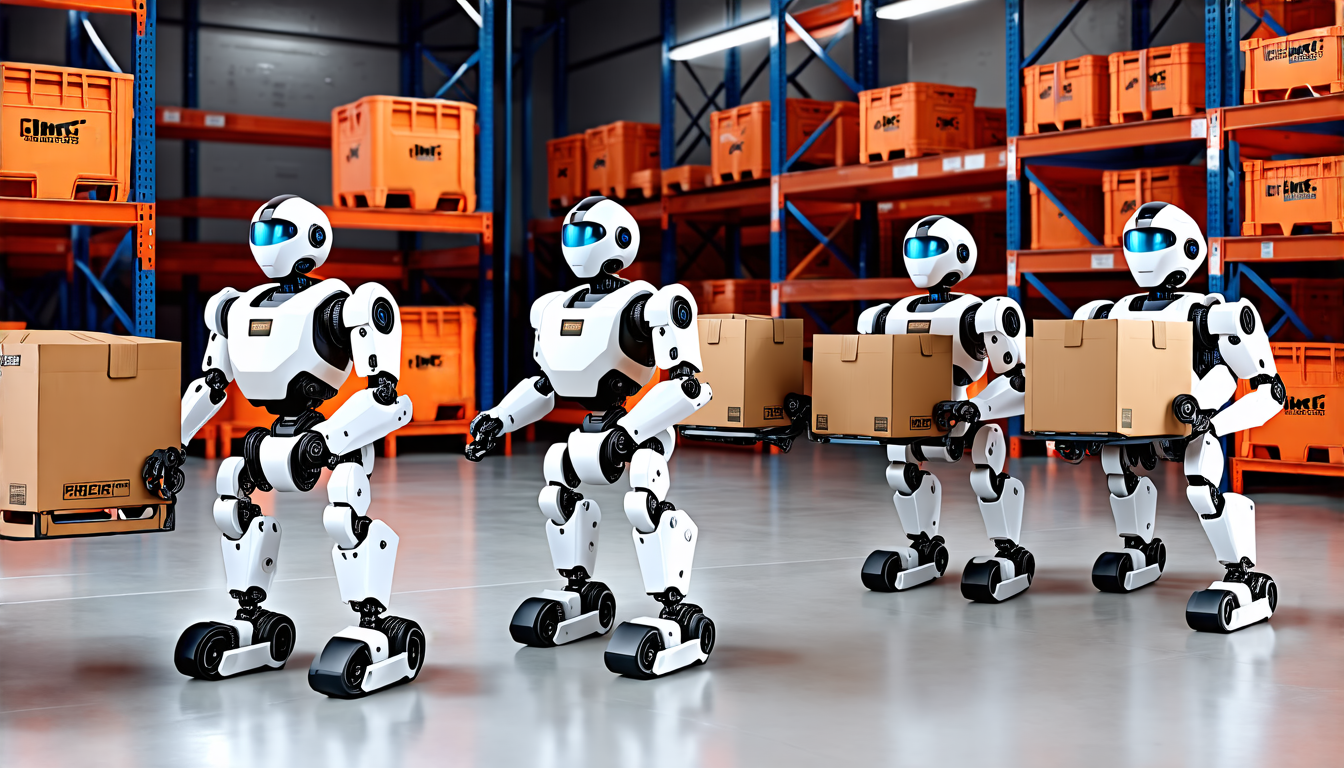
Scientists have made a significant breakthrough in developing a new system that can efficiently allocate tasks among multiple robots in a warehouse environment. The innovative approach, known as MRTAgent, uses artificial intelligence to optimize the distribution of tasks and reduce costs.
In a typical warehouse setting, multiple robots work together to pick up and deliver items to various locations. However, this process can be complex, especially when considering factors such as robot availability, task deadlines, and navigation constraints. To address these challenges, researchers have designed MRTAgent, a bi-level reinforcement learning framework that enables robots to dynamically allocate tasks and adapt to changing conditions.
The system consists of two main components: the planner and the executor. The planner is responsible for predicting future task requirements and allocating tasks among available robots. This process involves evaluating multiple scenarios and selecting the most optimal solution based on factors such as travel distance, task completion time, and robot availability. In contrast, the executor focuses on executing the allocated tasks while navigating through the warehouse.
MRTAgent has been tested in various scenarios, including environments with different numbers of robots and tasks. The results show that the system significantly outperforms traditional methods, achieving lower costs and increased efficiency. For instance, in a scenario with 10 robots and 5 tasks, MRTAgent reduced the total travel distance by 13% compared to traditional methods.
The key advantage of MRTAgent lies in its ability to adapt to changing conditions. Unlike traditional systems that rely on pre-defined rules or algorithms, MRTAgent uses reinforcement learning to learn from experience and adjust its strategy accordingly. This enables the system to respond effectively to unexpected events, such as robot breakdowns or changes in task priority.
The potential applications of MRTAgent are vast, extending beyond warehouse automation to other industries where multiple agents need to collaborate efficiently. For example, in a search and rescue scenario, MRTAgent could be used to allocate tasks among robots and optimize the search process.
While MRTAgent represents a significant advancement in multi-robot task allocation, there are still challenges to be addressed. For instance, the system assumes that all robots have identical characteristics, which may not always be the case in real-world scenarios. Additionally, MRTAgent does not account for potential collisions between robots or other obstacles.
Despite these limitations, the development of MRTAgent marks a significant step towards creating more efficient and adaptable multi-robot systems.
Cite this article: “Efficient Multi-Robot Task Allocation using Artificial Intelligence”, The Science Archive, 2025.
Artificial Intelligence, Multi-Robot Systems, Task Allocation, Warehouse Automation, Reinforcement Learning, Bi-Level Framework, Planner, Executor, Navigation, Efficiency





