

Friday 28 March 2025
In a breakthrough that sheds new light on the intricate relationships between networks, researchers have discovered a hidden pattern in the way labeled graphs contract.
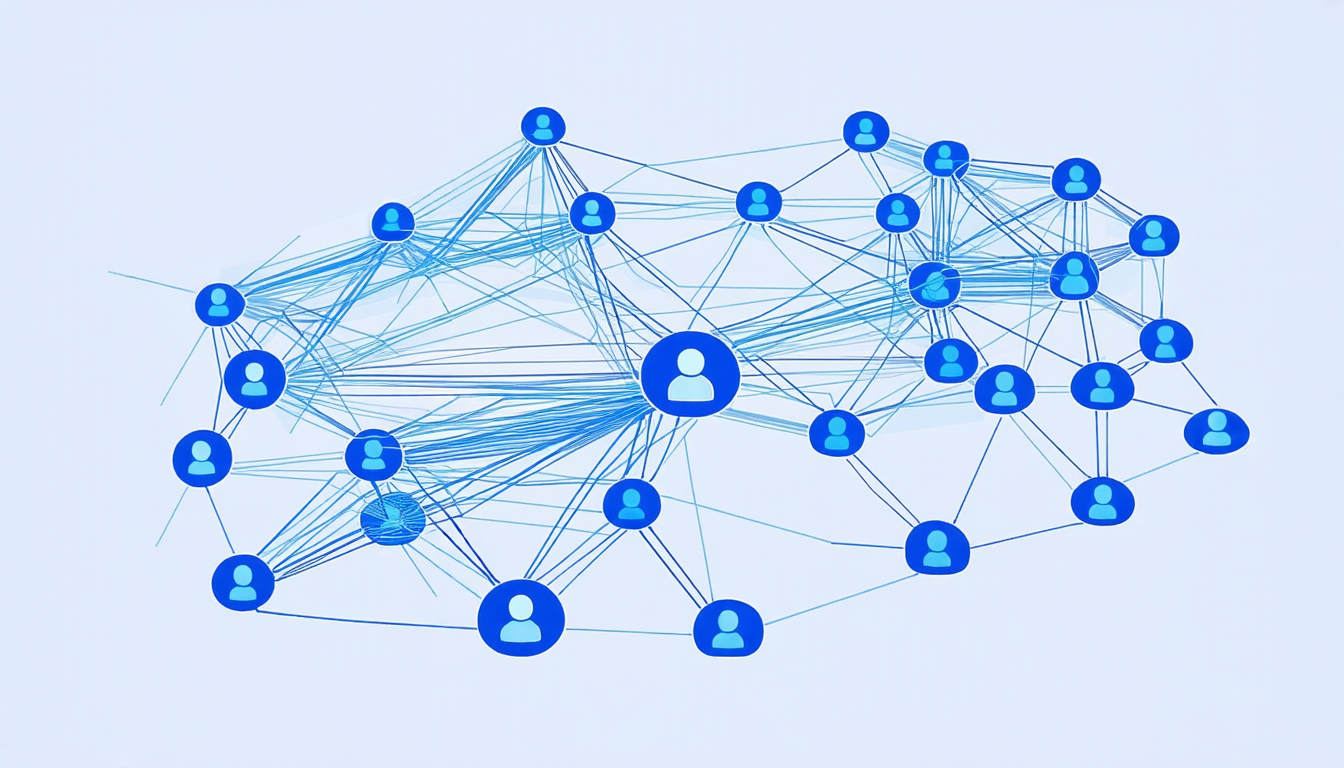
Labeled graphs are a type of mathematical structure used to represent complex systems, such as social networks or transportation routes. They’re made up of nodes and edges, where each node can have its own label or attribute. When two nodes are connected by an edge, it means they have some kind of relationship with each other.
One common operation on labeled graphs is contraction, which involves merging multiple nodes into a single node while preserving the relationships between them. This process is crucial in many fields, such as computer science, biology, and sociology.
However, until now, researchers didn’t fully understand how contractions affected the properties of labeled graphs. That changed with the discovery of a new pattern that reveals the intricate dance of nodes and edges during contraction.
The team behind this breakthrough found that certain types of contractions can be solved more efficiently using a technique called parameterized complexity analysis. This method allows researchers to identify the most important factors affecting the contraction process, making it easier to predict and optimize the outcome.
One key insight is that the number of contractions required to merge two graphs into one depends on the maximum degree of the graph – the highest number of edges connected to a single node. The team showed that this value can be used as a parameter to limit the number of possible contractions, making it easier to find the optimal solution.
Another important finding is that the treewidth of the graph – a measure of its complexity – also plays a crucial role in contraction efficiency. The researchers demonstrated that graphs with lower treewidth require fewer contractions to achieve the same outcome as graphs with higher treewidth.
These results have significant implications for various fields, including computer science, biology, and sociology. For instance, they can help optimize the performance of complex systems by reducing the number of contractions required to merge them into a single entity.
The team’s work also sheds light on the fundamental nature of labeled graphs and their behavior under contraction. This new understanding can be applied to a wide range of problems, from social network analysis to traffic flow optimization.
As researchers continue to explore the properties of labeled graphs, this breakthrough will undoubtedly pave the way for more efficient and effective solutions to complex problems.
Cite this article: “Unraveling the Patterns of Labeled Graph Contraction”, The Science Archive, 2025.
Labeled Graphs, Contraction, Graph Theory, Computer Science, Biology, Sociology, Social Networks, Transportation Routes, Parameterized Complexity Analysis, Treewidth.





