

Friday 28 March 2025
Federated learning, a technology that allows multiple devices or organizations to jointly train artificial intelligence models without sharing their individual data, has been making waves in recent years. But despite its promise, federated learning faces significant challenges when dealing with heterogeneous datasets – those where different clients have vastly different types of information.
A new study published recently aims to tackle this issue by introducing a novel approach called FedOC. This method uses orthogonality constraints on global prototypes at the server side to improve inter-prototype separation and maximize directional independence, while preserving semantic integrity.
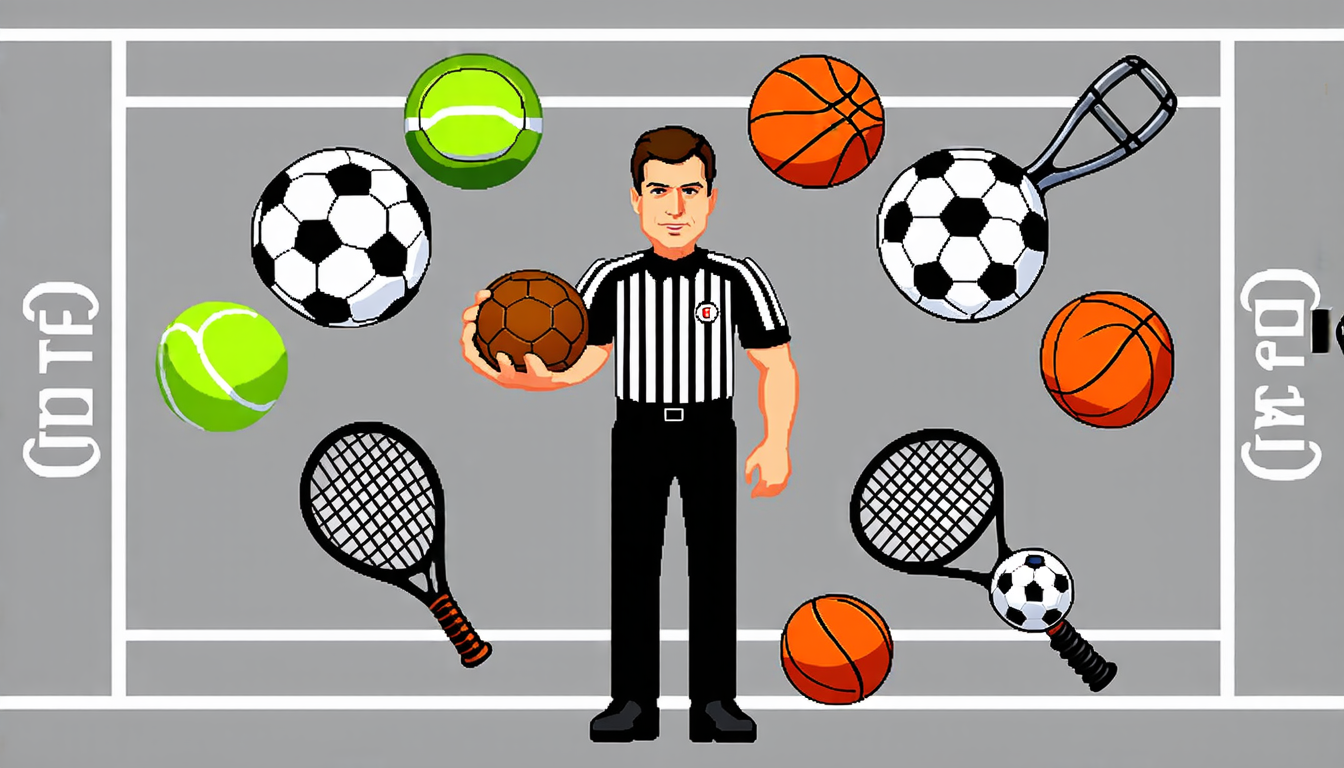
In simple terms, FedOC is like having a referee in a game who ensures that each team plays by the same rules, even if they’re using different strategies or equipment. This allows for more accurate and robust AI models to be trained, even when dealing with vastly different datasets.
The researchers behind FedOC used a combination of theoretical analysis and experimental evaluation to demonstrate its effectiveness. They tested their method on three benchmark datasets, including CIFAR-10, CIFAR-100, and Flowers102, which are commonly used in the field of computer vision.
The results were impressive: FedOC outperformed existing methods by up to 10% accuracy on certain tasks, and showed improved robustness across a range of heterogeneous scenarios. This means that AI models trained using FedOC could be more effective at recognizing objects or detecting anomalies in images, even when the training data is diverse and complex.
So how does FedOC work its magic? The key lies in the way it handles the global prototypes – mathematical representations of the underlying relationships between different classes of data. By applying orthogonality constraints to these prototypes, FedOC ensures that they are more distinct and easy to distinguish from one another.
This has several benefits. For one, it reduces the risk of overfitting – a common problem in machine learning where models become too specialized to their training data and fail to generalize well to new situations. It also improves the ability of AI models to recognize patterns and make predictions when faced with unseen data.
The implications of FedOC are significant. With its ability to handle heterogeneous datasets, it could be used in a wide range of applications, from medical imaging to autonomous vehicles. By enabling more accurate and robust AI models, FedOC has the potential to transform many industries and improve our daily lives.
As researchers continue to explore and refine Federated learning, approaches like FedOC will play a crucial role in unlocking its full potential.
Cite this article: “FedOC: A Novel Approach to Tackle Heterogeneous Data Challenges in Federated Learning”, The Science Archive, 2025.
Federated Learning, Heterogeneous Datasets, Orthogonality Constraints, Global Prototypes, Machine Learning, Overfitting, Pattern Recognition, Medical Imaging, Autonomous Vehicles, Artificial Intelligence.





