

Friday 28 March 2025
A team of researchers has made a significant breakthrough in the field of computational pathology, developing an innovative approach to generate new images for disease diagnosis and treatment. This technology has the potential to revolutionize the way doctors analyze tissue samples and make accurate diagnoses.
The conventional method of analyzing tissue samples involves manually examining each image, which can be time-consuming and prone to errors. To address this issue, researchers have been working on developing artificial intelligence (AI) models that can automatically classify images based on their characteristics. However, these models require large amounts of high-quality training data, which is often lacking in the field of pathology.
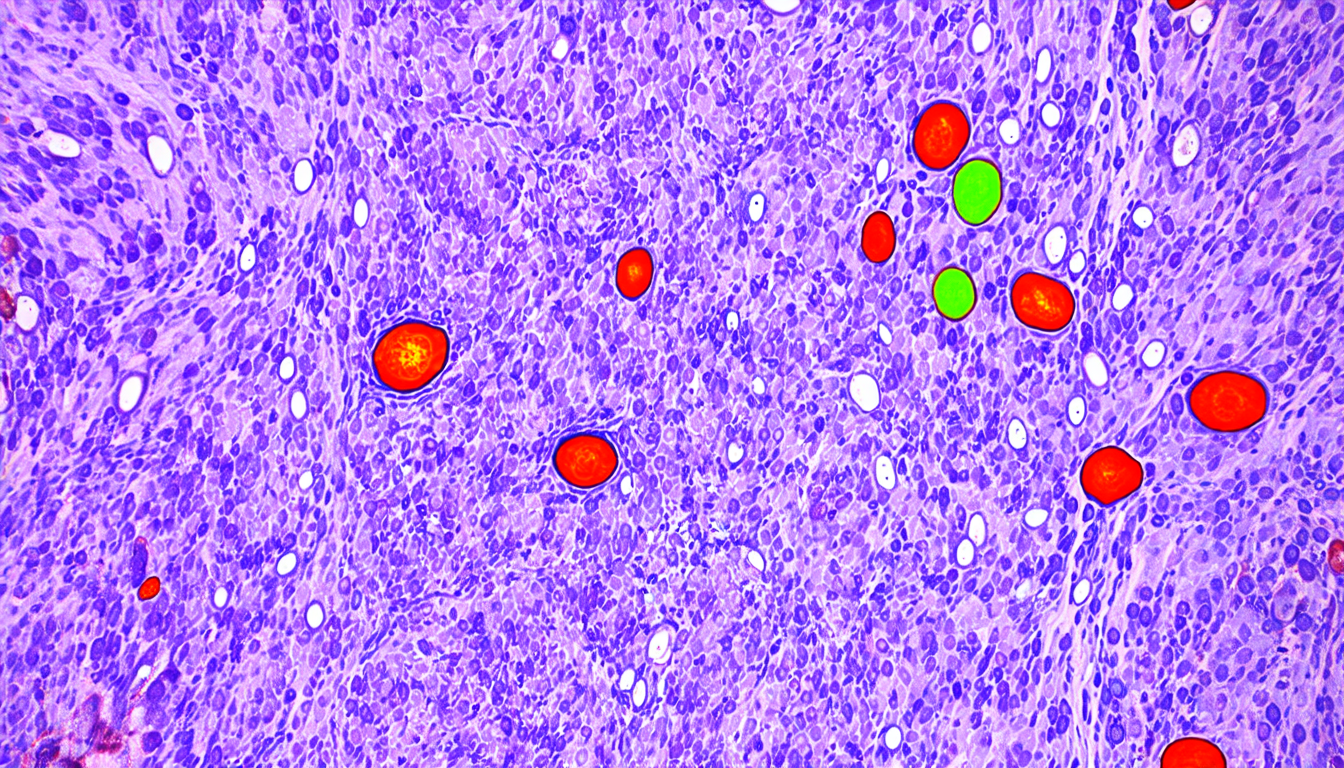
To overcome this limitation, the research team developed an approach called Patch Stitching Image Synthesis (PaSS), which generates new images by combining segments from existing images. This method allows doctors to train AI models on a larger and more diverse dataset, leading to improved accuracy and robustness.
The researchers tested PaSS using two sets of colorectal cancer datasets, each containing thousands of images. They used two different deep learning models, EfficientNet-B0 and ResNet-50, to classify the images. The results showed that PaSS significantly improved the performance of both models, with accuracy rates increasing by up to 3.25% on one dataset.
The team also compared the performance of PaSS with another method called CutMix, which randomly selects and masks out regions in an image. While CutMix showed some improvement, PaSS outperformed it due to its ability to preserve tissue structures more effectively.
The benefits of PaSS are twofold. Firstly, it allows doctors to train AI models on a larger dataset, which can lead to more accurate diagnoses. Secondly, it reduces the need for additional data collection and annotation costs, making the technology more feasible for widespread adoption.
In addition to its potential impact on disease diagnosis, PaSS also has applications in other fields such as medical research and education. For instance, researchers could use PaSS to generate synthetic images of rare diseases or conditions, which would help them study and better understand these conditions without having to collect and analyze large amounts of data.
Overall, the development of PaSS is an important step towards improving the accuracy and efficiency of disease diagnosis using AI models. Its potential applications are vast, and it could have a significant impact on healthcare outcomes in the future.
Cite this article: “Breakthrough in Computational Pathology: Patch Stitching Image Synthesis Revolutionizes Disease Diagnosis”, The Science Archive, 2025.
Computational Pathology, Artificial Intelligence, Image Synthesis, Patch Stitching, Disease Diagnosis, Tissue Samples, Deep Learning Models, Efficientnet-B0, Resnet-50, Cutmix





