

Friday 28 March 2025
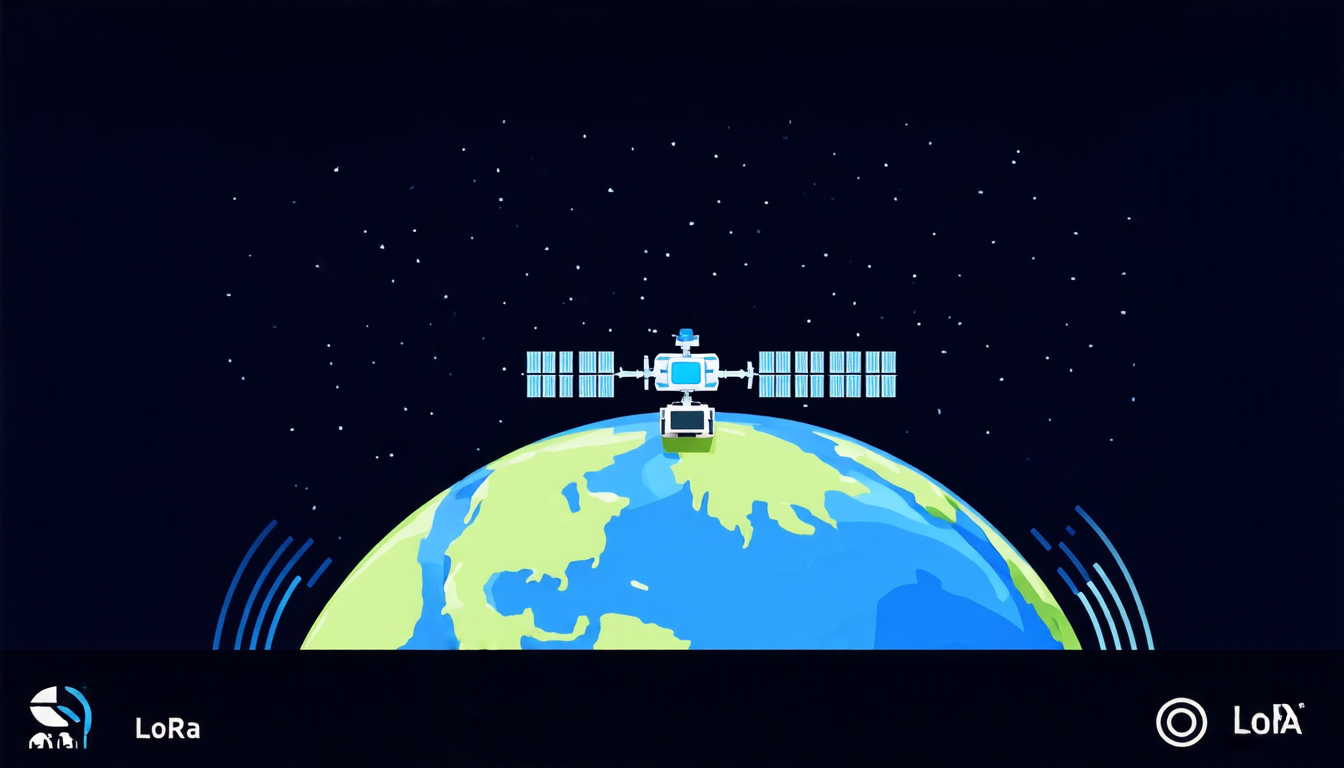
The humble LoRa wireless technology has been touted as a game-changer for the Internet of Things (IoT), allowing devices to communicate over long distances at low power consumption levels. But what happens when these devices are hurtling through space, subject to the whims of Doppler shift and satellite motion? A recent study published in IEEE Access sheds new light on the effects of these phenomena on LoRa signals.
For those unfamiliar, LoRa is a type of wireless technology that operates at very low frequencies, making it particularly well-suited for long-range communication. Its popularity has led to its adoption in a wide range of applications, from smart agriculture to satellite communications. However, as devices begin to venture into the vast expanse of space, new challenges arise.
The Doppler shift is a fundamental phenomenon that occurs when an object moves relative to an observer. In the context of LoRa signals, this means that the frequency of the signal will change as the device and receiver move at different speeds. For satellites, this effect can be significant, causing the received signal to shift in frequency by up to several hundred kilohertz.
To mitigate these effects, researchers have proposed various techniques, such as adaptive modulation and coding schemes. However, these methods often come with significant increases in complexity and power consumption. A more straightforward approach might be to simply adjust the transmission timing to compensate for the Doppler shift.
The study in question analyzed the impact of Doppler shift on LoRa signals using a combination of simulations and experimental data. The results show that the Doppler effect can have a significant impact on signal quality, particularly at higher speeds. However, by adjusting the transmission timing, researchers were able to improve signal reliability and reduce errors.
The findings also highlight the importance of considering satellite motion when designing LoRa-based systems for space applications. While LoRa’s low power consumption is a major selling point, it may not be enough to overcome the challenges posed by Doppler shift and satellite motion.
In practical terms, this means that designers will need to carefully consider the specific requirements of their application, including the speed and trajectory of the devices involved. By doing so, they can ensure reliable communication even in the face of these challenging environmental conditions.
As the IoT continues to expand into new realms, understanding the effects of Doppler shift on LoRa signals is crucial for ensuring seamless communication. This study provides valuable insights that will inform the development of more robust and efficient wireless technologies for space-based applications.
Cite this article: “Doppler Shifts Impact on LoRa Signals in Space-Based IoT Applications”, The Science Archive, 2025.
Lora, Iot, Doppler Shift, Satellite Communication, Signal Quality, Transmission Timing, Adaptive Modulation, Coding Schemes, Power Consumption, Space Applications.





