

Friday 28 March 2025
Scientists have made a significant breakthrough in understanding how to control and manipulate the behavior of light in materials that can switch between two different states, known as ferroelectric materials. These materials are used in a wide range of applications, from computer memory devices to sensors and transducers.
Ferroelectric materials have an electric polarization that can be reversed by applying an electric field. This property makes them useful for storing data and switching between different states. However, controlling the behavior of light in these materials has been a major challenge.
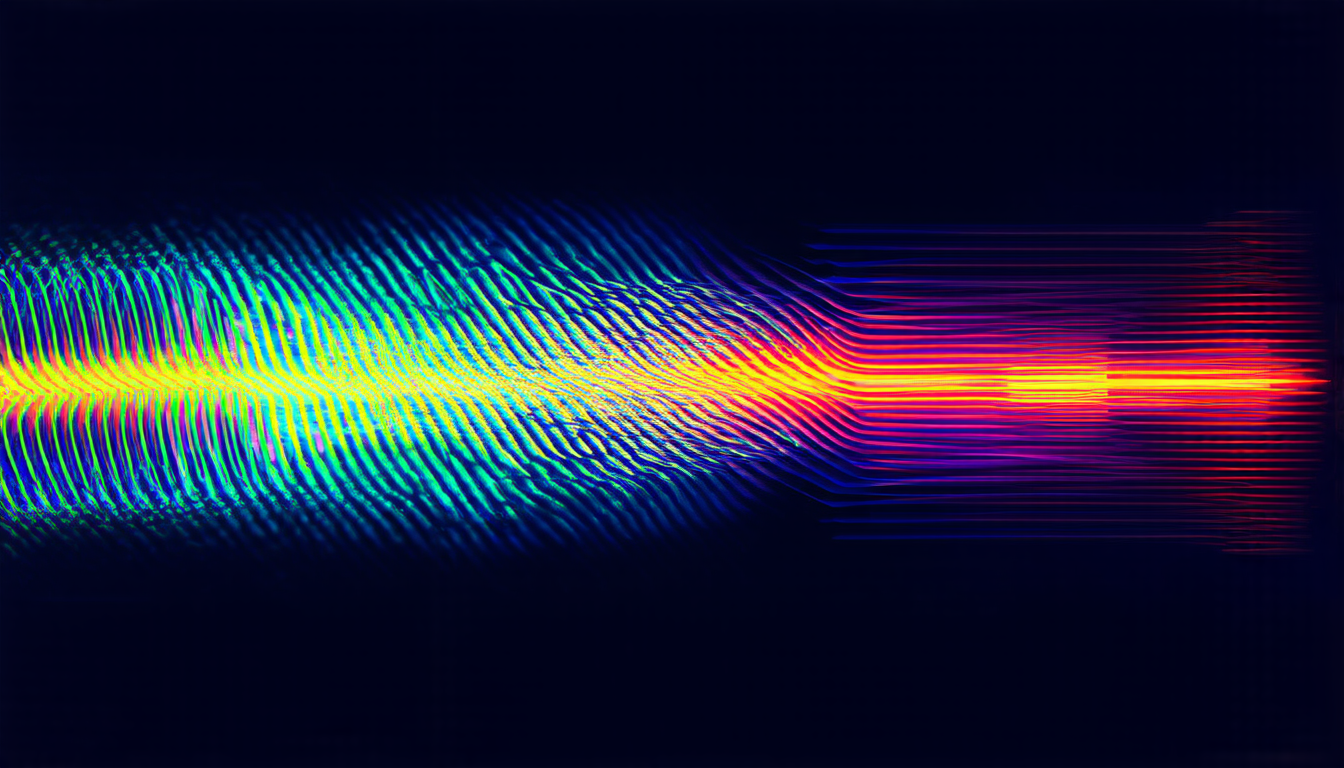
Researchers have now discovered that by manipulating the phase of light, they can control the flow of electrons within the material and switch its state. This is achieved by using a technique called chirp, which involves changing the frequency of the light over time.
The team used advanced computer simulations to study the behavior of light in ferroelectric materials and found that by applying a chirped laser pulse, they could induce a current in the material that was opposite in direction to the one induced by an unchirped pulse. This is known as current reversal, and it has important implications for the development of new electronic devices.
The researchers also found that the intensity of the light had a significant impact on the behavior of the material. At low intensities, the material exhibited a weak current response, while at high intensities, the current was much stronger. This suggests that the material is sensitive to the strength of the light and can be used to control its state.
The discovery of current reversal in ferroelectric materials has important implications for the development of new electronic devices. It could be used to create ultra-fast switching devices that are capable of storing large amounts of data quickly and efficiently.
In addition, the technique could also be used to create sensors that can detect changes in their environment with high sensitivity. This is because the material’s state can be switched by applying a specific frequency of light, allowing it to be used as a sensor for detecting changes in its surroundings.
The researchers are excited about the potential applications of their discovery and are already working on developing new devices that take advantage of current reversal. They believe that this breakthrough could have significant implications for the development of new electronic technologies and could lead to the creation of new devices with unique properties.
Overall, the discovery of current reversal in ferroelectric materials is an important breakthrough that has significant implications for the development of new electronic devices. It is a testament to the power of scientific research and its ability to drive innovation and progress.
Cite this article: “Controlling Light Behavior in Ferroelectric Materials Enables Ultra-Fast Switching and Sensing Applications”, The Science Archive, 2025.
Light, Ferroelectric Materials, Chirp, Laser Pulse, Current Reversal, Electronic Devices, Sensors, Transducers, Computer Memory, Scientific Research





