

Friday 28 March 2025
Researchers have long been fascinated by a peculiar phenomenon in physics known as altermagnetism, where magnetic moments interact in ways that defy conventional ferromagnetic or antiferromagnetic behavior. This anomaly has sparked intense interest and debate among scientists, who have been working tirelessly to understand its underlying mechanisms.
In recent years, researchers have made significant progress in identifying the characteristics of altermagnetism, which is characterized by collinear-compensated magnetic order in real space and spin-splitting band structure in reciprocal space. This unique property has opened up new possibilities for developing novel materials with extraordinary magnetic properties.
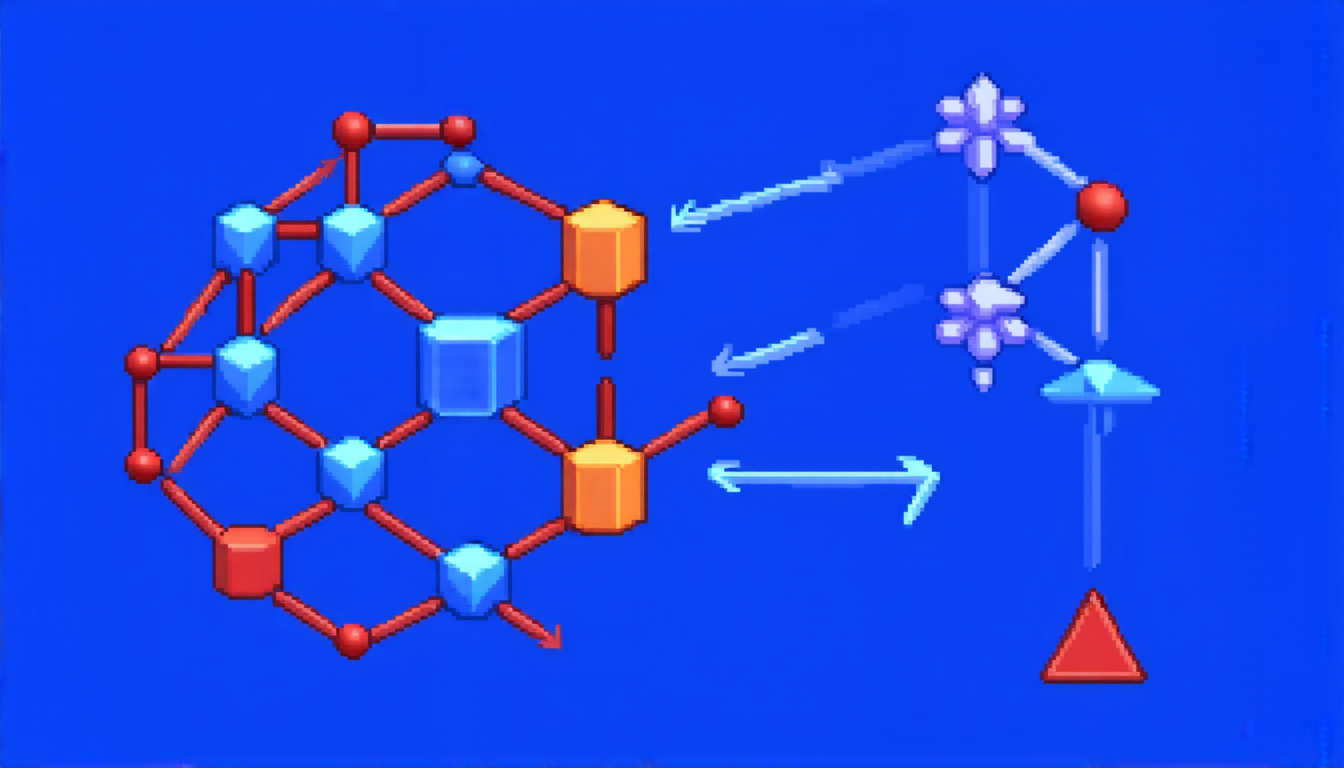
The latest breakthrough comes from a team of scientists who have developed a general approach to generating multi-component structures with two-dimensional altermagnetism. By analyzing the symmetry group of crystal structures and their subgroups, they were able to systematically categorize equivalent atomic positions and arrange them into orbits based on symmetry operations.
Using this method, the researchers generated candidate structures with specific symmetries and collinear magnetic configurations where opposite-spin lattices are interconnected through symmetry operations. They then employed first-principles calculations to determine the likelihood of these candidates possessing altermagnetism.
The team identified several stable two-dimensional altermagnetic materials, including Cr2Si2S3Se3, Fe2P2S3Se3, and V2O2BrI3. These materials possess unique magnetic properties that are not found in conventional ferromagnets or antiferromagnets.
One of the most exciting aspects of this research is its potential to revolutionize our understanding of magnetism and spintronics. Altermagnetic materials could be used to develop new devices with improved performance, efficiency, and scalability. For instance, they could enable more robust and efficient data storage systems or high-speed magnetic sensors.
The discovery of these altermagnetic materials also opens up new avenues for fundamental research. Scientists can now explore the underlying mechanisms that give rise to this phenomenon, which could lead to a deeper understanding of the intricacies of magnetism and spin physics.
In addition, the development of this general approach has far-reaching implications for the discovery of novel materials with unique properties. It demonstrates the power of symmetry-based classification in identifying exotic phases of matter and highlights the importance of interdisciplinary research that combines theoretical modeling with experimental verification.
The future of altermagnetism is bright indeed, with its potential to transform our understanding of magnetism and spintronics.
Cite this article: “Unlocking the Secrets of Altermagnetism: A New Frontier in Magnetic Materials”, The Science Archive, 2025.
Altermagnetism, Magnetism, Spintronics, Materials Science, Physics, Symmetry, Crystal Structures, Magnetic Order, Spin-Splitting, Novel Properties





