

Friday 28 March 2025
The quest for accuracy in wireless sensing networks has led researchers to tackle a pesky problem: preserving the chronological order of sensor updates in a world where packets can be dropped or delayed. A new paper tackles this issue head-on, proposing a novel approach to ensure that status updates are delivered to the application in the correct sequence.
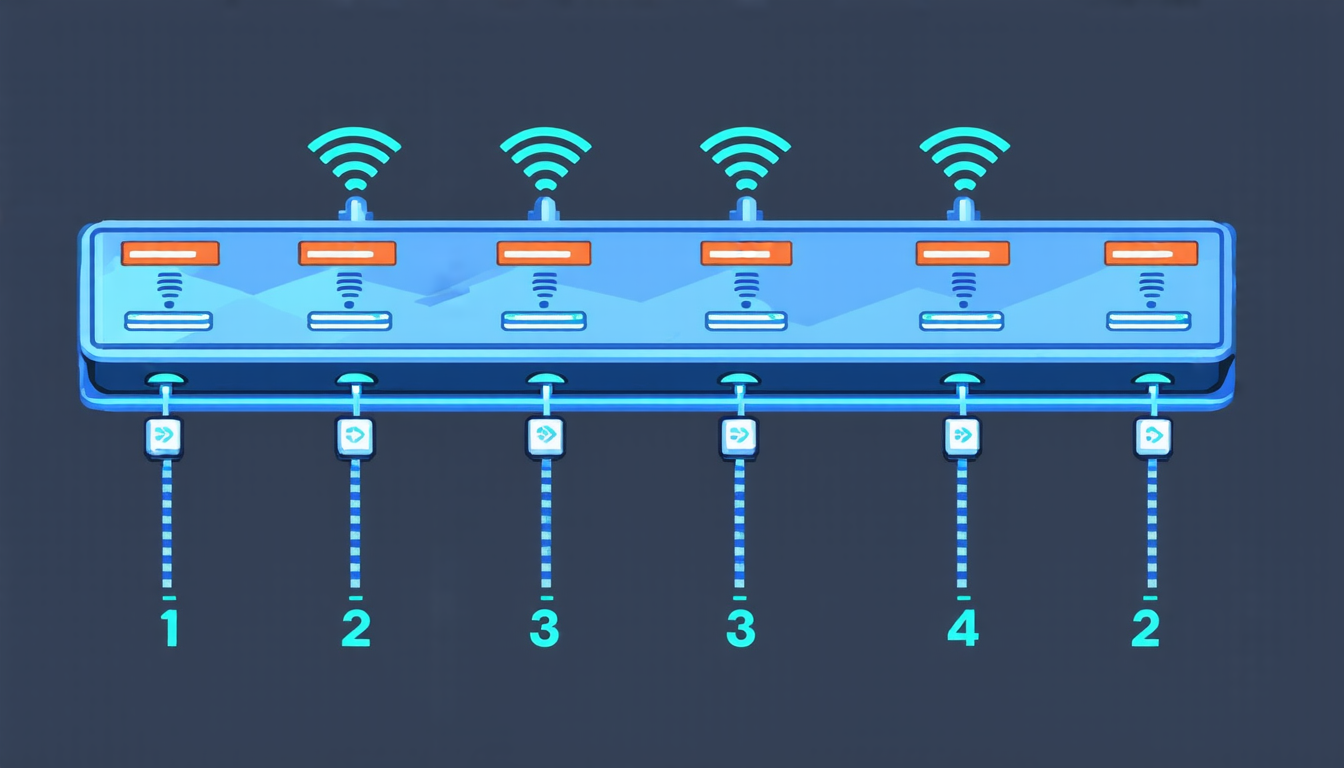
In the world of wireless sensing, it’s not uncommon for sensors to send updates to a central hub, where they’re processed and analyzed. But what happens when those updates don’t arrive in the order they were sent? This can lead to all sorts of problems, from incorrect analysis results to system failures. To mitigate this issue, researchers have turned to temporal windows of integration (TWIs), which ensure that updates are processed in the correct sequence by temporarily storing them at the hub.
But TWIs come with their own set of challenges. For example, what happens when a sensor’s packet is dropped or delayed? How can the hub know whether to process that update first or later? To answer these questions, researchers have developed a statistical model that takes into account the random delays involved in generating and transmitting updates.
The key insight behind this model is that the delay between two updates can be thought of as a random variable, with its own probability distribution. By analyzing this distribution, researchers can determine the likelihood that an update will arrive out of sequence and adjust the TWI duration accordingly.
To test their approach, researchers simulated various scenarios involving multiple sensors sending updates to a central hub. They found that their model accurately predicted the probability of simultaneity violation (PSV), which occurs when two or more updates are processed in the wrong order.
The implications of this work are far-reaching. By ensuring that status updates arrive at the application in the correct sequence, wireless sensing networks can provide more accurate analysis results and improve overall system reliability. This is particularly important in applications such as industrial automation, where incorrect sensor readings can have serious consequences.
One potential limitation of this approach is its reliance on statistical modeling, which may not always accurately capture the complexities of real-world systems. However, researchers are working to refine their model and extend it to more complex scenarios.
As wireless sensing networks continue to play a critical role in industries such as healthcare, transportation, and manufacturing, ensuring the accuracy and reliability of sensor updates will only become more important. This new approach offers a promising solution to this problem, and its potential benefits could be significant.
Cite this article: “Ensuring Temporal Integrity in Wireless Sensing Networks”, The Science Archive, 2025.
Wireless Sensing, Sensor Updates, Chronological Order, Packet Delays, Temporal Windows Of Integration, Statistical Modeling, Random Variables, Probability Distribution, Simultaneity Violation, System Reliability.





