

Friday 28 March 2025
The quest for secure and private machine learning has led researchers to explore innovative solutions, such as blockchain-based architectures. One of the latest developments in this area is a novel approach called TrustChain, which aims to ensure the integrity of decentralized federated learning (DFL) systems.
In traditional machine learning, data is typically stored on centralized servers, making it vulnerable to attacks and breaches. DFL, on the other hand, allows for the sharing of data among multiple parties while keeping sensitive information private. However, this approach also introduces new challenges, such as ensuring the trustworthiness of participating nodes and preventing malicious behavior.
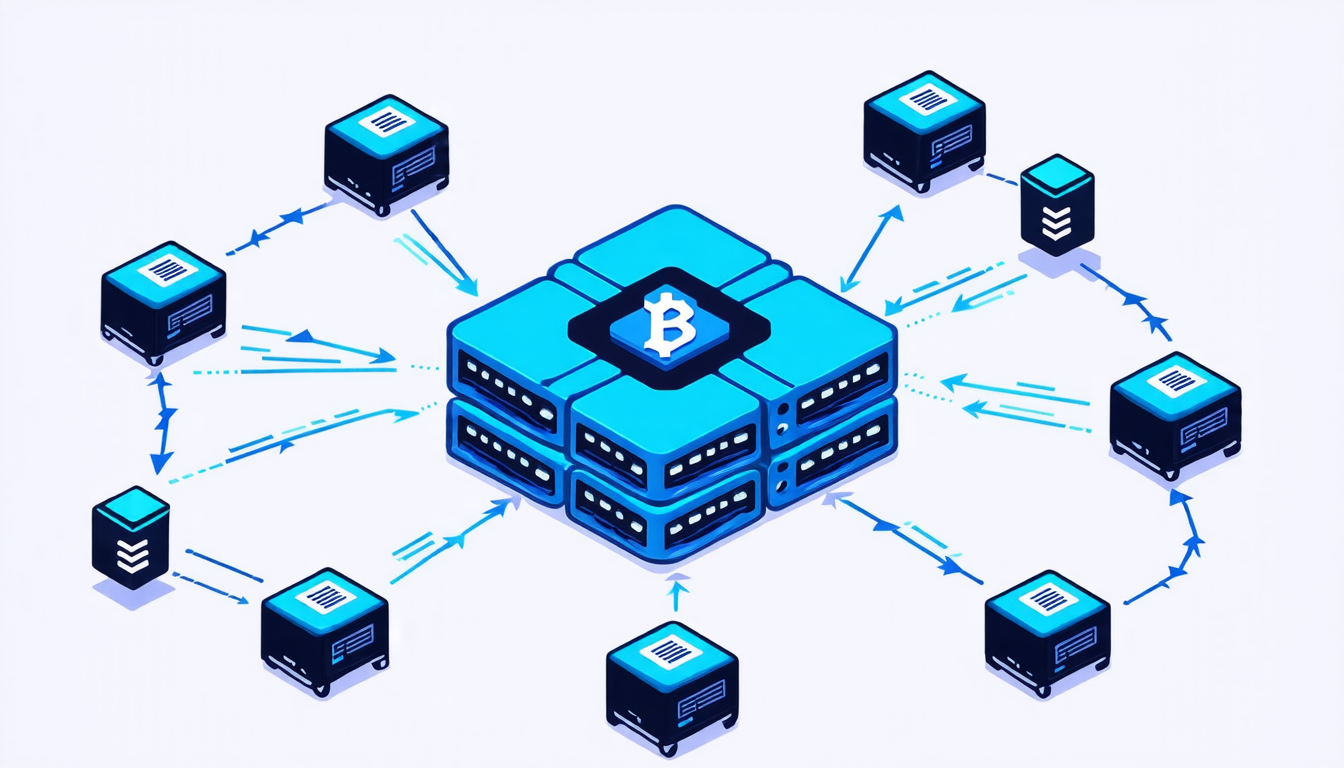
Enter TrustChain, a blockchain-enabled framework designed to address these issues. By leveraging the immutability and transparency of blockchain technology, TrustChain creates an audit trail for DFL transactions, allowing participants to verify the integrity of the data and the accuracy of the machine learning models.
The key innovation behind TrustChain lies in its two-stage approach to securing the DFL process. First, participating nodes are scored based on their behavior, with suspicious activity flagged for further investigation. This ensures that malicious nodes are excluded from the aggregation process, preventing them from influencing the results.
Second, TrustChain employs a statistical independence test called Hilbert-Schmidt Independence Criterion (HSIC) to verify the integrity of the aggregated model. HSIC measures the correlation between the model and the updates received from each participating node, allowing for the detection of anomalies and potential attacks.
The authors of TrustChain demonstrated the efficacy of their approach through extensive simulations on three benchmark datasets: MNIST, Fashion-MNIST, and CIFAR10. Their results show that TrustChain can effectively mitigate the impact of malicious nodes, even when they make up a significant portion of the participant pool.
Moreover, TrustChain’s design enables it to scale well with increasing numbers of participants, making it a promising solution for large-scale DFL applications. The authors also highlight the potential benefits of integrating TrustChain with other privacy-preserving techniques, such as zero-knowledge proofs and homomorphic encryption.
While TrustChain is still an emerging technology, its innovative approach to securing decentralized machine learning has significant implications for various industries, including healthcare, finance, and cybersecurity. As the demand for secure and private AI solutions continues to grow, TrustChain’s promise of trustworthy DFL could become a crucial component in the development of reliable and efficient machine learning systems.
Cite this article: “TrustChain: A Blockchain-Enabled Framework for Secure Decentralized Federated Learning”, The Science Archive, 2025.
Machine Learning, Blockchain, Decentralized Federated Learning, Dfl, Trustchain, Integrity, Privacy, Security, Malicious Behavior, Auditing





