

Saturday 29 March 2025
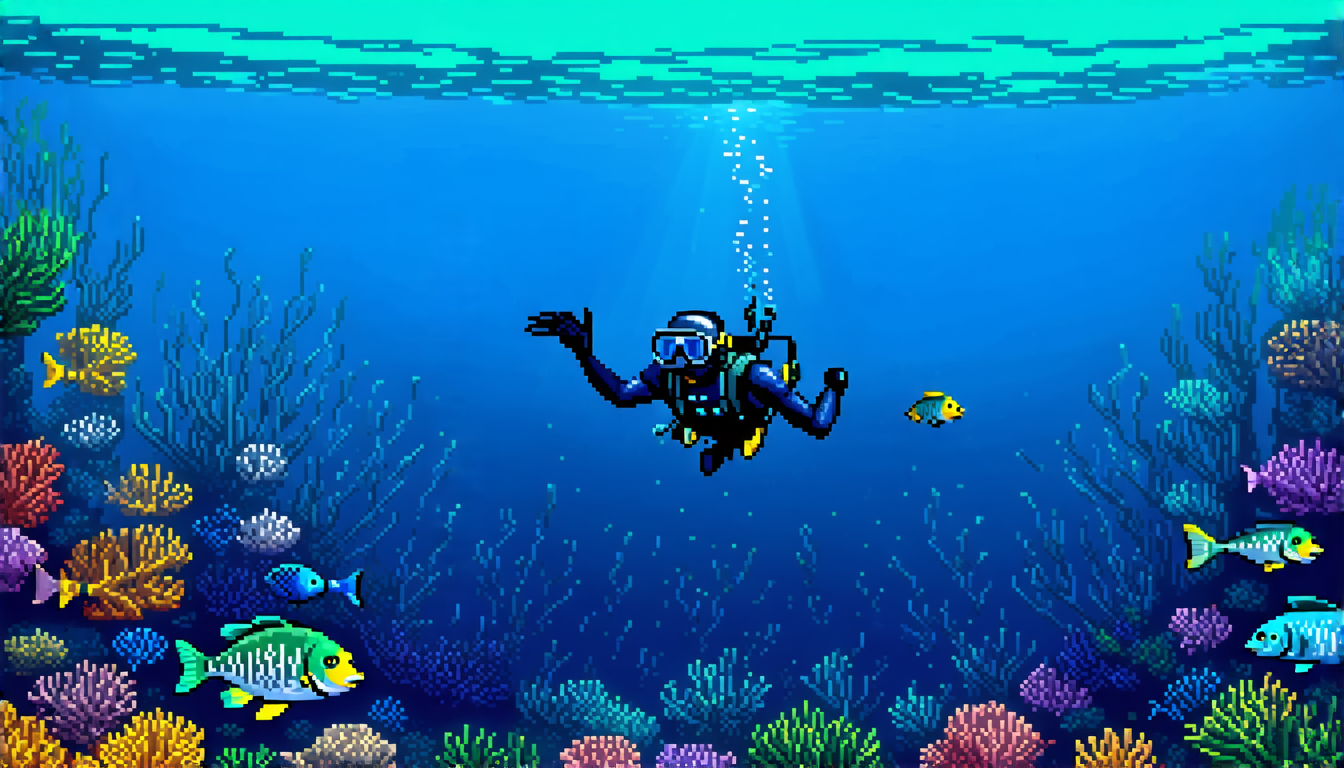
For years, underwater cameras have struggled to capture clear images of divers and their surroundings in the murky waters below. The problem lies in the way light behaves when it passes through water, scattering and absorbing much of its intensity and color along the way. This has made it difficult for researchers to analyze underwater scenes accurately.
Now, a team of scientists has developed an innovative solution to this long-standing issue. By combining machine learning algorithms with advanced image processing techniques, they have created a system that can detect and enhance underwater glare regions in real-time. These regions are crucial for identifying important features such as breath bubbles, which can indicate the presence and movement of divers.
The approach involves using a type of clustering algorithm called K-means to group similar pixels together based on their color and spatial coordinates. This allows researchers to distinguish between different objects and regions within an underwater scene. The system also incorporates contrast-limited adaptive histogram equalization (CLAHE), which helps to reduce noise and enhance the contrast between objects.
In a series of experiments, the team tested their algorithm using a dataset of 312 underwater images captured in various conditions. They found that the system was able to detect glare regions with high accuracy, even in cases where the images were heavily degraded by water absorption and scattering. The results showed that the combined use of RGB, Lab, and HSV color spaces significantly enhanced detection accuracy.
The implications of this research are significant for a range of fields, including underwater exploration, marine conservation, and search and rescue operations. By enabling researchers to analyze underwater scenes more accurately, the system could help improve our understanding of ocean ecosystems and support the development of new technologies for underwater applications.
One potential application is in the field of underwater robotics, where accurate image analysis could be used to enable robots to navigate and interact with their surroundings more effectively. The system could also be used to enhance the quality of images captured by underwater cameras, making it easier to identify objects and track movement over time.
Overall, this research demonstrates the potential for machine learning algorithms to solve some of the most challenging problems in underwater imaging. By combining advanced image processing techniques with clever clustering algorithms, researchers can unlock new insights into the underwater world and support a range of applications that benefit from accurate image analysis.
Cite this article: “Enhancing Underwater Imaging with Machine Learning Algorithms”, The Science Archive, 2025.
Underwater Imaging, Machine Learning, Image Processing, Glare Detection, Clustering Algorithms, K-Means, Contrast-Limited Adaptive Histogram Equalization, Rgb Color Space, Lab Color Space, Hsv Color Space.





