
Saturday 29 March 2025
A team of researchers has made a significant breakthrough in forecasting complex patterns in data, which could have far-reaching implications for fields such as finance, economics, and healthcare.
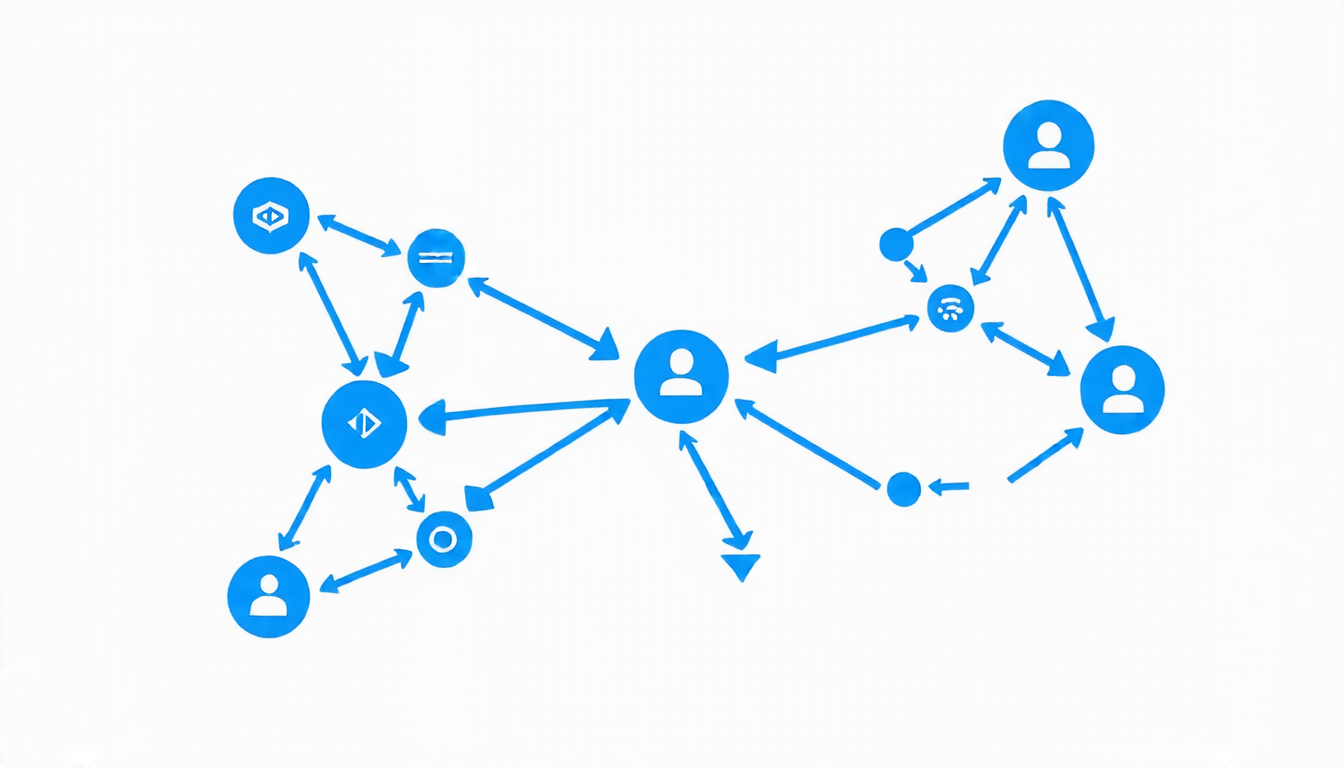
The problem they tackled is this: many real-world systems involve multiple variables that interact with each other in intricate ways. For instance, the economy is influenced by factors like interest rates, inflation, and employment numbers. But predicting these interactions is notoriously difficult, especially when the variables are non-Gaussian – meaning their distributions don’t follow a normal bell curve.
To tackle this challenge, the researchers developed a novel approach that combines ideas from statistics, machine learning, and dynamical systems. Their method, called the Dynamic Gaussian Copula Factor Model (DGFC), uses a clever combination of techniques to model these complex relationships.
The key innovation is the use of copulas, which are mathematical functions that describe the dependence between different variables. Traditionally, copulas have been used in finance to model risk and return in investments. But the researchers adapted this approach for use with non-Gaussian data.
Their DGFC model consists of two main components: a Gaussian factor model and a dynamic copula model. The first part captures the underlying structure of the data, while the second part models how the variables interact over time.
To test their approach, the team applied it to two real-world datasets: crime rates in New South Wales, Australia, and macroeconomic aggregates from the United States. They compared their results with those from other popular forecasting methods, including Bayesian vector autoregression (BVAR) and Poisson distributed lag models (DGLM).
The results were impressive. The DGFC model outperformed its competitors in terms of accuracy, precision, and robustness. In the crime rate dataset, for example, it produced highly competitive density, interval, and point forecasts.
But what’s particularly exciting about this research is its potential applications. By accurately forecasting complex patterns in data, the DGFC model could help policymakers make more informed decisions about everything from interest rates to public health interventions.
The implications are far-reaching, and researchers are already exploring how to adapt the DGFC approach for use in other fields, such as climate modeling and social network analysis.
In short, this breakthrough has the potential to revolutionize our ability to understand and predict complex systems – and that’s something to get excited about.
Cite this article: “Unlocking Complexity: A Novel Approach to Forecasting Non-Gaussian Data Patterns”, The Science Archive, 2025.
Data Forecasting, Complex Patterns, Machine Learning, Statistics, Dynamical Systems, Copulas, Gaussian Factor Model, Dynamic Copula Model, Bayesian Vector Autoregression, Poisson Distributed Lag Models