

Sunday 30 March 2025
Recent advancements in the field of artificial intelligence have led to a significant breakthrough in the creation of variable multi-layer transparent images. These images, once considered a distant possibility, are now being generated using a novel technique called Anonymous Region Transformer (ART).
The concept of ART is quite simple: it involves creating an anonymous region layout that allows the generative model to determine which set of visual tokens should align with which text tokens. This approach differs significantly from traditional semantic layouts, where the user must specify what objects to generate in each given region.
One of the most impressive aspects of ART is its ability to generate images with numerous distinct layers. In a recent study, researchers demonstrated that their model could produce images with over 50 layers, each with its own unique characteristics and textures. This level of complexity would have been unthinkable just a few years ago, and it has significant implications for fields such as graphic design and digital art.
The process of creating these complex images is surprisingly efficient, thanks to the layer-wise region crop mechanism used in ART. This mechanism allows the model to select only the visual tokens that belong to each anonymous region, reducing attention computation costs and enabling faster generation times. In fact, the researchers found that their method was over 12 times faster than traditional full-attention approaches.
But what about the quality of these generated images? The answer is astonishingly good. By using a high-quality multi-layer transparent image autoencoder, the model can support direct encoding and decoding of transparency in variable multi-layer images. This results in images that are not only complex but also visually stunning.
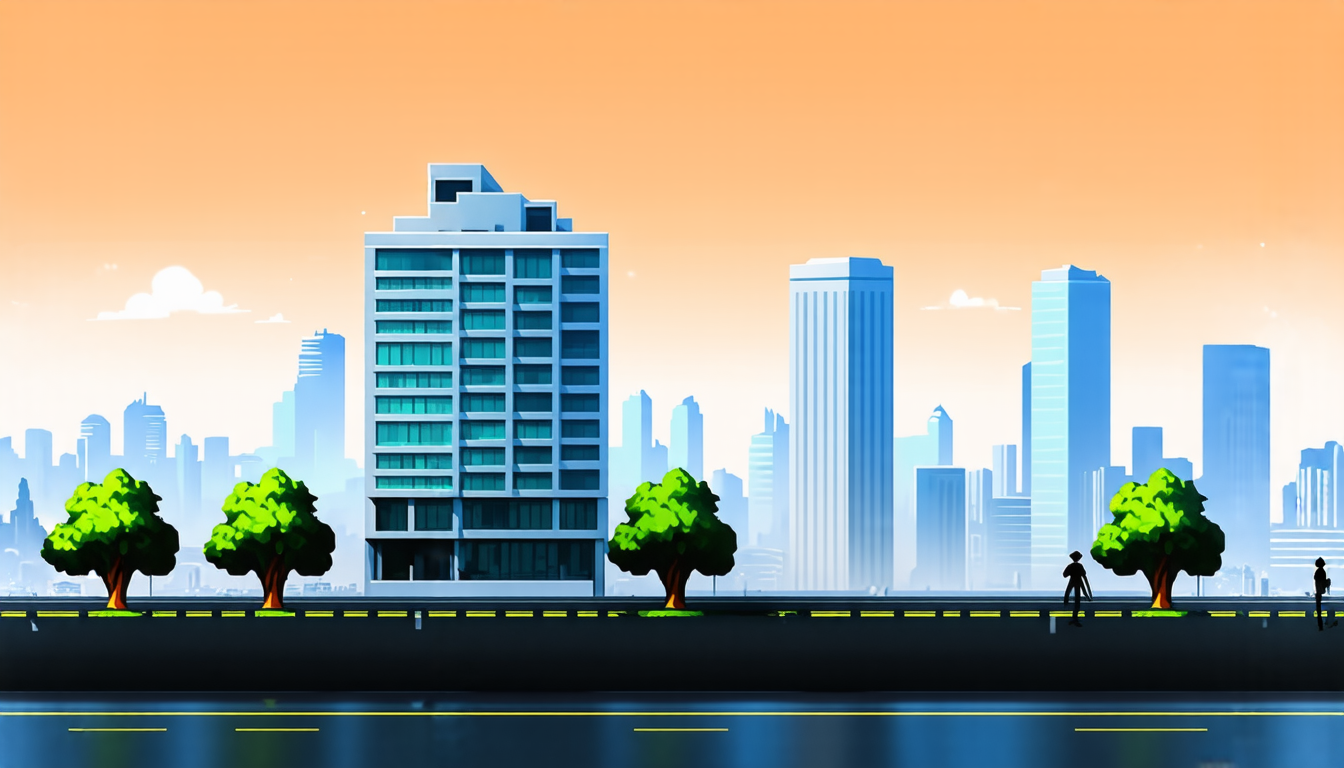
To demonstrate the capabilities of ART, researchers created several examples of variable multi-layer transparent images. One example featured a graphic design with a celebratory theme, complete with a banner at the top, a circular frame containing a photograph, and decorative elements surrounding it. Another example showed a stylized illustration of an urban landscape, complete with buildings, trees, and a martial arts uniform-clad individual.
These examples are just a few among many that demonstrate the potential of ART. The technique has significant implications for fields such as advertising, graphic design, and digital art, where the ability to create complex, visually appealing images quickly and efficiently is invaluable.
In addition to its practical applications, ART also has significant theoretical implications. It challenges our understanding of how generative models can be used to create complex images and opens up new avenues for research in this area.
Cite this article: “Anonymous Region Transformer: A Breakthrough in Generating Variable Multi-Layer Transparent Images”, The Science Archive, 2025.
Artificial Intelligence, Variable Multi-Layer Transparent Images, Anonymous Region Transformer (Art), Generative Models, Visual Tokens, Text Tokens, Graphic Design, Digital Art, Advertising, Transparency, Image Autoencoder.





