

Sunday 30 March 2025
The art of differential diagnosis has long been a cornerstone of medical practice, relying on clinicians’ ability to accurately identify the underlying cause of a patient’s symptoms. While this approach has served us well, it is inherently limited by its reliance on human expertise and the complexity of medical knowledge.
Recent advances in artificial intelligence have shown promise in augmenting this process, but most approaches have focused on static models that rely on pre-existing patient profiles. However, in real-world clinical practice, patient data is often incomplete or uncertain, making it difficult to apply these models effectively.
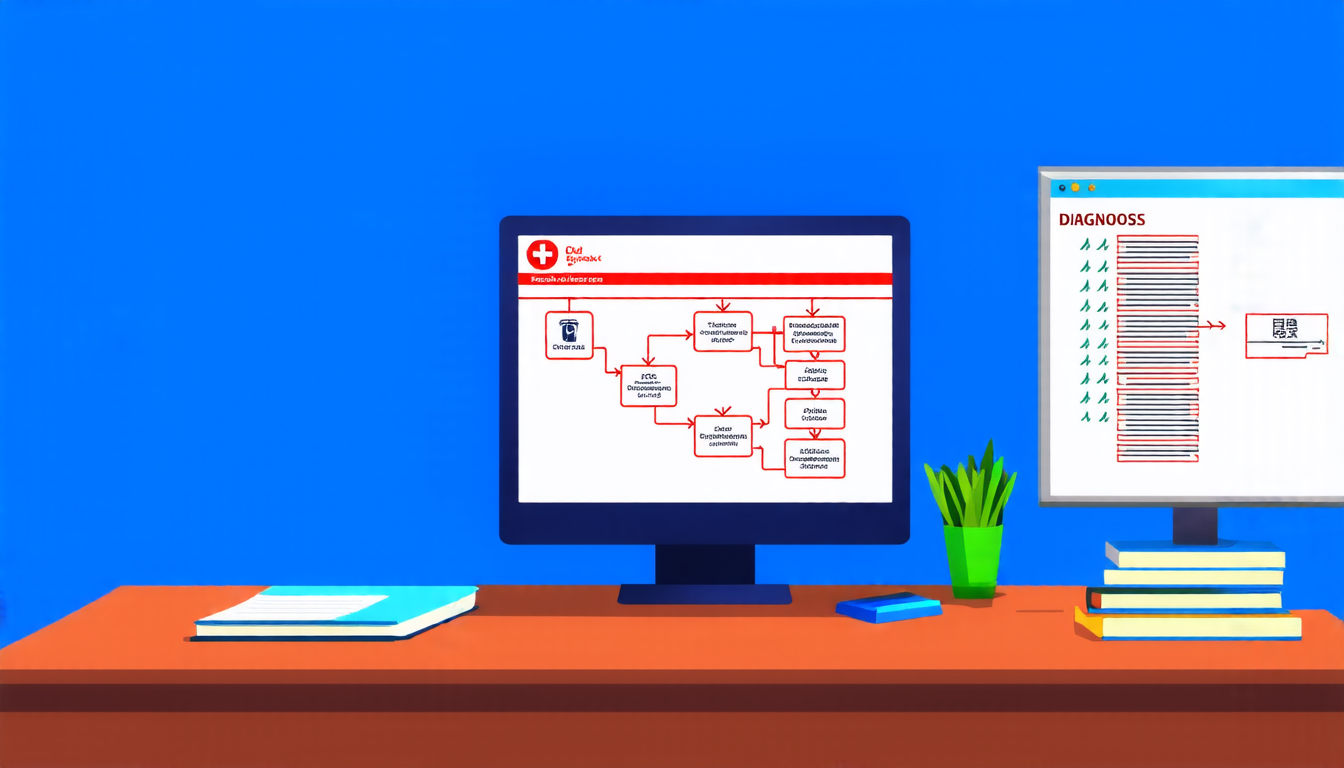
Enter MEDDxAgent, a novel framework designed to address this challenge by incorporating interactive differential diagnosis into its architecture. Developed by researchers from the University of California, Santa Barbara and NEC Laboratories Europe, MEDDxAgent takes a modular approach, breaking down the diagnostic process into three distinct components: an orchestrator, history taking simulator, and two specialized agents for knowledge retrieval and diagnosis strategy.
The orchestrator serves as the central hub, guiding the interaction between the other modules and providing a dynamic environment that adapts to changing patient data. The history taking simulator generates simulated patient profiles based on real-world clinical scenarios, allowing MEDDxAgent to train its models in a more realistic setting.
The knowledge retrieval agent is responsible for gathering relevant medical information from various sources, including PubMed and Wikipedia. This module is designed to be highly flexible, capable of adapting to different data formats and sources. The diagnosis strategy agent, on the other hand, uses this retrieved knowledge to generate diagnostic hypotheses and refine its approach based on user feedback.
In testing MEDDxAgent against existing approaches, researchers found significant improvements in accuracy, particularly when patient profiles were incomplete or uncertain. Furthermore, the framework’s interactive nature allowed for more effective iteration and refinement of diagnoses, leading to better overall performance.
The implications of this work are far-reaching, with potential applications extending beyond medicine to any field where complex diagnostic processes are involved. By providing a flexible, adaptive platform for differential diagnosis, MEDDxAgent offers a powerful tool for healthcare professionals and researchers alike, capable of improving the accuracy and efficiency of diagnosis in a wide range of clinical settings.
The authors have also demonstrated the effectiveness of their framework by comparing it to existing approaches using three different datasets, each representing a distinct medical domain. The results showed that MEDDxAgent outperformed its competitors, achieving higher accuracy and better overall performance in all three domains.
Cite this article: “MEDDxAgent: A Novel Framework for Interactive Differential Diagnosis”, The Science Archive, 2025.
Differential Diagnosis, Artificial Intelligence, Medical Knowledge, Patient Profiles, Incomplete Data, Uncertain Data, Meddxagent, Diagnostic Process, Accuracy, Healthcare Professionals





