

Sunday 30 March 2025
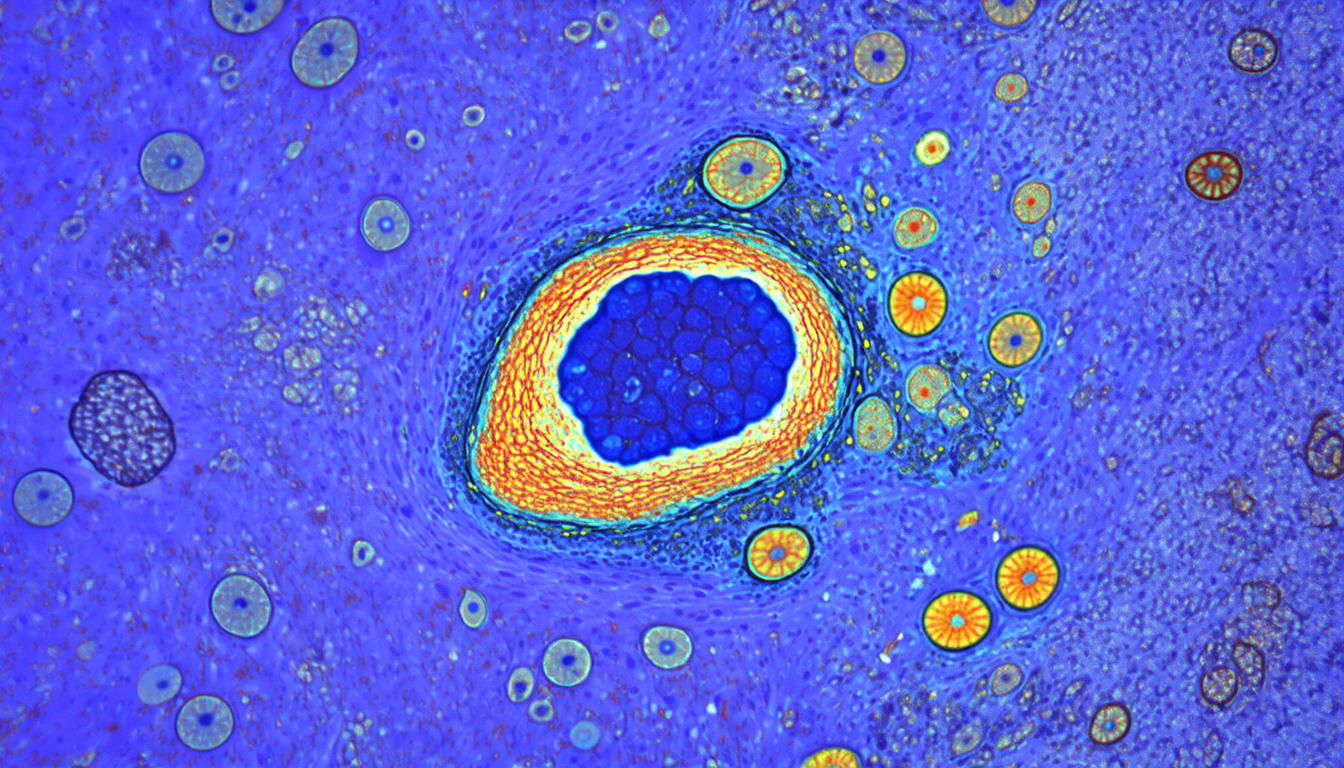
In a breakthrough that could revolutionize the field of digital pathology, researchers have developed a new model that can accurately identify and classify different types of cells in histopathology images. This is achieved through a combination of machine learning and data augmentation techniques, which enable the model to learn from a large dataset of labeled images.
The new model, known as CellSeg, uses a convolutional neural network (CNN) to segment individual cells within an image and then classifies them based on their morphology and other characteristics. The CNN is trained using a large dataset of labeled images, where each cell is manually annotated with its corresponding type. This training process allows the model to learn the patterns and features that distinguish one type of cell from another.
One of the key innovations of CellSeg is its ability to handle the variability in image quality and staining protocols that are common in histopathology images. This is achieved through a combination of data augmentation techniques, such as random cropping, flipping, and rotation, which enable the model to learn robust features that are not specific to a particular image or staining protocol.
In addition to its accuracy, CellSeg is also highly efficient and can process images at a rate of several thousand per hour. This makes it an attractive solution for researchers and clinicians who need to analyze large datasets of histopathology images.
The potential applications of CellSeg are vast and varied. For example, it could be used to identify specific types of cancer cells in biopsies, which could lead to more accurate diagnoses and targeted treatments. It could also be used to monitor the progression of disease over time, which could help researchers understand how different therapies affect the body.
In addition to its potential medical applications, CellSeg could also have a significant impact on our understanding of cell biology. By enabling researchers to quickly and accurately identify and classify different types of cells, it could lead to new insights into cellular behavior and function.
Overall, CellSeg is an important step forward in the field of digital pathology and has the potential to revolutionize our ability to analyze and understand histopathology images. Its accuracy, efficiency, and flexibility make it a powerful tool for researchers and clinicians alike, and its potential applications are vast and varied.
Cite this article: “CellSeg: A Breakthrough in Digital Pathology for Accurate Cell Identification and Classification”, The Science Archive, 2025.
Histopathology, Digital Pathology, Machine Learning, Convolutional Neural Network, Cell Segmentation, Data Augmentation, Image Analysis, Cancer Diagnosis, Cell Biology, Biomedical Imaging





