

Sunday 30 March 2025
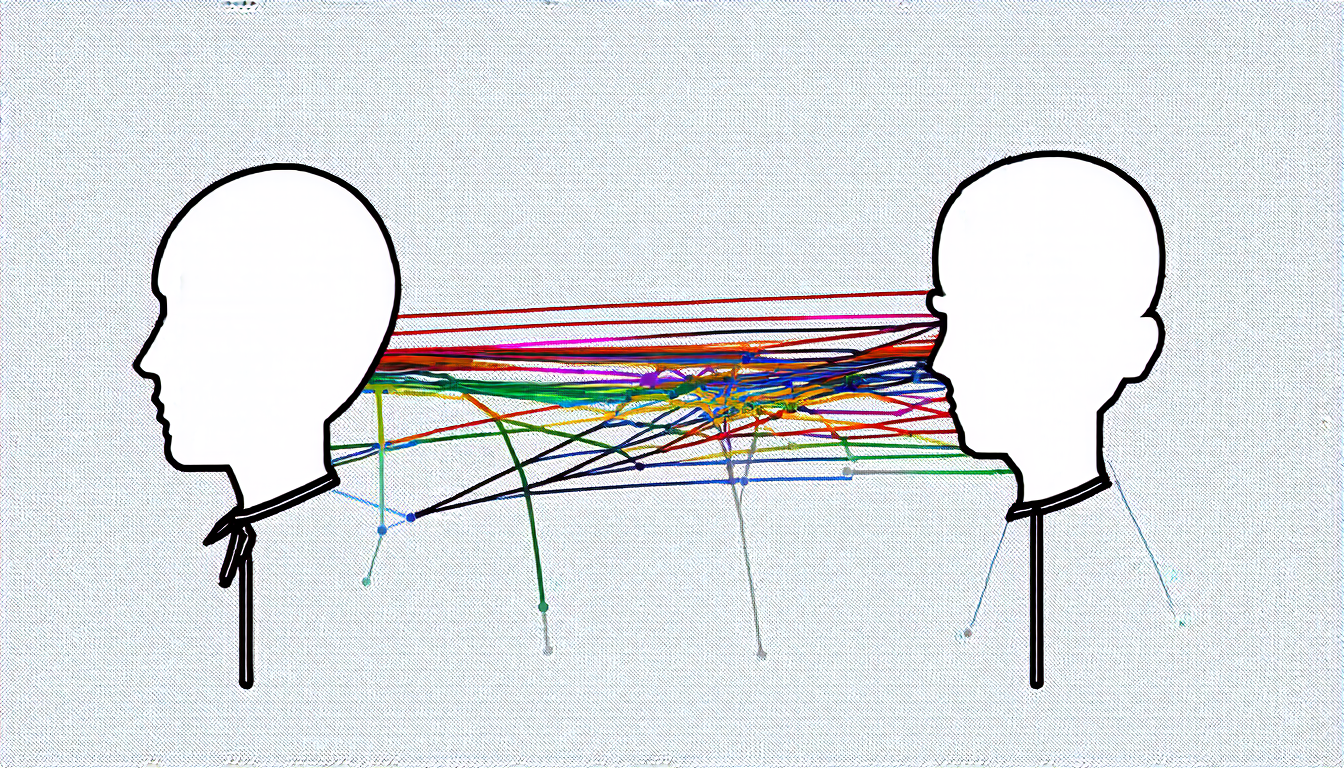
Network alignment is a crucial task in modern data science, where researchers aim to find correspondences between nodes across different networks. This process can help uncover hidden relationships and patterns, leading to breakthroughs in various fields such as social network analysis, bioinformatics, and recommender systems.
To tackle this complex problem, scientists have developed numerous algorithms over the years. However, most of these methods rely on fixed cost functions that are difficult to generalize across different networks. This limitation has led researchers to explore alternative approaches, including optimal transport (OT) theory.
Recently, a team of scientists proposed a novel framework called Joint Optimal Transport and Embedding for Network Alignment (JOENA). JOENA combines the strengths of OT-based methods with those of network embedding techniques to achieve more accurate and robust alignments. By directly modeling cross-network node relationships through OT, JOENA can better capture complex interactions between nodes.
In traditional OT-based methods, the cost function is typically fixed and predefined. However, this approach has several limitations. For example, it may not capture subtle differences in node relationships or handle noisy data effectively. In contrast, JOENA uses a learnable cost function that adapts to the specific characteristics of each network.
To develop JOENA, the researchers first trained a neural network to embed nodes from two different networks into high-dimensional spaces. These embeddings were then used as input features for an OT algorithm, which computed the optimal node correspondence between the two networks.
The team also introduced a novel regularization term that encouraged the model to learn meaningful node representations. This term was based on a variant of the Fisher information metric, which measures the amount of information contained in a node’s attributes.
To evaluate JOENA, the researchers conducted extensive experiments on six real-world datasets, including social networks, citation graphs, and co-authorship networks. The results showed that JOENA outperformed several state-of-the-art methods in terms of alignment quality and robustness to noise.
JOENA’s performance was particularly impressive in handling large-scale networks with millions of nodes and edges. In one experiment, the team aligned a network with 93,773 nodes and 5,088,434 edges in just over an hour, achieving an alignment quality that surpassed other methods.
The implications of JOENA are far-reaching, with potential applications in areas such as recommender systems, bioinformatics, and social network analysis. By enabling more accurate and robust alignments between networks, JOENA could unlock new insights into complex systems and relationships.
Cite this article: “Joint Optimal Transport and Embedding for Network Alignment (JOENA)”, The Science Archive, 2025.
Network Alignment, Optimal Transport Theory, Joint Optimal Transport And Embedding, Neural Networks, Node Embeddings, Fisher Information Metric, Regularization Term, Real-World Datasets, Recommender Systems, Bioinformatics.





