

Sunday 30 March 2025
In a breakthrough that could revolutionize the field of nanophotonics, researchers have developed a new method for designing and optimizing metasurfaces – thin layers of materials engineered to manipulate light at the nanoscale.
Metasurfaces are already being used in a variety of applications, including solar energy harvesting, sensing, and optics. However, their performance is often limited by the complexity of the materials and structures involved. Traditional design methods rely on trial and error or complex numerical simulations, which can be time-consuming and inaccurate.
The new method uses a combination of computational topology optimization and finite-difference time-domain (FDTD) simulations to design metasurfaces that maximize power dissipation – the ability to absorb light and convert it into other forms of energy. This approach allows researchers to quickly and accurately explore a vast range of possible designs, identifying the most effective ones in a matter of minutes.
The method starts by using computational topology optimization to generate a library of potential metasurface structures. These structures are then simulated using FDTD, which solves Maxwell’s equations to determine how light interacts with each structure. The simulations provide detailed information on the absorption and transmission properties of each structure.
By analyzing the simulation results, researchers can identify the most effective designs and optimize them further through iterative cycles of design and simulation. This process allows for the exploration of a vast design space in a short amount of time, enabling the discovery of novel structures that might not have been possible through traditional methods.
The new method has already been used to design metasurfaces with unprecedented levels of broadband absorption. These designs can absorb light across a wide range of wavelengths, from the ultraviolet to the near-infrared, and convert it into other forms of energy such as heat or electrical current.
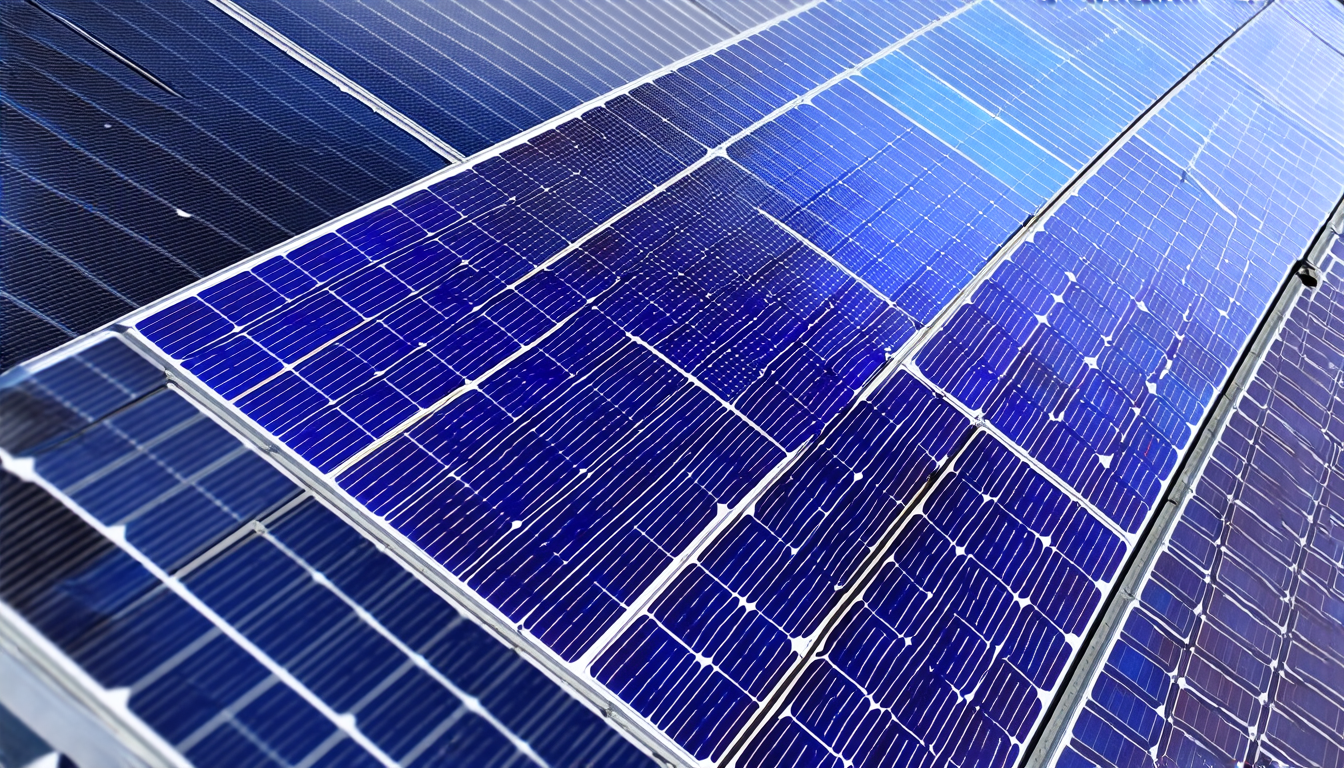
The implications of this research are significant. Metasurfaces could be used to improve the efficiency of solar panels, enabling them to generate more electricity from the same amount of sunlight. They could also be used to develop new sensors that can detect a wide range of substances and materials with greater accuracy and sensitivity.
Furthermore, metasurfaces could play a key role in the development of next-generation optical devices, such as ultra-compact lasers and optical switches. These devices would require precise control over light-matter interactions, which metasurfaces could provide through their ability to manipulate light at the nanoscale.
Cite this article: “Revolutionizing Metasurface Design with Computational Topology Optimization and FDTD Simulations”, The Science Archive, 2025.
Nanophotonics, Metasurfaces, Computational Topology Optimization, Fdtd Simulations, Maxwell’S Equations, Light Absorption, Broadband Absorption, Solar Panels, Sensors, Optical Devices





