

Sunday 30 March 2025
Scientists have made a significant breakthrough in understanding how cause and effect work in complex systems, such as molecular dynamics. By using advanced computational methods, researchers have been able to identify causal relationships between variables that were previously thought to be unrelated.
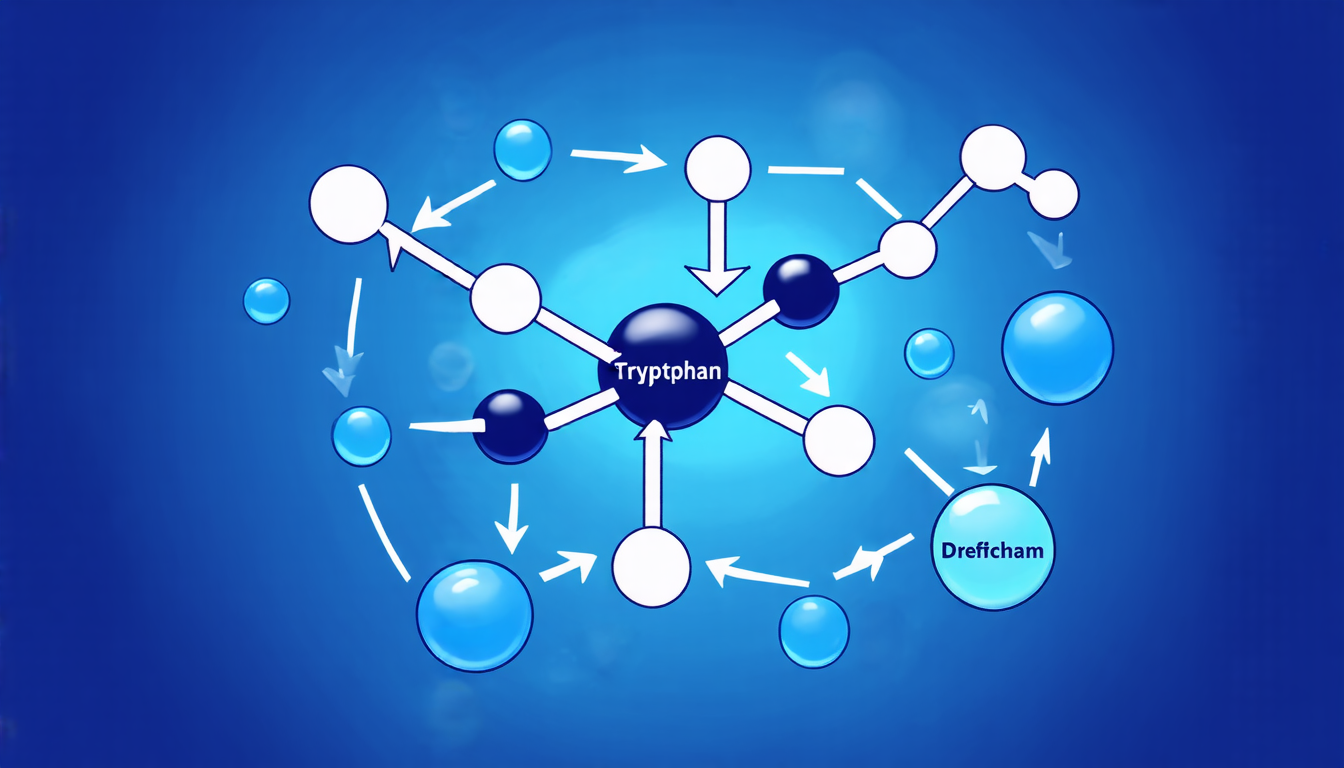
The study focused on a specific system, where a molecule called tryptophan was placed in water and its behavior was simulated using computer models. The team used two independent methods to analyze the data and found that both methods produced similar results: there was an asymmetry in the way information flowed between certain variables.
This asymmetry is a key indicator of causality, meaning that one variable is affecting another in a specific way. In this case, the researchers found that the tryptophan molecule was influencing the water molecules around it, but not vice versa. This suggests that the tryptophan molecule is playing a dominant role in shaping its environment.
The significance of this finding lies in its potential to shed light on complex biological processes. For example, understanding how proteins interact with their surroundings could help us better understand diseases such as Alzheimer’s and Parkinson’s.
One of the most exciting aspects of this research is its ability to identify causal relationships between variables that were previously thought to be unrelated. This has implications for a wide range of fields, from biology and chemistry to economics and social sciences.
The study also highlights the importance of using multiple methods to analyze data. By combining different approaches, researchers can increase the accuracy and reliability of their findings. This is particularly important in complex systems, where small changes can have significant effects.
Overall, this research has opened up new avenues for understanding complex systems and identifying causal relationships between variables. It’s a reminder that even in seemingly unrelated fields, there may be hidden patterns and connections waiting to be uncovered.
Cite this article: “Unraveling Causal Relationships in Complex Systems”, The Science Archive, 2025.
Cause, Effect, Complex Systems, Molecular Dynamics, Tryptophan, Water, Asymmetry, Causality, Protein, Biology





