

Sunday 30 March 2025
Researchers have made significant progress in developing a new method for generating high-quality, dense point clouds from sparse and noisy input data. This breakthrough has far-reaching implications for a variety of fields, including robotics, computer vision, and autonomous vehicles.
The challenge of generating accurate and detailed point clouds is a long-standing problem in the field of computer science. Traditional methods rely on interpolation algorithms that can produce inconsistent results, especially when dealing with complex shapes or noisy data. The new approach, dubbed SPU-IMR, uses an iterative mask-recovery framework to generate point clouds that are not only dense but also highly accurate.
The key innovation behind SPU-IMR is its ability to learn from the input data itself. By iteratively applying a series of transformations and refinements, the algorithm is able to identify patterns and relationships within the data that would be difficult or impossible for traditional methods to capture. This allows it to generate point clouds that are not only dense but also highly detailed and accurate.
One of the most impressive aspects of SPU-IMR is its ability to handle arbitrary-scale input data. Unlike traditional methods, which are limited to specific scales or resolutions, SPU-IMR can generate high-quality point clouds from input data of any size or complexity. This makes it an extremely versatile tool that can be applied to a wide range of applications.
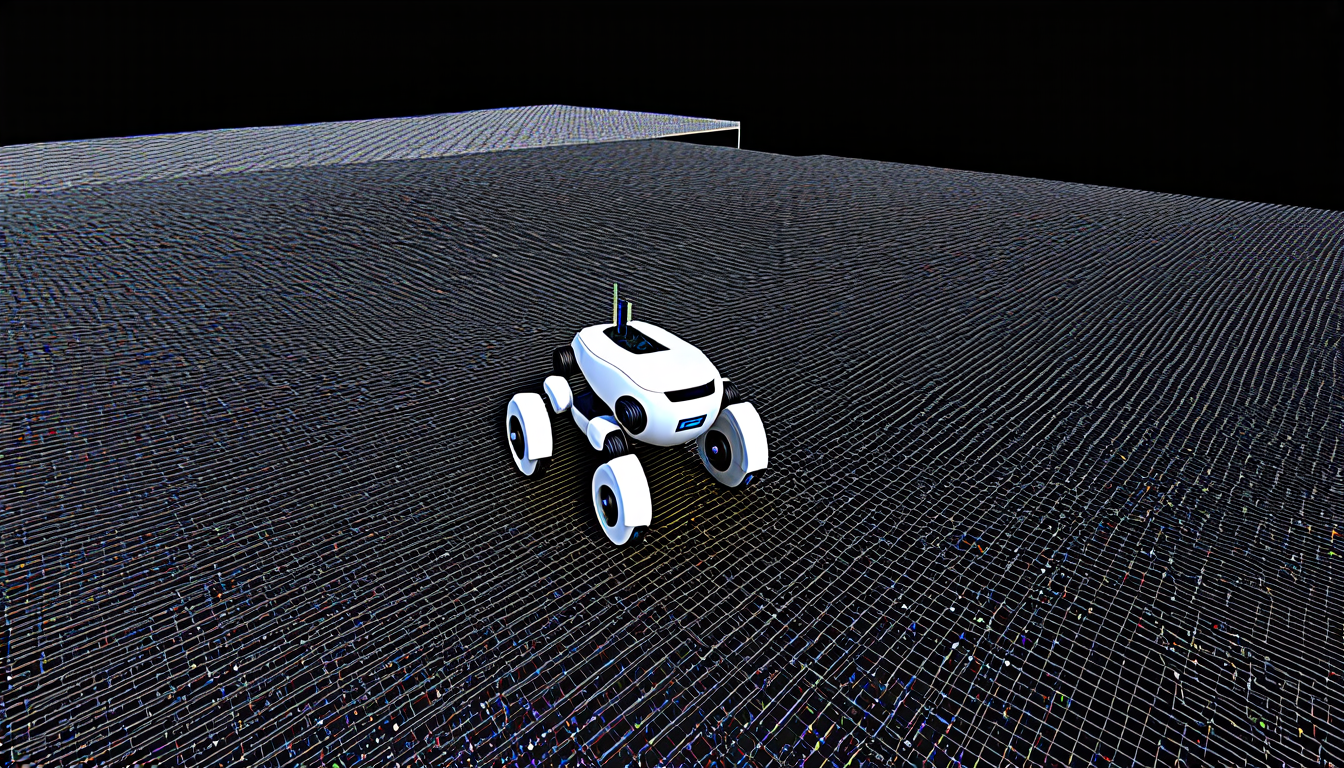
The potential applications of SPU-IMR are vast and varied. In the field of robotics, for example, the algorithm could be used to create highly detailed 3D models of complex environments, allowing robots to navigate and interact with their surroundings in a more accurate and effective way. In computer vision, SPU-IMR could be used to generate high-quality point clouds from images or videos, enabling new applications such as 3D reconstruction and object recognition.
Autonomous vehicles are another area where SPU-IMR could have a significant impact. By generating highly accurate and detailed point clouds from sensor data, the algorithm could enable autonomous vehicles to better understand their surroundings and make more informed decisions about navigation and control.
Overall, the development of SPU-IMR represents a major breakthrough in the field of computer science, with far-reaching implications for a wide range of applications. Its ability to generate high-quality point clouds from sparse and noisy input data makes it an extremely versatile tool that could have significant impacts on fields such as robotics, computer vision, and autonomous vehicles.
Cite this article: “Breakthrough in Point Cloud Generation: A New Era in Computer Science”, The Science Archive, 2025.
Point Clouds, Computer Science, Robotics, Autonomous Vehicles, Computer Vision, 3D Models, Iterative Mask-Recovery Framework, Spu-Imr, Interpolation Algorithms, Noisy Data





