
Sunday 30 March 2025
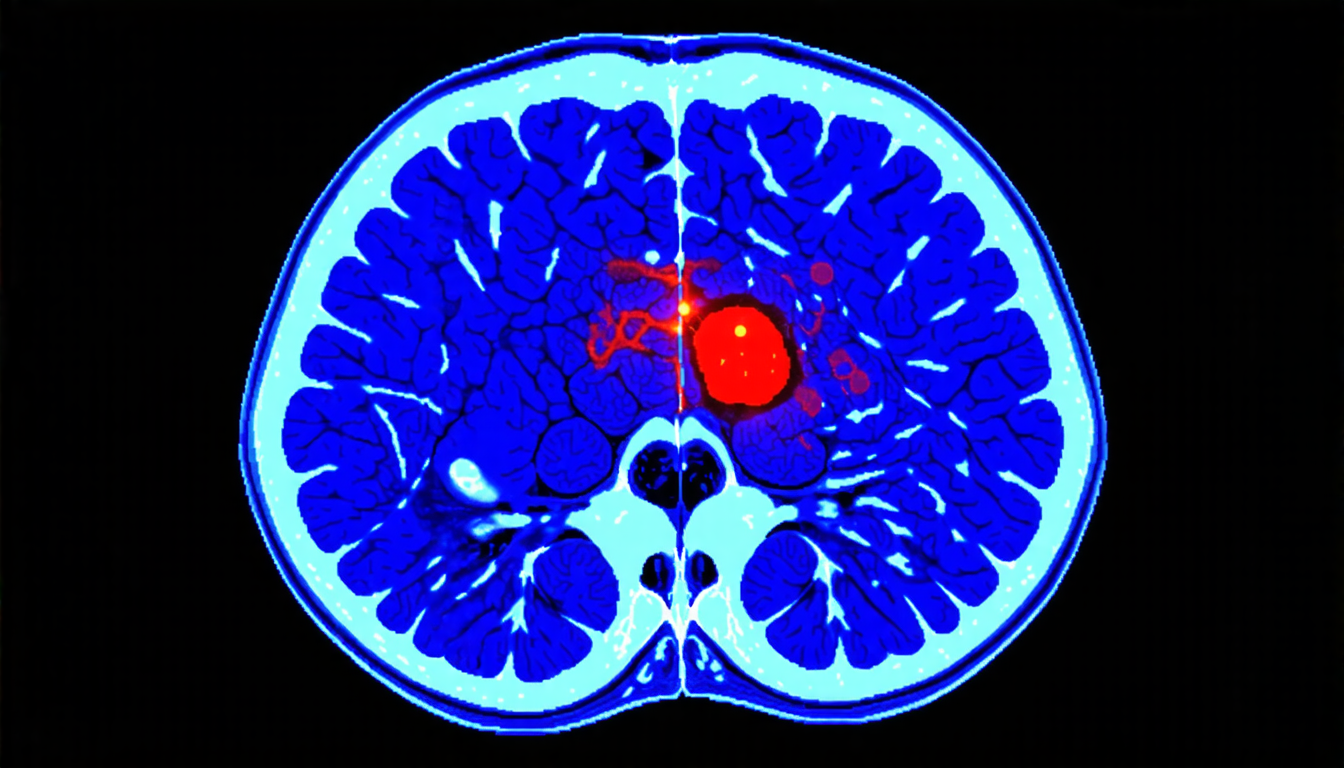
A team of researchers has made a significant breakthrough in the field of medical imaging, developing a deep learning-based approach that can automatically segment brain tumors with unprecedented accuracy.
The new method uses a combination of convolutional neural networks and residual connections to analyze magnetic resonance imaging (MRI) scans and identify areas of abnormal tissue growth. By leveraging pre-trained models and fine-tuning them on glioma imaging data, the researchers were able to achieve remarkable results in both 2D and 3D segmentations.
The approach has been tested on a range of datasets, including the BraTS 2018, 2019, and 2020 challenges, which provide a standard benchmark for evaluating brain tumor segmentation algorithms. The results are impressive: in 2D segmentations, the model achieves an accuracy of 99.77%, while in 3D segmentations, it reaches 98.91%.
These figures are significant because accurate segmentation is crucial for effective treatment planning and patient outcomes. By automating this process, clinicians can focus on making more informed decisions about patient care, rather than spending hours manually analyzing images.
The researchers also explored the use of different architectures, including UNET, Inception, and ResNet models. While each has its strengths and weaknesses, the ResNet model emerged as a clear winner, demonstrating exceptional performance in both 2D and 3D segmentations.
One of the key advantages of this approach is its ability to capture both local and global features in MRI scans. By using residual connections, the model can learn hierarchical patterns in brain tissue growth, allowing it to identify subtle changes that might be missed by simpler algorithms.
The potential applications of this technology are vast. In addition to improving patient care, it could also accelerate clinical trials and reduce the time it takes to develop new treatments for brain cancer.
As medical imaging continues to play a vital role in modern healthcare, advances like these will be crucial in helping clinicians make more accurate diagnoses and developing targeted treatments. By leveraging the power of artificial intelligence, researchers can unlock new possibilities for improving patient outcomes and transforming our understanding of complex diseases.
Cite this article: “Accurate Brain Tumor Segmentation Using Deep Learning-Based Approach”, The Science Archive, 2025.
Medical Imaging, Deep Learning, Brain Tumors, Mri Scans, Convolutional Neural Networks, Residual Connections, Glioma, Segmentation, Accuracy, Artificial Intelligence