

Sunday 30 March 2025
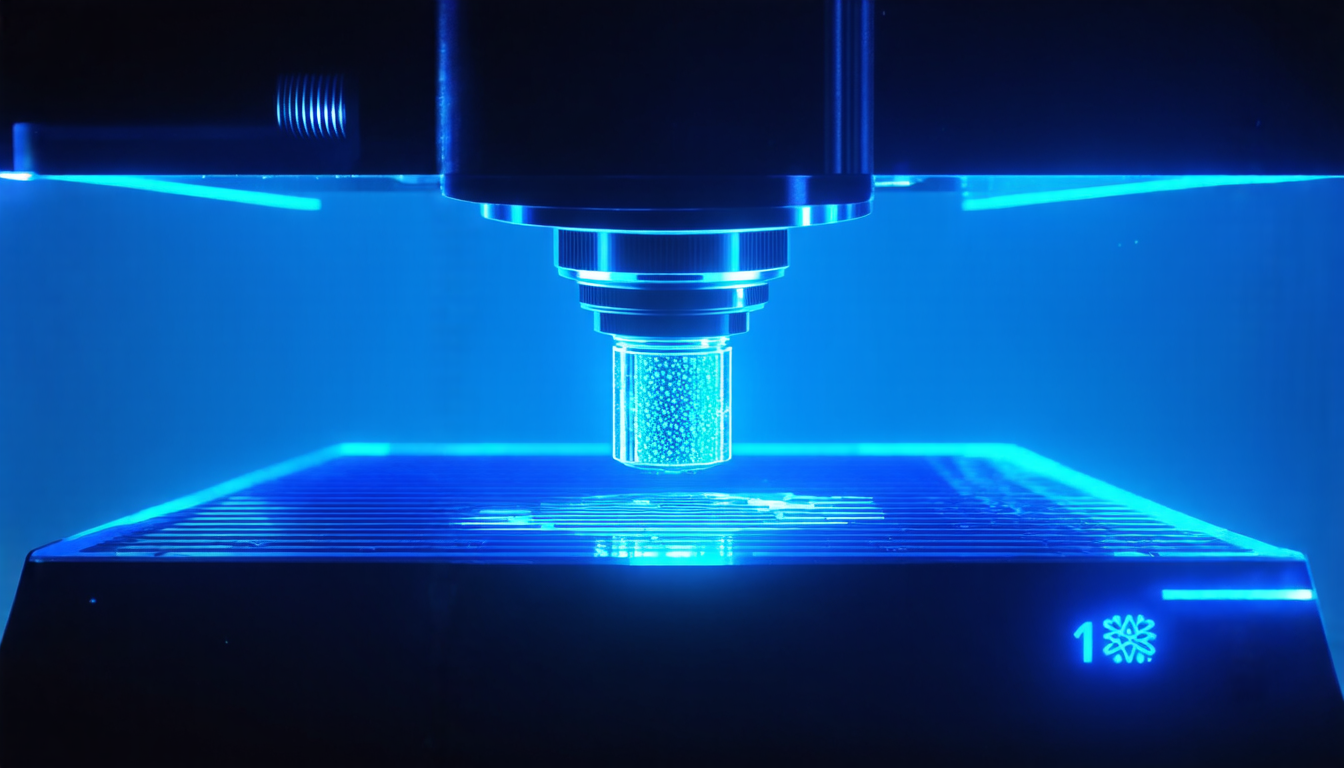
A team of researchers has developed a cryogen-free atomic force microscope (AFM) made entirely out of glass, capable of achieving sub-nanometer resolution at temperatures as low as 100 millikelvin. This achievement marks a significant milestone in the field of scanning probe microscopy, which is crucial for studying quantum materials and understanding their behavior.
The new AFM design takes advantage of fused silica glass’s exceptional thermal insulation properties, allowing it to maintain a stable temperature while operating in a dilution refrigerator. The microscope uses a unique symmetric positioner-scanner (SyPS) design, which amplifies the mechanical stiffness of the system, reducing vibrations and noise.
One of the main challenges in building an AFM is decoupling external vibrations from the scanning mechanism, as even minute movements can compromise the resolution. The SyPS design addresses this issue by using a combination of amplification and thermal insulation to minimize thermal expansion and contraction. This allows the microscope to maintain its stability and precision while operating at extremely low temperatures.
The researchers also implemented a novel interferometer module that utilizes fiber-optic deflection sensors, providing high-resolution displacement detection with minimal noise. This enables the AFM to achieve resolutions of less than 1 angstrom (0.1 nanometers), making it an ideal tool for studying quantum materials and their behavior.
In addition to its exceptional resolution, the glass-made AFM is also remarkably durable. The researchers tested the microscope by cycling it through various temperatures and operating conditions without observing any signs of degradation or failure.
The development of this cryogen-free, all-glass AFM has significant implications for the field of scanning probe microscopy. It opens up new possibilities for studying quantum materials at extremely low temperatures, which is essential for understanding their behavior and properties. The microscope’s high-resolution capabilities also make it an ideal tool for characterizing the surface topography of these materials.
The researchers’ innovative design and implementation have pushed the boundaries of what is possible with AFMs, demonstrating that even seemingly insurmountable challenges can be overcome through careful engineering and experimentation. As the field continues to evolve, this achievement serves as a testament to the power of human ingenuity and creativity in driving scientific progress.
Cite this article: “Glass-Made Atomic Force Microscope Achieves Sub-Nanometer Resolution at 100 Millikelvin”, The Science Archive, 2025.
Atomic Force Microscopy, Scanning Probe Microscopy, Quantum Materials, Glass, Thermal Insulation, Interferometer, Fiber-Optic Deflection Sensors, Nanotechnology, Cryogen-Free, Sub-Nanometer Resolution





