

Monday 31 March 2025
Scientists have made a significant breakthrough in the field of nanofluidics, allowing them to analyze tiny amounts of liquid solutes with unprecedented precision. By developing a new technique called Nanofluidic Scattering Spectroscopy (NSS), researchers can study the properties of molecules at the nanoscale, opening up new possibilities for understanding complex biological and chemical processes.
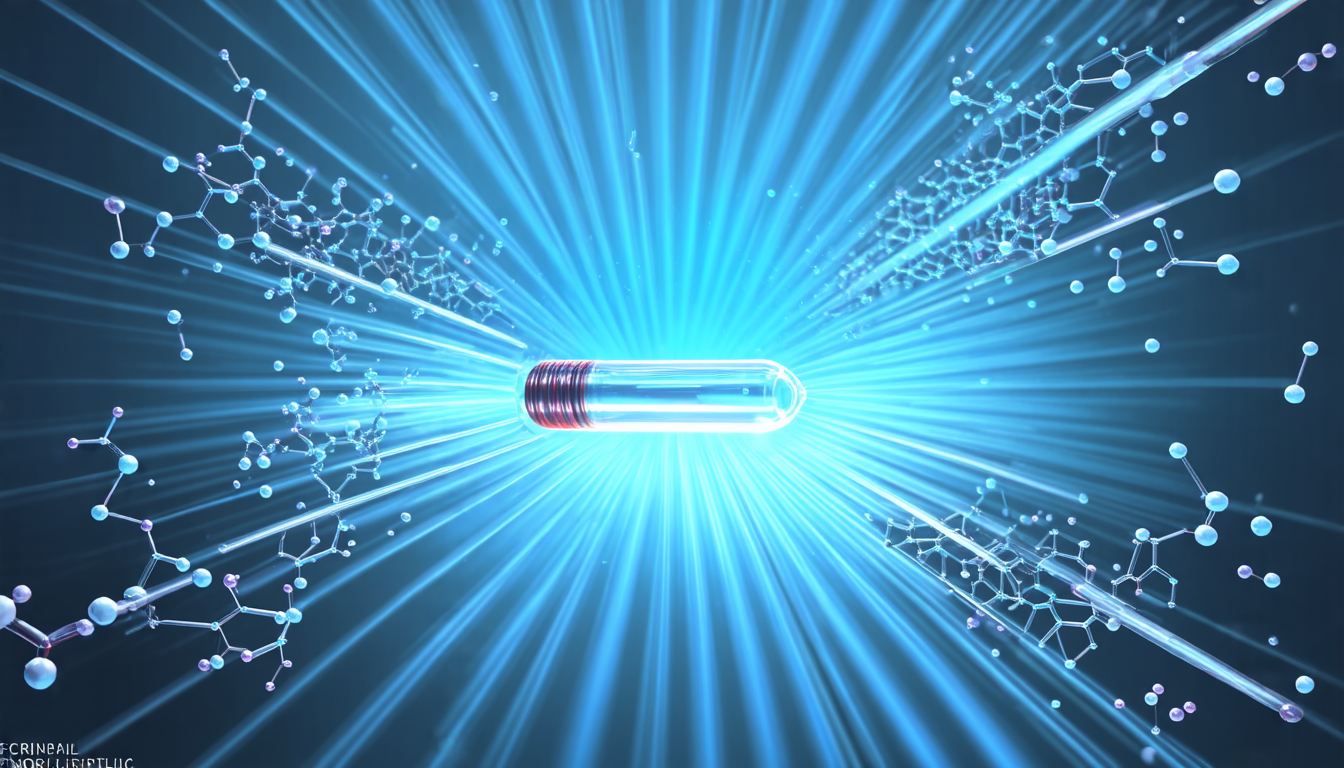
Traditionally, scientists have relied on absorption spectroscopy to analyze the composition of liquids. However, this method has limitations when dealing with small sample volumes or highly concentrated solutions. NSS overcomes these challenges by using a nanofluidic channel, which is essentially a tiny glass tube, to scatter light as it passes through the liquid. By measuring the scattered light, researchers can determine the concentration of solutes in the solution.
The technique is particularly useful for analyzing biological samples, such as proteins or DNA, which are often present in extremely low concentrations. By using NSS, scientists can detect and quantify these molecules with unprecedented accuracy, allowing them to better understand their behavior and interactions.
One of the key advantages of NSS is its ability to analyze tiny sample volumes. This is important because many biological processes occur at the nanoscale, making it difficult to study them using traditional methods. By analyzing small samples, researchers can gain valuable insights into how molecules interact and behave in different environments.
The researchers used NSS to study three common dyes – Brilliant Blue, Allura Red, and Fluorescein – and compared their results with traditional absorption spectroscopy. The results showed that NSS was able to accurately detect the concentration of each dye in a solution, even at very low concentrations.
NSS also has potential applications in fields beyond biology, such as energy technology and materials science. For example, researchers could use NSS to study the properties of new materials or analyze the composition of fuels.
The development of NSS is an important step forward in the field of nanofluidics, and its potential applications are vast. By allowing scientists to analyze tiny amounts of liquid solutes with unprecedented precision, NSS opens up new possibilities for understanding complex biological and chemical processes.
In addition to its scientific significance, NSS also has practical implications for researchers working in a variety of fields. The technique is relatively simple to use and requires minimal equipment, making it accessible to labs around the world. This could lead to a surge in research and innovation as scientists take advantage of this new tool.
Cite this article: “Unlocking Nanoscale Secrets: New Technique Reveals Molecules with Unprecedented Precision”, The Science Archive, 2025.
Nanofluidics, Nanofluidic Scattering Spectroscopy, Liquid Solutes, Molecular Analysis, Biological Processes, Chemical Reactions, Materials Science, Energy Technology, Dna, Proteins





