

Monday 31 March 2025
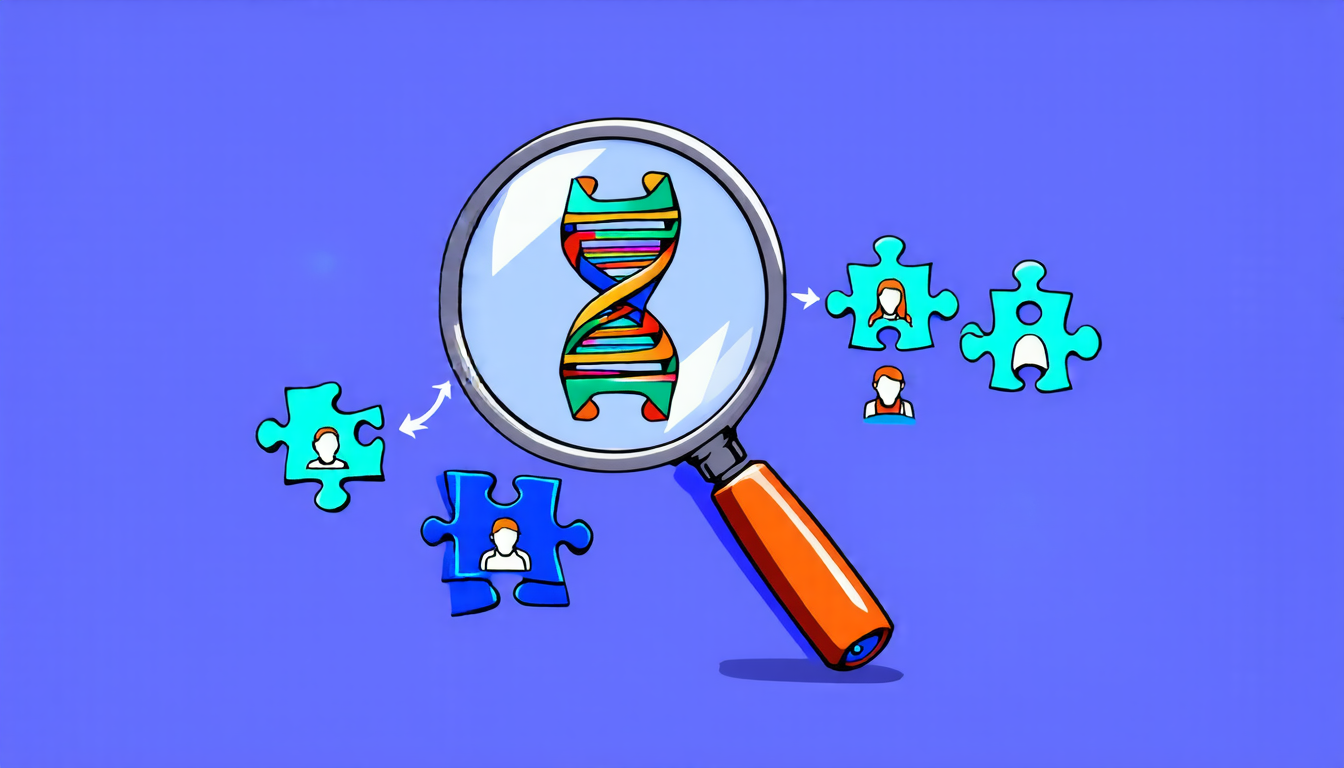
Researchers have developed a new approach to finding exact matches in genomic data, which could significantly speed up the process of identifying key genetic sequences.
The technique, known as KeBaB, involves breaking down long DNA sequences into smaller chunks called pseudo- SMEMs, or super-maximal exact matches. These chunks are then searched for matches against a reference genome, rather than searching the entire sequence at once.
This approach has several advantages over traditional methods. For one, it reduces the amount of data that needs to be processed, which can greatly speed up the search process. Additionally, KeBaB is more efficient because it focuses on finding the longest possible matches first, rather than searching for shorter sequences and then extending them.
The researchers used a combination of algorithms and data structures to develop KeBaB. They created a Bloom filter, a type of data structure that can quickly determine whether a given sequence occurs in a large dataset. This filter was used to identify which pseudo- SMEMs were likely to contain matches against the reference genome.
Once the researchers had identified the relevant pseudo- SMEMs, they used a sorting algorithm to arrange them in order of length. They then searched for matches within each pseudo- SMEM, starting with the longest ones first.
The researchers tested KeBaB using a toy dataset of 10,000 base pairs and a set of long DNA sequences. They found that their approach was able to identify exact matches much faster than traditional methods. In one test, they were able to find all the longest 5 SMEMs in each pattern in just over a second.
The potential applications of KeBaB are significant. For example, it could be used to quickly identify genetic variations associated with diseases, or to analyze large datasets of genomic data more efficiently. The researchers plan to continue refining their approach and testing it on larger datasets in the future.
One of the key challenges facing genomics is the sheer scale of the data involved. With millions of base pairs of DNA to analyze, traditional methods can be slow and laborious. KeBaB offers a solution to this problem by breaking down the data into smaller chunks that can be searched more quickly.
The approach also has implications for our understanding of how genetic sequences are organized. By identifying the longest possible matches first, KeBaB provides a new perspective on the structure of genomic data.
Overall, KeBaB is an innovative approach that could have a significant impact on the field of genomics.
Cite this article: “KeBaB: A Novel Approach to Identifying Exact Matches in Genomic Data”, The Science Archive, 2025.
Genomics, Dna, Sequence Matching, Kebab, Pseudo-Smems, Bloom Filter, Sorting Algorithm, Genetic Variations, Disease Association, Genomic Data Analysis





