

Monday 31 March 2025
The quest for a deeper understanding of superconductivity has led scientists down a rabbit hole of complex physics and mathematical models. But a recent study has shed new light on this phenomenon, revealing the unexpected role that repulsive interactions play in its emergence.
Superconductors are materials that can conduct electricity with zero resistance when cooled to extremely low temperatures. This property makes them incredibly useful for applications such as medical imaging and high-speed transportation. However, the exact mechanisms behind superconductivity remain poorly understood.
One popular theory is that it arises from attractive interactions between electrons, which cause them to pair up and form a single entity known as a Cooper pair. These pairs then move through the material as a single unit, carrying electrical current with ease.
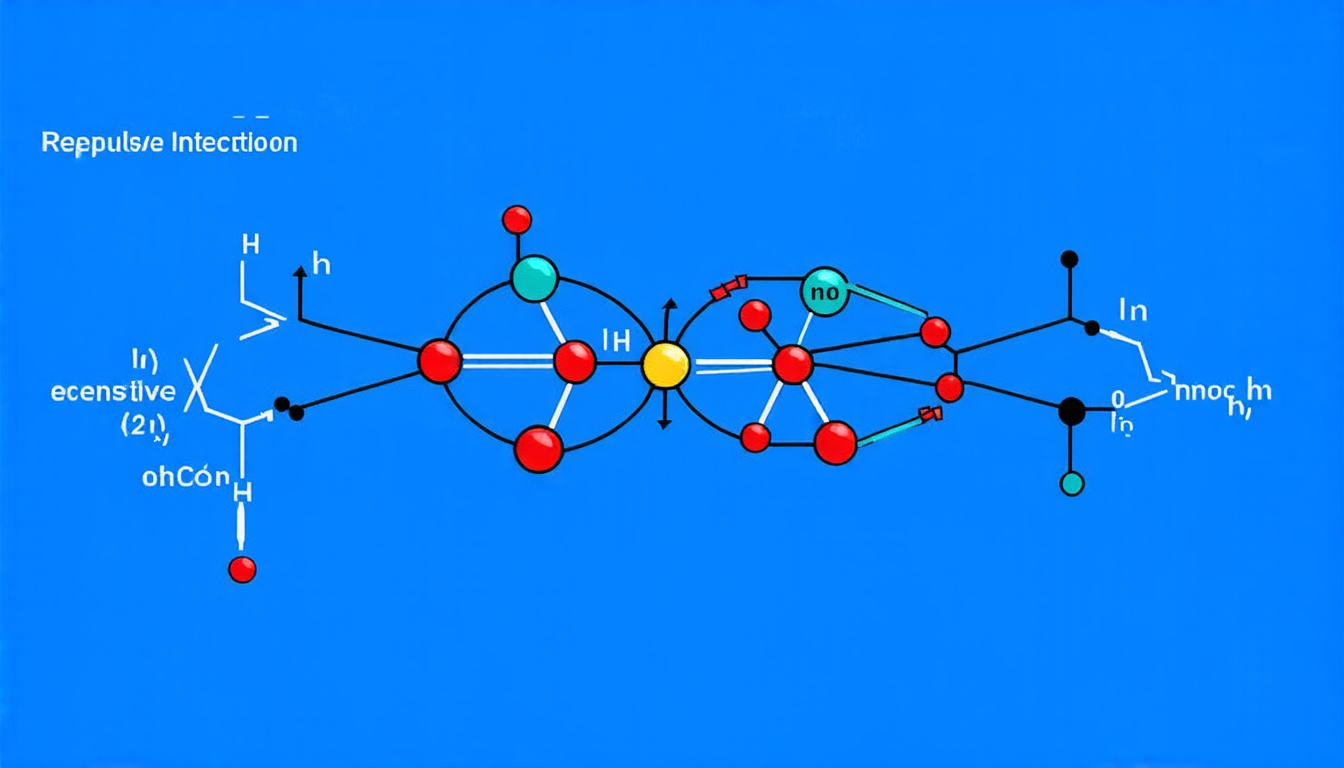
But researchers have long suspected that there might be more to the story. In particular, they’ve noticed that repulsive interactions – where electrons push each other away rather than attracting – seem to play a crucial role in the emergence of superconductivity.
To investigate this phenomenon further, scientists turned to a theoretical framework known as the renormalization group. This approach allows researchers to study complex systems by breaking them down into smaller components and examining how these pieces interact with one another.
Using this technique, the team discovered that repulsive interactions can actually enhance the formation of Cooper pairs, leading to the emergence of superconductivity. This effect is particularly pronounced in two-dimensional materials, where the electrons are confined to a single plane.
The researchers also found that the type of pairing that occurs depends on the specific arrangement of electrons and their interactions. In some cases, this leads to the formation of exotic superconducting phases with unusual properties.
These findings have significant implications for our understanding of superconductivity and its potential applications. By exploiting repulsive interactions, scientists may be able to design new materials with enhanced superconducting properties.
The study also highlights the importance of considering all possible interactions between electrons – not just attractive ones – when trying to understand complex phenomena like superconductivity.
As researchers continue to explore the mysteries of superconductivity, this work provides a valuable reminder that even seemingly repulsive forces can play a crucial role in shaping its behavior.
Cite this article: “Repulsive Interactions Uncover Hidden Secrets of Superconductivity”, The Science Archive, 2025.
Superconductivity, Electrons, Interactions, Cooper Pairs, Renormalization Group, Two-Dimensional Materials, Repulsive Forces, Exotic Phases, Superconducting Properties, Complex Phenomena





