

Monday 31 March 2025
Astrologers have long sought to understand the mysteries of the universe, and one of their most powerful tools is the art of spectral analysis. By studying the light emitted by stars and other celestial bodies, scientists can gain valuable insights into their composition, temperature, and even age.
Recently, a team of researchers has made significant strides in this field by developing a new method for classifying the spectra of emission-line regions. These regions are areas where hot gas is emitting light across a wide range of wavelengths, often as a result of intense energy released during star formation or supernovae explosions.
Traditionally, scientists have used various diagnostic tools to identify and classify these regions, such as measuring the ratio of certain emission lines to determine their physical properties. However, this approach has limitations, particularly when dealing with complex and noisy data.
To overcome these challenges, researchers turned to machine learning algorithms, which are capable of recognizing patterns in large datasets. By training a neural network on a dataset of simulated spectra, they were able to develop a model that could accurately classify emission-line regions into different categories, including H ii regions, planetary nebulae, supernova remnants, and diffuse ionized gas.
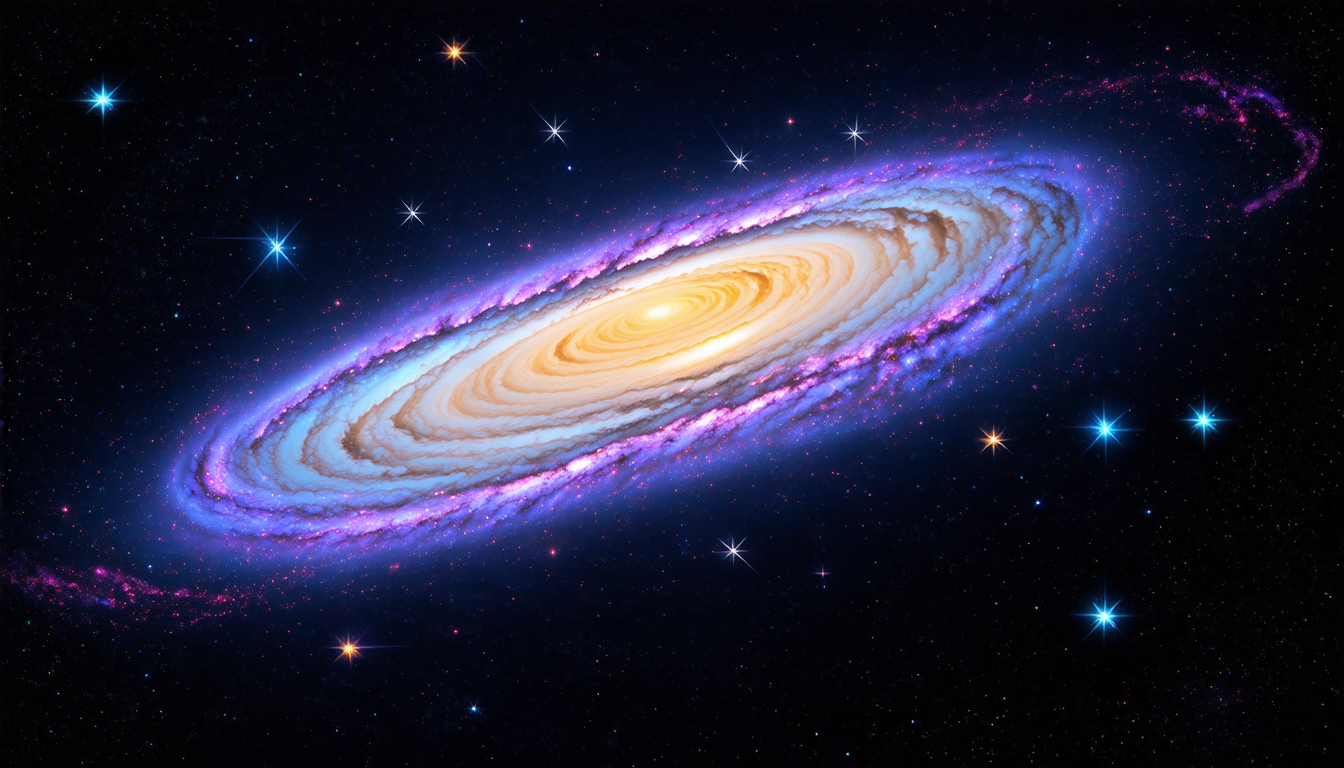
The new method was tested using data from the M33 galaxy, which is located approximately 2.7 million light-years away in the constellation Triangulum. By applying the neural network to a dataset of integrated spectra extracted from this galaxy, researchers were able to identify a range of emission-line regions with high accuracy.
One of the most significant advantages of the new method is its ability to handle complex and noisy data. Unlike traditional diagnostic tools, which can be sensitive to errors in measurement or assumptions about the underlying physics, the neural network is capable of learning from patterns in the data regardless of their complexity.
This approach has important implications for our understanding of the universe. By accurately classifying emission-line regions, scientists can gain a deeper understanding of star formation and evolution, as well as the properties of diffuse gas and dust. Additionally, the new method could be used to identify potentially explosive events, such as supernovae, before they occur.
In addition to its scientific implications, the development of this new method also highlights the power of machine learning in astronomy. By leveraging the capabilities of neural networks, scientists can analyze large datasets more efficiently and accurately than ever before, opening up new possibilities for discovery and exploration.
Cite this article: “Unlocking the Secrets of the Universe with Machine Learning”, The Science Archive, 2025.
Spectral Analysis, Machine Learning, Astrology, Emission-Line Regions, Neural Networks, Star Formation, Supernovae, Galaxy, Triangulum, Astronomy





