

Monday 31 March 2025
Scientists have long been fascinated by the intricate patterns that emerge in seemingly simple systems, like the swirling shapes that form on a pot of boiling water or the branching networks of river deltas. Now, researchers have discovered a new way to create these kinds of patterns, using nothing more than a mixture of proteins and sugars dissolved in water.
The team behind this discovery used a petri dish to mix together two common sugars – glucose and sucrose – with a protein called urease. As the mixture spread across the surface of the dish, it began to form intricate patterns, like spiral arms or irregular shapes. These patterns emerged because of the way the different components interacted with each other: the proteins and sugars had different densities and surface tensions, which caused them to move and spread in unique ways.
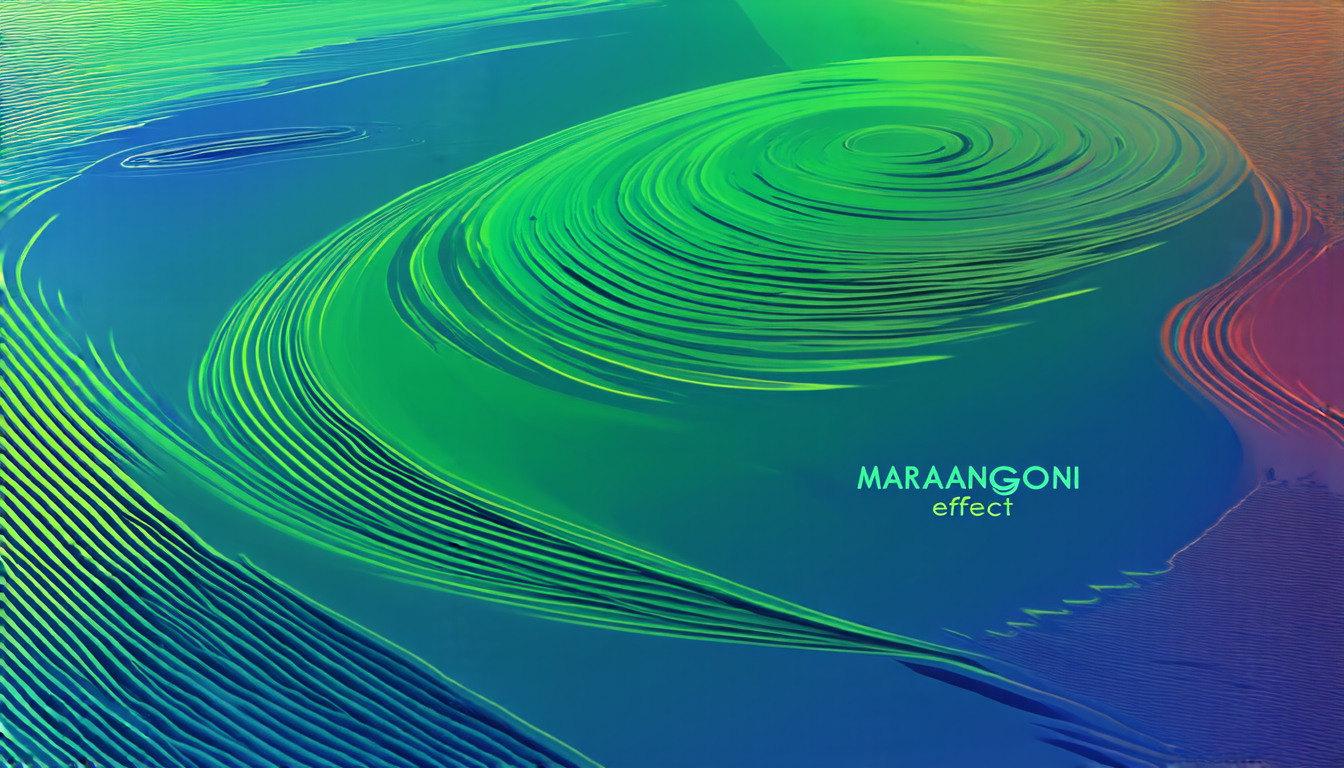
The researchers used a combination of experiments and computer simulations to understand how these patterns formed. They found that the key factor was the Marangoni effect, a phenomenon in which a gradient in surface tension drives fluid flow. In this case, the proteins and sugars created different levels of surface tension as they spread across the dish, causing the liquid to move and form patterns.
One of the most interesting aspects of this research is its potential applications. The team notes that these kinds of patterns could be used to create new materials or surfaces with unique properties – for example, a surface that repels water or changes color in response to different conditions. They also suggest that their findings could have implications for fields like biology and medicine, where understanding how complex systems form and interact is crucial.
The researchers used a combination of techniques to study the patterns, including video analysis and particle image velocimetry (PIV) – which involves tracking tiny particles suspended in the liquid to measure its flow. They also developed custom computer simulations to model the behavior of the proteins and sugars as they spread across the dish.
One challenge facing the team was understanding how to manipulate the Marangoni effect to create specific patterns. To do this, they used airflow above the surface of the dish – blowing air gently across the mixture caused the patterns to change and evolve in interesting ways. They also experimented with different concentrations of proteins and sugars, finding that changing these conditions could alter the shapes and sizes of the patterns.
The results of this research have implications for a range of fields, from materials science to biology and medicine.
Cite this article: “Unraveling the Secrets of Pattern Formation in Proteins and Sugars”, The Science Archive, 2025.
Protein, Sugar, Mixture, Patterns, Surface Tension, Marangoni Effect, Fluid Flow, Materials Science, Biology, Medicine





